Bathroom wipes, notorious for clogging sewer systems, can no longer be labeled as "flushable" in Michigan unless they meet specific requirements under a new state law. Public Act 43 of 2024 mandates that most wipe packaging must now include "Do Not Flush" labels and symbols to prevent consumers from disposing of them in toilets.
The law targets premoistened, nonwoven disposable wipes containing petrochemical-derived fibers that are commonly used in bathrooms and pose a significant risk of being flushed. Gov. Gretchen Whitmer signed the bill into law in May aiming to protect wastewater systems across the state.
SF Bay Water Board Unveils Major Nutrient Reduction Initiative
The San Francisco Bay Water Board recently announced new permitting regulations aimed at reducing nutrient loads, such as nitrogen, from roughly three dozen wastewater treatment plants around the bay. The initiative seeks to mitigate the propagation of harmful algae blooms exacerbated by climate change.
The necessary upgrades to treatment plants are projected to cost around $11 billion, marking it as one of the most significant decisions by the board since the Clean Water Act of the 1970s. Some facilities, like Palo Alto's, have already initiated infrastructure improvements.
Worker Rescued After 15-Foot Fall at Hawaii WWTP
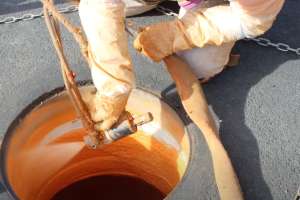
A worker recently sustained serious leg and back injuries after falling 15 feet into a manhole at the Sand Island Wastewater Treatment Plant in Honolulu, Hawaii. The Honolulu Fire Department dispatched six units, comprising 26 personnel, to the scene.
The man, who was trapped in an oxygen-deficient environment, remained conscious and communicative. Firefighters used a rescue tripod and ropes to reach and extract him, providing basic life support during the process. Care was then transferred to Honolulu Emergency Medical Services, where paramedics administered advanced life support before transporting the 32-year-old contractor to the hospital in serious condition.
Continue reading for free