The lead poisoning crisis in Flint that came to light in 2016 highlighted the problem of lead service lines and the importance of proper water treatment.
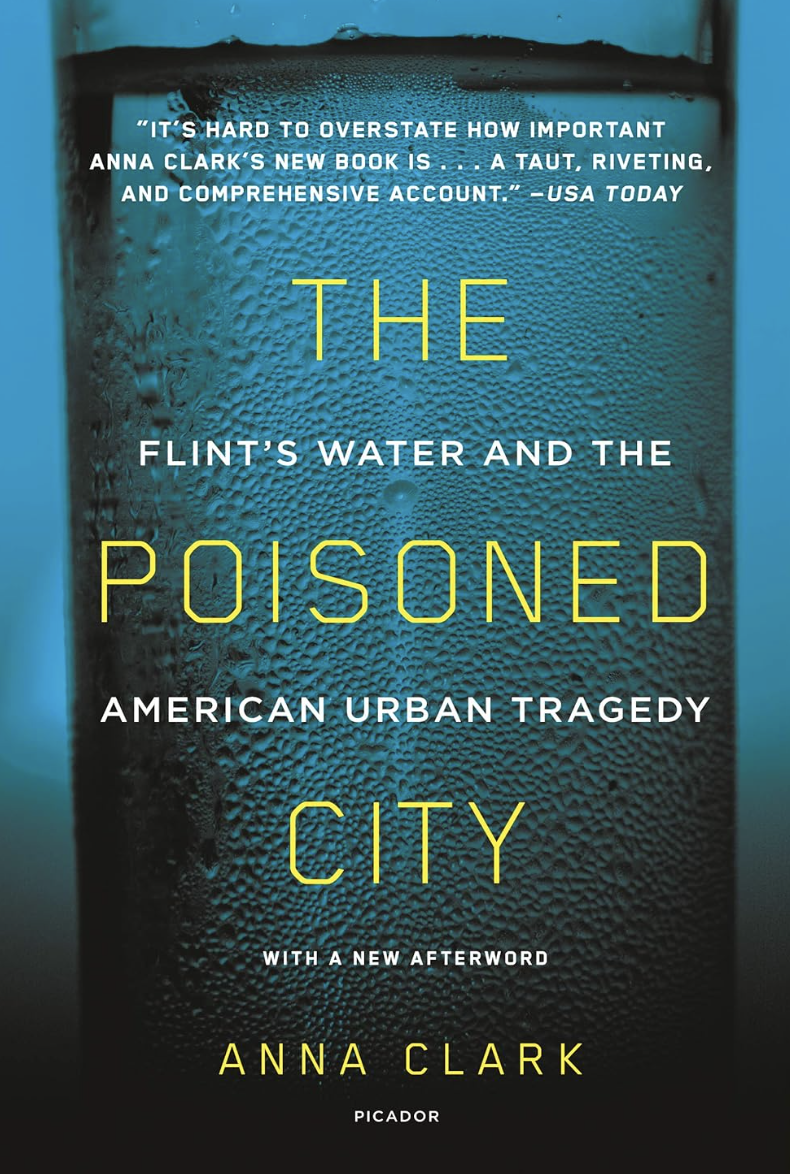
The city’s struggles for healthy drinking water are the subject of a book, The Poisoned City by Anna Clark. The book was published by Metropolitan Books in 2018 and received the Hillman Prize for Book Journalism in 2019.
While the book isn’t new, it is a useful reminder about the importance of safe water as cities and utilities nationwide tackle the costly and challenging but essential task of replacing lead-containing water service lines to homes, schools, institutions and businesses. The publisher’s summary observes that “Through a series of disastrous decisions, the state government had switched the city’s water supply to a source that corroded Flint’s aging lead pipes. Complaints about the foul-smelling water were dismissed: the residents of Flint, mostly poor and African American, were not seen as credible, even in matters of their own lives. It took 18 months of activism by city residents and a band of dogged outsiders to force the state to admit that the water was poisonous. By that time, 12 people had died and Flint’s children had suffered irreparable harm.” The Poisoned City tells Flint’s story through people who caused it and experienced it.
A review published by Rutgers University noted that Flint became “a grim noun, adjective, and verb.” A Flint, for example, “is a hollowed out American city, barely held together by the civic pride and tenacity of remaining members unwilling to abandon their town and neighbors, but with a dismal trajectory along all axes of municipal well-being and prosperity.”
Author Clark is a Detroit-based journalist. Her account covers “the intricacies of water science, the history of water infrastructures, and the Byzantine layers of government regulation of the water supply in a city under dire financial straits.” She spotlights determination of the everyday people who raised alarm about the unsafe water and pushed for accountability.
The reviewer noted, “What happened in Flint is merely the ominous tip of a very large and growing iceberg. One Natural Resources Defense Council report suggests that millions of Americans may be exposed to unsafe lead levels.”
Jim Lauria, who writes a blog, “To Know Water Is to Love Water,” calls The Poisoned City “A wake-up call for America’s water systems” and “a sobering reminder that the systems we rely on the most are often the ones we notice the least.”
He notes how Clark blended investigative reporting with knowledge of public health, policy failures, and community resilience: “She shows how a crisis like Flint doesn’t erupt overnight; it accumulates, drip by drip, as a series of structural decisions, deferred maintenance, and ignored warnings…In Flint, the dose of negligence, austerity, and corrosion control missteps was toxic long before a single household turned on a faucet.”
Lauria further observes, “(Clark) shows that aging pipes and under-resourced utilities aren’t abstract engineering problems — they’re precursors to public health failures. Add to that the looming 'gray tsunami' of experienced water treatment professionals nearing retirement, and the book feels less like a retrospective and more like a warning flare for what could come next.”
The Poisoned City is available wherever books are sold, in brick-and-mortar stores and online.
Continue reading for free