If you work in sewer inspection, whether you're managing a municipal system or running an inspection contracting crew, you already know the pressure. Aging infrastructure. Shrinking budgets. A workforce that's graying out faster than it can be replaced. And somewhere in the middle of all that, miles of pipe that need to be assessed, coded and prioritized before something fails.
What you may not fully appreciate yet is how dramatically AI-powered defect coding is changing the math on all of that. Not someday. Right now.
This isn't a story about robots replacing inspectors. It's a story about getting more out of every inspection dollar and doing it with a level of consistency and accuracy that simply wasn't possible before.
Aging infrastructure
The problem isn't just aging pipes. It's the entire system around them. The scale of America's wastewater infrastructure challenge is staggering. The ASCE's 2021 Infrastructure Report Card puts the numbers in stark relief: over 800,000 miles of public sewers, many of them averaging 45 years old. The EPA estimates between 23,000 and 75,000 sanitary sewer overflows occur every single year, releasing billions of gallons of raw sewage into local waterways and communities.
Addressing that backlog will require an estimated $271 billion in investment over the next 25 years, according to the EPA's Clean Watersheds Needs Survey. That's not a rounding error. That's a generational infrastructure challenge.
At the same time, the water sector is in the middle of what the American Water Works Association describes as a "silver tsunami." Up to one-third of water utility workers are expected to retire within the next decade. Whether it is the experienced inspector who can spot a subtle crack pattern or the coder who knows the difference between roots and a shadow, institutional knowledge walking out the door is genuinely difficult to replace.
Cities aren't just dealing with older pipes. They're dealing with older workforces, tighter budgets, and growing public accountability for every dollar spent on infrastructure.
This convergence of aging infrastructure, workforce attrition, and resource constraints is exactly the environment in which AI defect coding stops being a "nice to have" and becomes a strategic necessity.
Reactive vs. proactive: The cost gap is bigger than you think
Most municipalities, if they're honest, are still operating reactively. A pipe fails. A manhole backs up. An emergency call comes in. Resources scramble, the repair gets made, and the root cause is a defect that could have been flagged months earlier in a routine inspection that goes unaddressed until the next incident.
The cost difference between reactive and proactive sewer management is significant. A reactive approach can run an average-sized city between $5 million and $20 million annually, driven largely by emergency repairs that typically cost five to 10 times more than planned maintenance. A single significant sewage overflow event can cost anywhere from $100,000 to several million dollars once you factor in cleanup, fines and liability.
Proactive management including regular inspections, predictive maintenance and strategic upgrades, can bring those annual costs down to $2 million to $8 million. Over a decade, that difference can represent $30 million to $120 million in savings for a single city.
5–10x — The cost premium of emergency sewer repairs compared to planned, proactive maintenance
$271B — Estimated investment needed in U.S. wastewater infrastructure over the next 25 years (EPA, 2022)
$120M — Potential 10-year savings for an average-sized U.S. city that adopts proactive AI-assisted sewer management
The challenge has never been convincing cities that proactive management is better. The challenge has been giving them the tools to actually do it. The ability to process inspection data fast enough, accurately enough, and at a large enough scale to stay ahead of the problem rather than perpetually chasing it.
Where human inspection falls short (and it's not the inspector's fault)
Traditional manual defect coding is hard work, and the people doing it are skilled professionals. But the process has real, structural limitations that no amount of training or dedication can fully overcome.
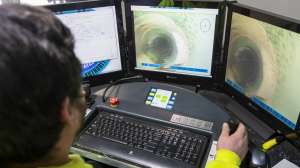
Human inspectors, even well-trained ones, are subject to fatigue, distraction and inconsistency. Accuracy rates for manual coding typically range from 60% to 70%. That's not a failure of the workforce, it's a reflection of the sheer cognitive load involved in watching hours of CCTV footage and making real-time classification decisions under production pressure.

The throughput challenge is equally significant. Manual post-processing of a single mile of inspection footage typically takes at least 16 hours to code, plus an additional four to six hours of QA/QC review. With traditional methods, even the most proactive cities can only inspect 10% to 15% of their sewer network in a given year. That means the majority of the system is uninspected at any point in time, which is a genuine risk management problem.
There's also the consistency problem. Different operators interpret data differently. Different crews apply NASSCO coding standards with different levels of rigor. Over time, that variability undermines the reliability of the data driving multimillion-dollar capital planning decisions.
When the data driving your infrastructure decisions is inconsistent, every budget request, every rehab prioritization, and every deferral decision carries more risk than it needs to.
What AI defect coding actually does (and what it doesn't)
Let's be direct about something, because there's a lot of noise in this space: AI defect coding is not magic, and it's not a replacement for human expertise. The best implementations of this technology are explicitly hybrid, where AI handles the heavy lifting of analysis and initial coding, and qualified human reviewers verify the output, catching edge cases and maintaining quality control.
Here's what that looks like in practice with a well-designed AI defect coding workflow:
- Field crews capture CCTV footage using their existing hardware. No new equipment is required.
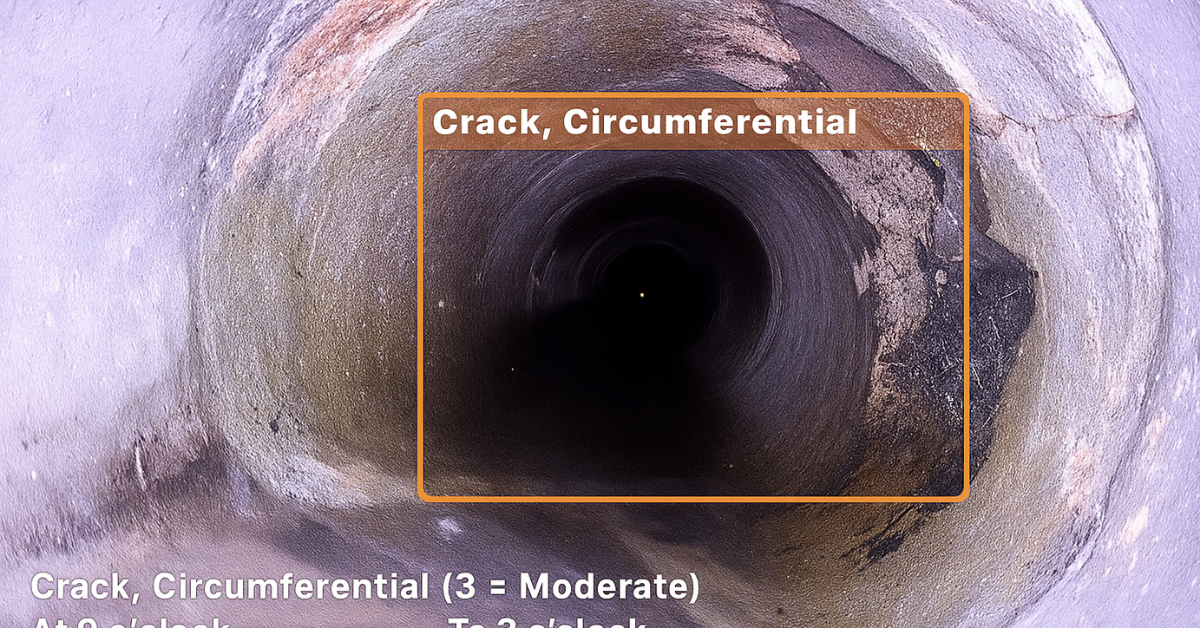
- Footage is uploaded to a secure, cloud-based platform where AI algorithms analyze each pixel of each frame, recognizing defect patterns and applying NASSCO coding standards automatically.
- Items where the model has lower confidence are flagged for review by NASSCO-certified human experts before reports are finalized.
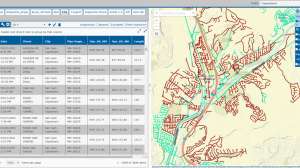
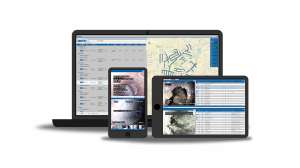
- Comprehensive, compliant reports are generated and delivered, ready to integrate with GIS and asset management systems.
The result is a process that maintains rigorous quality control while dramatically improving speed and scale. The AI does what AI does well, providing consistent, tireless pattern recognition across large datasets. Humans do what humans do well, providing contextual judgment, quality assurance, and professional accountability.
Critically, this model also addresses the workforce problem. By handling the bulk of coding, AI allows field inspectors to focus entirely on video quality including speed, lighting, positioning, and adequate capture of defects, rather than simultaneously trying to classify what they're seeing. That separation improves both field productivity and downstream coding accuracy.

The numbers that matter to decision-makers
For public works directors and city engineers who need to make the case internally, the performance data on AI defect coding is compelling:
97% — Defect detection accuracy achieved by leading AI coding systems, compared to 60%–70% for manual methods
50+% — Reduction in coding and QA/QC time — what takes 20-plus hours manually can be completed in roughly four hours with AI
2x — Increase in annual network coverage — from inspecting 10%–15% of the system to 20%–30% with the same resources
That last point is worth sitting with. If you're currently inspecting 10% of your network per year and AI-assisted coding lets you reach 25% with the same budget, you've fundamentally changed your risk profile. You're seeing more of your system, more often, with better data.
For contractors, the value proposition is equally strong. Faster turnaround on coded inspections means more capacity, more clients served, and better value delivery without a proportional increase in labor costs. It also enables a consistent quality standard across crews, which is something genuinely difficult to maintain as organizations scale.
What to look for when evaluating AI coding solutions
Not all AI defect coding tools are created equal, and the wrong choice can create as many problems as it solves. Overcoding inflates rehab budgets and wastes resources. Undercoding misses critical defects and creates liability. Here are the questions worth asking before committing to any solution:
- Human oversight: Is AI output reviewed by qualified, NASSCO-certified professionals? Lack of QA/QC is a significant red flag.
- Accuracy metrics: Can the provider show you real performance data, not just AI confidence scores? Confidence scores mean little without verification context.
- NASSCO compliance: Are outputs fully PACP/MACP/LACP-compliant? Which versions are supported?
- Model training: How much footage has been used to train the model? How often is it retrained? How does it continuously improve?
- Video integrity: Does the system alter original video in any way? Does it remove overlays, change distances, adjust aspect ratios? This compromises inspection integrity.
- Transparency: Will the solution provider walk you through the full workflow from upload to delivery? Opacity for Q/A processes is a warning sign.
- Integration: Can outputs flow directly into your existing GIS and asset management systems without manual work?
The goal isn't just faster coding. It's better, more reliable data that enables smarter infrastructure decisions over time.
AiDetect: Built for the realities of the industry
One solution purpose-built for this challenge is AiDetect by ITpipes, which combines AI-powered automation with expert human oversight to transform how inspection data is processed and delivered.
AiDetect was built on more than 15 years of pipe inspection video, a training dataset that gives the model deep familiarity with the full range of defect types, pipe materials, and real-world inspection conditions. The system achieves a 97% accuracy rate in defect detection and classification, with every inspection reviewed and finalized by NASSCO-certified professionals before delivery.
The workflow is designed to integrate with what teams already do. Field crews record footage using their existing CCTV hardware and simply upload it to a secure cloud platform. AiDetect processes the footage by analyzing pixels, clustering patterns, recognizing defects, flagging uncertain areas for human review and then delivers standardized, NASSCO-compliant reports that plug directly into GIS and asset management systems.
In practice, the impact is substantial. Coding time that previously took upward of 16 hours per mile drops to around four hours. Cities that previously could only inspect 10% to 15% of their network annually are now covering 20% to 30% with the same resources. And coding consistency is dramatically improved, as it is no longer subject to inspector fatigue or inter-operator variability.
Real-world results bear this out. A New York municipality used AiDetect to re-evaluate previously coded footage, uncovering missed defects and using those findings to strengthen operator training programs. A large national contractor who was responsible for inspecting 450 million linear feet of pipe annually across more than 2,000 municipalities, deployed AiDetect to eliminate a significant backlog of uncoded footage that had been delaying critical infrastructure decisions. In both cases, the technology didn't replace the professionals involved; it amplified what they were able to accomplish. Learn more about this solution at itpipes.com/aidetect.
The industry is moving. Are you?
Sewer inspection has always been essential, unglamorous work. The people who are in the field, in the office, in GIS and asset management roles that depend on the data they generate, are doing some of the most important infrastructure work in the country. They deserve tools that match the scale of the challenge they're facing.
AI defect coding isn't a disruption to that work. It's an upgrade. It takes the analytical burden off skilled professionals and gives them something more valuable: time, capacity and confidence in the data they're working with.
The cities and contractors that move toward AI-assisted inspection now will be better positioned to make the case for infrastructure investment, stretch their inspection budgets further, and stay ahead of a deteriorating system rather than perpetually responding to it.
The infrastructure is aging. The workforce is shrinking. The data problem is solvable.
AI defect coding doesn't change what sewer inspection is for. It changes what's possible within the same budget, the same staff, and the same inspection window you've always had.
To learn more about how AI defect coding works in practice, visit itpipes.com/aidetect.