Hurricanes Helene and Milton earlier this fall significantly impacted some wastewater and water treatment facilities in the Southeast, causing shutdowns and service delays. These events serve as a reminder that pump motors are a critical component of water treatment systems, and it's important for industry professionals to accurately assess potential damage to motors and determine what needs replacement and what can be repaired, before bringing their facilities back online.
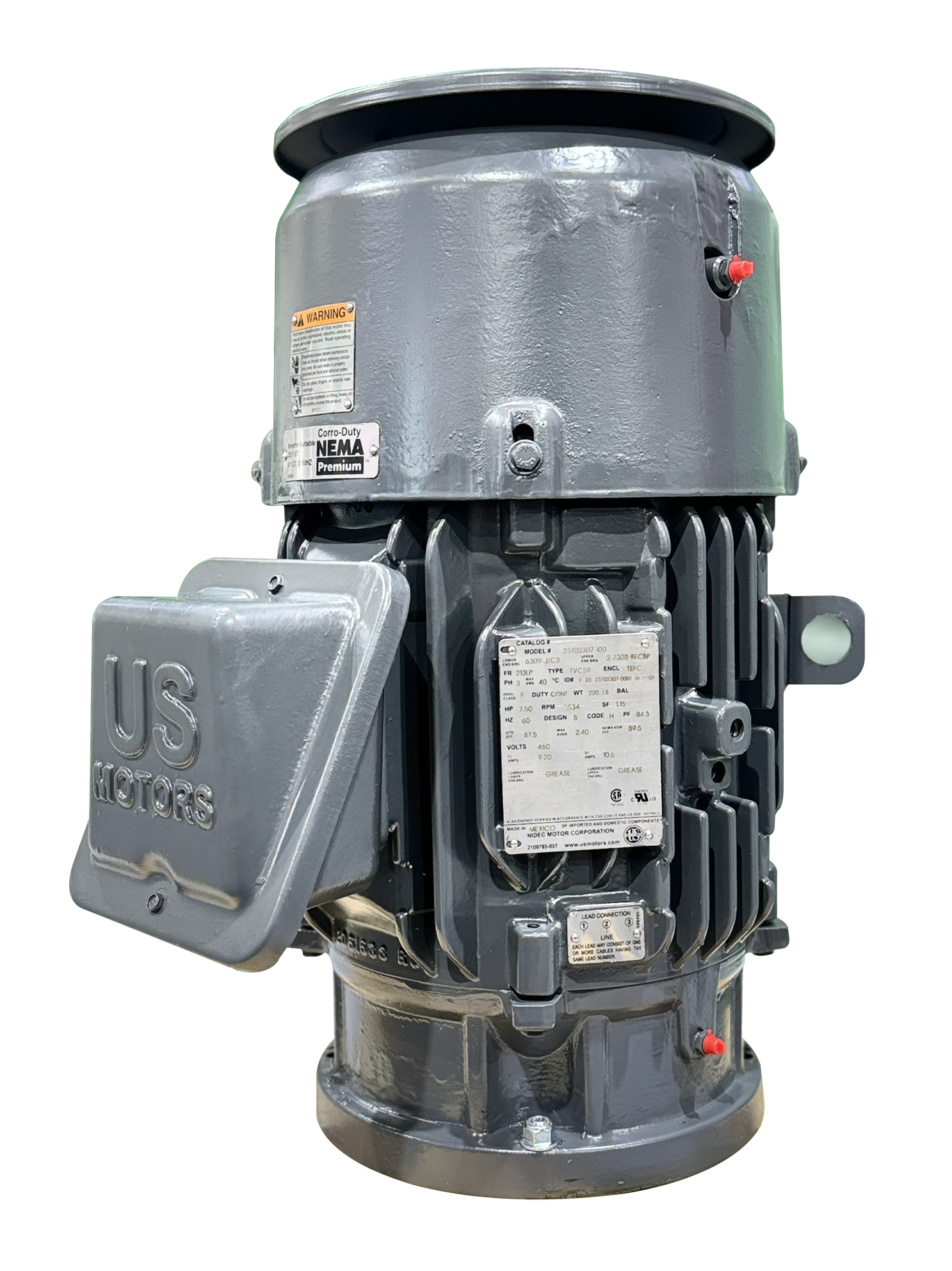
Nidec/U.S. MOTORS, a longtime manufacturer of pump motors for the water industry, has issued a memorandum outlining the steps needed to evaluate motors for safety and performance after being exposed to severe weather. This includes new motors stored in warehouses that may have experienced water damage.
“Hurricanes and tropical storms continue to pose a threat to municipal plants in the South and the Gulf states,” says Dave Lyle, vice president of quality for Nidec/U.S. MOTORS. “This information from Nidec will be helpful for those currently dealing with rebuilding as well as those who want to be prepared for future storms.”
While some of the obvious damage will be rusted motor shafts or contaminated bearings and lubricants, other components like the electrical insulation, when exposed even briefly to moisture, can damage the windings and result in ground failures, Lyle says.
In addition, damage from saltwater can cause rusting of the stator and rotor cores and corrode copper windings and copper or aluminum rotor cages, leading to motor failure. Flushing and cleaning out the saltwater before the equipment dries can prevent this issue, Lyle adds.
The Nidec/U.S. MOTORS memorandum includes the following guidance for motors subjected to water ingress and flooding:
Disconnect power immediately throughout any facility subjected to water/flooding ingress as there is a potential for electrocution which could result in physical injury or death whenever motors are subjected to water ingress and flooding. Motors should not be energized and instead need to be taken to an authorized EASA motor service shop for full analysis and inspections. These analyses and inspections should include:
1. Incoming visual inspection.
2. Incoming electrical tests.
3. Motor(s) should be opened, and internal components and parts inspected.
After inspection, if the motor shows signs of water ingress, the following activities need to be performed:
- Fully clean all parts, internal and external
- Have a motor service shop flush out any saltwater or moisture during cleaning process
- Verify all mechanical dimensions are within the manufacturers design specifications
- Replace the bearings
- Dry the wound stator by placing in oven
- Reassemble the motor
- Perform final test of the motor prior to returning to the end user. These tests will consist of electrical test of the winding (insulation resistance) and a test run of the motor at the shop.
“We encourage treatment plant operators who have experienced storm damage to prioritize motors and generators for repair and replacement,” Lyle says. “Acting quickly will increase the odds that the motors can be restored for safe and efficient performance.”
For questions pertaining to motors subjected to flooding or storm damage, Nidec’s product service engineers can be reached at 800-566-1418. The service teams have decades of experience handling customer questions and providing guidance on motor operation and troubleshooting.
Additional information on the U.S. MOTORS line for water and wastewater applications is available here. Nidec has an inventory of in-stock replacement motors for those in need of immediate shipment.
Continue reading for free