Water district modernizes wastewater inspection
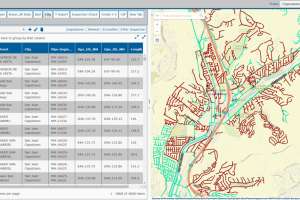
Problem: In November 2021, Santa Margarita Water District acquired the wastewater system of the city of San Juan Capistrano, one of California’s oldest inhabited areas. The inherited system, covering 126 miles of gravity mains, came with significant challenges. The city’s previous inspection process relied on a non-GIS, non-web-based system, with data stored on DVDs, unindexed and inaccessible for effective condition assessment. SMWD needed a modern, GIS-integrated solution to gain visibility into the system’s condition and manage it effectively.
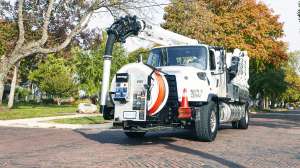
Solution: To address these challenges, SMWD invested in ITpipes, selecting it specifically for its GIS and web-based capabilities. They also procured a new CCTV truck dedicated to inspecting the newly acquired wastewater infrastructure. A major hurdle was aligning the city’s asset schema, which contained over 20 attributes, with the district’s existing GIS-based system. By integrating ITpipes with Esri GIS, the district was able to overlay and update asset information, ensuring all data was geospatially accurate and accessible.
Result: Within two years, the district had successfully inspected 95% of the newly acquired wastewater system. All inspection data is now GIS- and web-based, allowing for real-time access, better decision-making and proactive maintenance. What was once an inaccessible collection of DVD-based reports has been transformed into an interactive, dynamic system, enabling the district to effectively manage and maintain San Juan Capistrano’s aging wastewater infrastructure. 505-355-6829; www.itpipes.com

Corrosion-resistant manholes strengthen sewer infrastructure
Problem: Truax Corporation, a family-owned infrastructure services company headquartered in North Attleboro, Massachusetts, performs roughly 2 million linear feet of CCTV sewer inspection per year across four New England states. Mainline inspections were a strength. Manhole inspections were not. The legacy workflow required manual field data entry, measuring tape for every defect and topside photos that gave engineers little to work with. Video from rotating cameras produced distorted 3D models, and reports took days. As Owner/President Jamie Truax put it, “We had to manually type all the field info into software, measure everything by hand, and take pictures manually. It was a huge headache and took up a lot of downtime.” The inefficiency was bad enough that Truax avoided manhole work unless a contract required it.
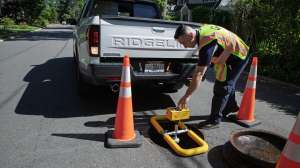
Solution: Truax paired the TREKK360 self-leveling manhole inspection camera with SewerAI’s automated processing platform — Pioneer for project management, AutoCode for NASSCO defect coding and Sewer3D for 3D modeling. TREKK360’s self-leveling descent keeps footage stable from start to finish. Footage uploads directly to SewerAI, which handles coding, measurements and report generation without manual input. In the field, power on, drop the camera in, pull it up, move on. No specialist, no truck setup, no calibration.
Result: Truax went from avoiding manhole work to completing 100-plus inspections per crew per day with no added headcount. Reports and interactive 3D models are delivered in hours instead of days. Engineers now request the deliverables by name, and the combination of speed, quality and lower overhead has become a clear advantage in competitive bidding across New England. 855-952-2200; www.sewerai.com
Continue reading for free