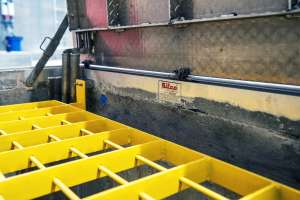
By nature of their role and training, civil engineers and construction contractors appreciate clear written standards because they help define expectations, reduce guesswork, eliminate risk and prevent costly rework. This is exactly what ASTM F3754 does when it comes to polypropylene crate stormwater storage systems.
As municipalities confront increasingly intense rainfall events and aging stormwater management infrastructure, underground stormwater storage systems are becoming a core component of modern civil infrastructure. Among the newer technologies gaining traction are modular PP crate systems used for detention, retention, infiltration and exfiltration applications beneath parking lots, roadways, parks and urban developments.
Designed to help maximize land usage for private and public applications, modular PP crate systems are used to temporarily store excess stormwater runoff until it can safely be released into the sewer system or infiltrated into the ground, supporting groundwater recharge. They can also be used with green infrastructure to enhance the performance and extend the service life of these practices.
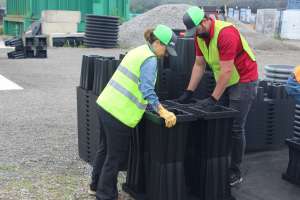
The publication of ASTM F3754, “Standard Specification for PP Crate Stormwater Storage Systems,” earlier this year represents a significant milestone for stormwater management because it establishes requirements for designing and installing modular, cube-shaped PP crates that are interconnected to form underground storage galleries in stormwater management applications. The standard covers product materials, structural testing, performance requirements, installation considerations, marking and quality assurance for modular underground storage systems.
For municipal engineers, public works departments, consulting engineers and design-build contractors, the new standard provides an important framework for evaluating products, writing specifications and reducing project risk. No longer do they have to rely on proprietary manufacturer literature and varying installation recommendations and procedures. ASTM F3754 creates a common technical benchmark that engineers and municipalities can use to compare products objectively and install systems uniformly.
The following are a few specific reasons why this standard is so important.
It provides standardization that reduces municipal risk
One of the key benefits of ASTM F3754 is that it bridges the gap between product manufacturing and engineering design. Historically, underground stormwater crate systems were often specified using proprietary standards or manufacturer-specific testing protocols. This created inconsistencies in procurement, product evaluation and long-term performance expectations. Manufacturers now have clearly defined performance and testing expectations, while designers gain confidence that compliant systems meet consistent structural and material criteria.
ASTM F3754 gives municipalities a recognized, consistent industry benchmark that can be used to evaluate underground stormwater storage systems and referenced directly in project specifications. This reduces ambiguity during bidding and helps owners avoid the risk of comparing systems with inconsistent test criteria. It also improves defensibility during procurement reviews and simplifies the process of approving alternate products. Most importantly, the standard helps diminish the chances of premature failure of the system.
It establishes minimum structural requirements
One of the primary concerns with underground storage systems is long-term structural performance under traffic loading and soil pressures. ASTM F3754 establishes testing and material requirements intended to ensure that crate systems can withstand burial conditions and anticipated live loads when properly installed. This is particularly important for systems installed beneath parking lots.
The standard recognizes that structural performance is not solely a function of the plastic module itself. Installation methods, bedding quality, backfill material, compaction and depth of the installation are all critical to successful performance. It requires manufacturers to provide installation instructions and embedment recommendations as part of the system documentation. This creates better coordination between civil engineers, contractors and manufacturers throughout the construction process.
It supports more consistent system design specifications
Civil engineers frequently face challenges when writing specifications for underground detention systems because manufacturer data can vary significantly in terminology, test methods and published load capacities. ASTM F3754 enables engineers, manufacturers, suppliers and regulators to reference the same specification structure, reducing the risk of conflicting interpretations or incomplete requirements.
The standard also supports repeatability and quality assurance. When organizations use a uniform specification methodology, they can compare designs more effectively, streamline validation activities and simplify future updates or maintenance. Consistent specifications make it easier to identify gaps early in development, reducing costly redesigns and improving overall project efficiency.
ASTM F3754 is more than just another technical standard. It represents an important step toward standardization and maturation in the rapidly evolving market for underground PP stormwater management systems. The standard helps move the industry toward greater consistency and accountability at a time when stormwater infrastructure performance has never been more important.
Joe Babcanec, P.E., is the director of national engineering at Advanced Drainage Systems.
Continue reading for free