Communities in Colorado seek to maximize every drop of water, and state residents are already concerned about a lingering drought through the first few months of 2026.
The Colorado Climate Center reported in late April that 100% of the state fell into a category it described as “abnormally dry or worse,” while 90% fell into the category of “severe drought or worse.”
A rare March heat wave — temperatures soared 20-30 degrees above normal, according to a report by the University of Colorado — and a shortage of snowpack contributed to the statewide drought conditions. Denver Water’s collection system remained at the lowest levels observed in the past 40 years, the agency said. The agency issued a Stage 1 drought advisory for the fifth time since 2000, but the first time since 2013.
Water allocation is a statewide concern, and communities are developing methods to maximize efficiency in delivering water to residents.
An innovative water sharing partnership, the Water, Infrastructure and Supply Efficiency Project, provides a sustainable, renewable water supply for many utilities in the Denver metro area. An important component of the program started service in January with the completion of WISE Pump Station in Parker.

Parker Water & Sanitation District is a member of the WISE partnership alongside 13 other members. PWSD and WISE partners Castle Rock Water and Dominion Water & Sanitation District shared the $16.9 million cost for the station, which will eventually expand pumping capacity to 22 mgd.
Station specifics
The state’s ongoing current overreliance on groundwater and staggering population growth in Parker and other communities southeast of Denver in Douglas County drove the need for the new pump station. Known as the “Birthplace of Colorado” and named after statesman Stephen A. Douglas, the county is known for its award-winning schools, libraries and parks.
While Douglas County may have been an undiscovered gem, that is no longer the case. Its population has soared from 25,153 in 1980 to nearly 400,000 today, according to estimates. Nearly 180,000 new residents flocked to Douglas County from 2000 to 2020, more than doubling its population.

The WISE initiative was established in 2008 and became operational in 2017. Parker joined the partnership in 2009. Prior to the construction of the pump station, WISE flows were initially pumped through the existing Rueter-Hess Water Purification Facility.
“WISE flows will be increasing in the future and will exceed the RHWPF pumping capacity,’’ according to Emilie Abbott, P.E., senior project manager for PWSD. “The WISE pump station is a dedicated pump station to handle full future WISE flows.”
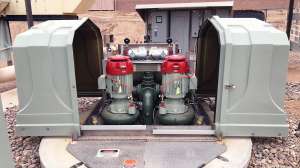
The project consists of a wet well and pump station with Trillium Floway vertical turbine pumps and a hydropneumatic surge tank, yard piping (24 inches and 42 inches) connecting the station to other key pipelines in the distribution system, sewer and storm drainage, and electrical and gas connections.
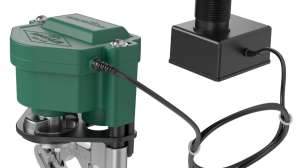
It also features a flow control vault with two VAG electrically actuated plunger valves, along with chemical storage and feed facilities. “While WISE water is already treated prior to conveyance to WISE members, PWSD has the flexibility to dose small amounts of extra chemicals to ensure that the WISE water quality matches that of the water in our distribution system from other sources,’’ Abbott says.
Increased capacity
The RHWPF came online in 2015 with a treatment capacity of 10 mgd and pumping capacity for 7.5 mgd of WISE flows. The recently opened pump station was outfitted with 15 mgd of pumping capacity, but it can be expanded to 22 mgd by adding another pump.
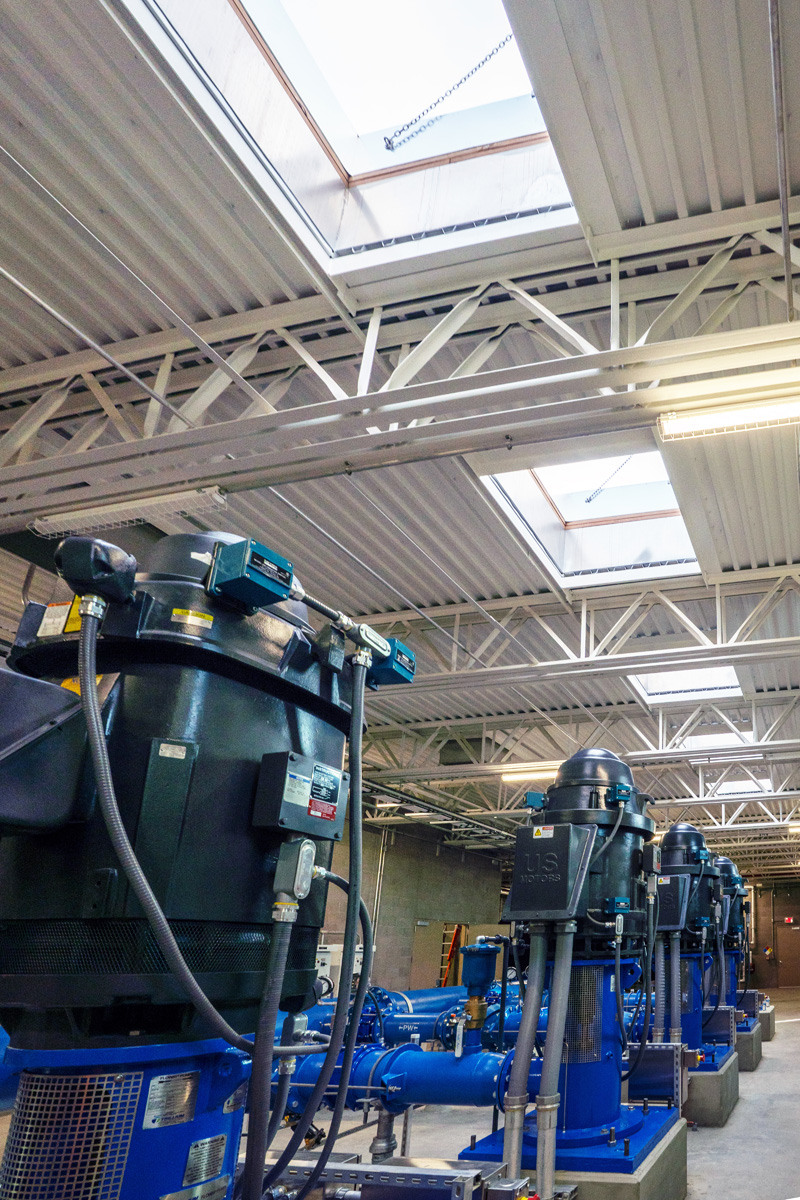
“The completion of the WISE pump station provides a substantial increase in capacity. Of the ultimate 22 mgd capacity available in the pump station, PWSD’s share is 6.5 mgd. The Rueter-Hess Purification Facility was created to treat surface water from PWSD’s Rueter-Hess Reservoir, not WISE flows,” Abbott notes. “Utilizing the finished water pumps for WISE flows has worked well for us over the past few years, but the WISE pump station provides a robust, permanent solution for pumping these flows. The RHWPF will eventually be expanded due to growth and development of the PWSD, but the need for expansion is independent of increasing future WISE flows.”
Abbott said other WISE member entities receive their WISE water through pipeline connections to PWSD’s distribution system. “In other words, PWSD receives the WISE water at our point of connection to the WISE system, and the water then makes its way through our own distribution system before being delivered to the other entities’ connection points,’’ she explained.
Construction focus
PWSD collaborated with Filanc and HDR Engineering to build the WISE Pump Station through the design-bid-build arrangement.
“Developing the WISE pump station involved more than building a new pump station,’’ Filanc said on its website. “The project also required chemical feed and storage systems to support treatment operations along with a flow control vault that would regulate water entering the station. Bringing those elements together meant coordinating pumping, chemical and flow control infrastructure as part of one new facility.”
Relatively few issues confronted the construction team, Abbott says. “Some of the typical construction challenges arose including cost increase and shipping delays,’’ she explains. “We accounted for cost increases with owner-managed contingency, and the contractor adjusted their schedule around the shipping delays. Startup occurred later than originally anticipated, but WISE flows have not increased according to the original schedule, so we were able to deliver all flows through the RHWPF until the WISE pump station became fully operational.”
Equipment access
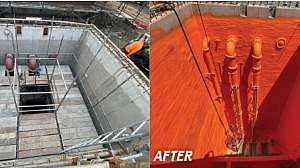
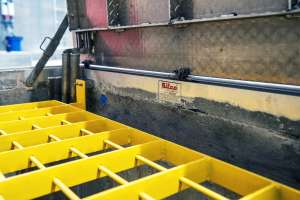
The overwhelming scope of the project required easy access to equipment for maintenance, repair and replacement. Access points were created through nine roof hatches of various sizes and seven floor access doors manufactured by The BILCO Company and supplied by Dalco Industries. The doors are equipped with fall protection grating.

“The BILCO hatches allow access through the floor into the pumping station wet well, through the roof for maintenance access to roof-mounted equipment, and into the flow control vault on the exterior of the building,’’ according to Abbott. “They are common on many projects in our area, and the district, the contractor and the engineer have all had success with BILCO products on past projects.”
Water efficiency
One of the primary objectives of PWSD, Denver Water, Aurora Water and the South Metro Water Supply Authority, which manages most of the WISE infrastructure, is to ensure everybody in the region maximizes water efficiency while also getting the precious resource into the homes of customers. The pumping station was the last major project for PWSD-specific WISE infrastructure.
“An additional parallel pipeline may be needed to wheel maximum WISE flows through our system,’’ Abbott says. “The need for this pipeline will be confirmed through master planning and engineering analysis.”
The WISE Pump Station is one of the large capital improvement projects that PWSD completed in recent years and is a key piece toward ensuring water stability for residents in the region.
“While it was delivered via design-bid-build, we developed a fun and collaborative relationship with the engineer, the contractor and some of the key subcontractors,’’ Abbott explains. “We also had a pleasant experience working with the WISE member entities who wheel water through our district. All in all, it was a successful project with many positive lessons learned.”
Thomas Renner writes on building, construction and trade industry topics for publications throughout the United States.
Continue reading for free