AMI system enables small water staff to keep up
Problem: The Raytown Water Company serves approximately 6,700 customers (13,000 residents) in Raytown, Missouri, a suburb of Kansas City. With a small staff responsible for multiple functions, the utility relied on a combination of limited AMR technology and manual meter reading. The process was labor-intensive, time-consuming and increasingly difficult to staff, particularly during the COVID-19 pandemic, when meter failures increased and workforce challenges intensified.
Solution: Recognizing the need to replace more than half of its aging meters, Raytown Water chose to modernize its system by implementing an AMI solution with USG Water Solutions. Staffing challenges made manual meter reading and maintenance difficult. The solution not only installed smart meters and the AMI system; it also provided Raytown with ongoing remote monitoring, management and maintenance services. The system eliminated manual meter reading, reduced the potential for human error and freed field staff to focus on higher-value work. In addition, the remote monitoring and maintenance solution provides daily — and even hourly — water consumption data, giving the utility visibility into system performance and customer usage.
Result: The AMI system enables near real-time monitoring of water consumption, allowing Raytown Water to quickly identify potential leaks and notify customers before costs escalate. Additional benefits include highly accurate billing, automated data collection and actionable system insights. Monitoring and system maintenance services performed by USG Water’s Visio Center ― which continually tracks the performance of all of Raytown’s meters ― enable Raytown Water to maintain a systemwide read rate of 98.5% or higher. 855-526-4413; www.usgwater.com

Radar level sensor reveals true impact of urban development
Problem: Ahead of planned commercial construction near a recently completed 95-unit housing development, flow measurement specialists at the Ohio-based company Lower 48 Instruments needed to establish a hydrologic baseline roughly 1,000 meters downstream. Acquiring water level and flow would later support stormwater management measures like retention ponds, cascading waterways and vegetation buffers. But the floodprone culvert site made monitoring difficult: heavy debris loads threatened to damage submerged equipment, dense canopy ruled out solar power, and the constrained space left no room for a traditional enclosure.
Solution: Lower 48 deployed the Level TROLL NC, a noncontact radar water level sensor from In-Situ, mounted above and perpendicular to the water surface atop the culvert to ensure accurate readings and avoid debris and high flows. A built-in bubble level and the VuSitu mobile app helped confirm correct installation. A compact VuLink unit, secured to a nearby tree, supplied power and telemetry for continuous remote data transmission without manual downloads.
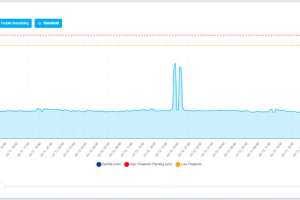
Result: Over a three-month deployment, the system delivered uninterrupted high-frequency water level and flow data with zero data loss and battery life exceeding three months, despite physical disturbances from bird activity. Hydrographs showed water levels spiking within five minutes of rainfall onset, with peak flows nearly three times higher than federal models predicted, revealing an urgent need for upstream retention infrastructure. 970-498-1500; www.in-situ.com

Adding AI visibility to SCADA and water process monitoring
Problem: A Pacific Northwest water processing operation already had SCADA, PLCs, flowmeters, pressure transmitters, tank level readings and daily reports. Those tools are important because they show what the equipment is doing and document operating history. However, SCADA and reports do not always show the full field story. A flow rate may change, a pump may run, a tank level may move, or a report may show treatment volumes, but operators still need to know what is visually happening in the water, tanks and process areas.
Solution: XPC Water was designed to complement existing SCADA and reporting systems, not replace them. SCADA provides control and live equipment signals. Reports summarize volumes, readings and operating activity. It adds an AI-driven visual layer that helps connect instrument data, operating reports and camera-based process evidence. The system can support flow, pressure, tank levels, pump status, pH, ORP, turbidity, conductivity and temperature, while also using AI camera models to observe visual process conditions such as water movement, tank behavior, foam, solids, color change or abnormal conditions.
Result: The operation gained a clearer way to understand not only what the system recorded, but what was actually happening in the process. XPC Water helped turn SCADA readings, reports and visual field conditions into one operational story. This supports faster troubleshooting, better shift communication, stronger customer explanations and improved confidence when reviewing water processing performance. 512-677-5196; www.xpcwater.com

Assessment platform enables municipality to get on top of I&I issues
Problem: The village of Great Neck, New York, faced significant challenges with I&I in its wastewater collection system. Excess stormwater and groundwater were entering the system through open caps, surface inflow, structural degradation and illegal connections. These conditions increased treatment costs, strained system capacity and posed environmental risks.
Solution: To address these challenges more efficiently, the village partnered with RH Borden to implement the BASINiQ assessment platform, which integrates dense sensor monitoring, digital manhole scans and weather-integrated analysis. The methodology combined three key elements: 1. Sensor-Dense Monitoring: 423 radar-based sensors deployed every 300 to 800 feet using BASINiQ algorithms to calculate flow in each manhole. 2. Manhole Virtual Models : High-resolution 3D scans and 360-degree imagery created digital twins of manholes, identifying structural defects and inflow pathways not visible during conventional inspections. 3. Weather-Integrated Flow Analysis: Hydrographs were correlated with localized rainfall data to distinguish inflow from infiltration, blockages and normal flow variation.
Result: By September 2025, BASINiQ had identified 74 specific locations of I&I based on the BASINiQ flow calculations. Each location was documented with flow data, GIS mapping and digital imagery, enabling targeted remediation actions such as fixing clean-out caps, inspecting and repairing pipes, rehabbing manholes and repairing defects. The study provided the village with a detailed, data-driven understanding of its collection system. The integration of dense sensor data, high-resolution manhole models and weather correlation enabled precise identification of inflow and infiltration sources. Compared to traditional methods, BASINiQ delivered faster results, greater accuracy and significantly lower cost, equipping Great Neck with actionable intelligence to reduce treatment expenses and improve infrastructure resilience. 385-510-3223; www.rhborden.com
Water district modernizes wastewater inspection
Problem: Fayette County Water System in Georgia struggled with aging water meters and manual reads that created operational inefficiencies and strained resources for utility staff. The utility needed a modern metering solution to improve efficiency, recover revenue and conserve water across its service area.
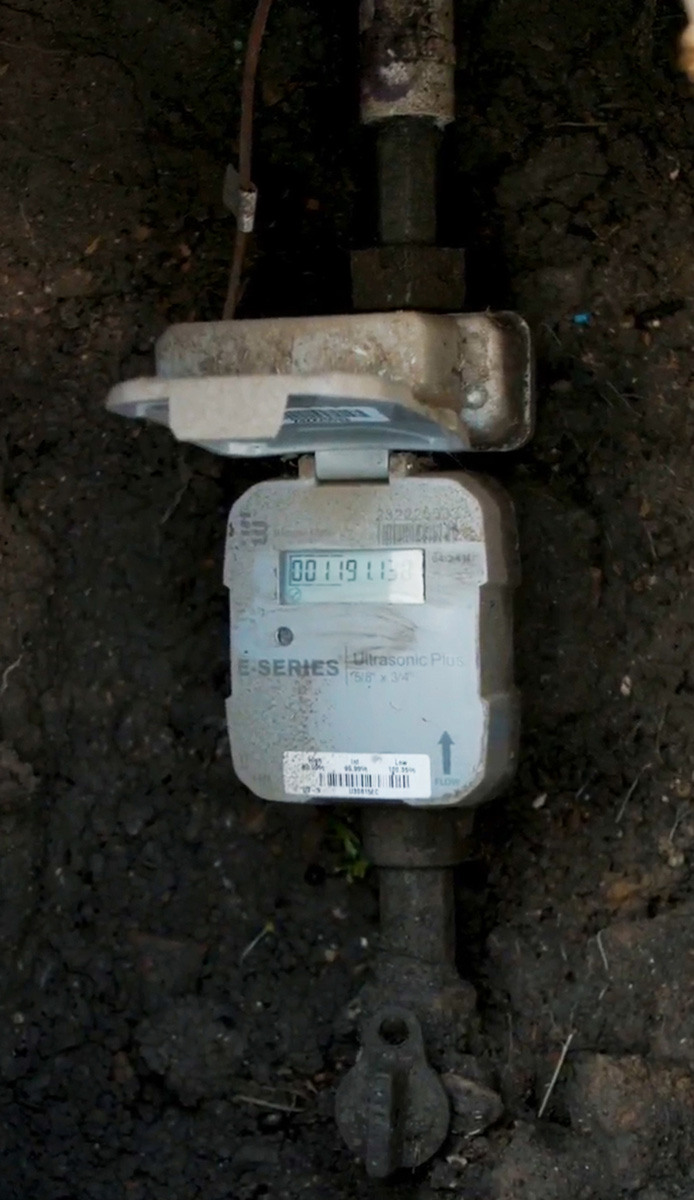
Solution: The city selected a Cellular AMI system from Badger Meter, including E-Series G2 Residential and Commercial Ultrasonic Flow Meters — selected for their measurement accuracy — coupled with ORION Cellular endpoints to deliver flow data in 15-minute intervals leveraging existing cellular infrastructure. Using BEACO software provides the robust information needed to optimize operations.
Result: The AMI deployment was completed two months ahead of schedule and on budget. Meter upgrades helped save nearly 21 million gallons of water in the first seven months of deployment through early leak detection and improved operational efficiency. 877-243-1010; www.badgermeter.com
Continue reading for free