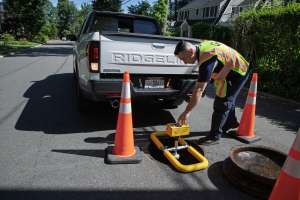
Like many North American municipalities, Saskatoon faces the challenge of maintaining aging infrastructure while serving a growing population. The city’s Water & Sewer Maintenance Workgroup oversees emergency repairs and field maintenance across a utility network that includes approximately 1,150 kilometers of water main, more than 74,000 service connections and infrastructure dating back to 1907.
Over the past decade, the city has helped reduce annual water main breaks from more than 300 to just 167 through a combination of targeted replacement programs, operational innovation and a willingness to challenge long-standing practices.
“We’re still trying new things,” says operations superintendent Tyler Hillis. “We don’t know what our capability is yet. If we try something and discover we’ve reached our ceiling, there’s no shame in that. The bigger mistake is not trying at all.”
That mindset has helped Saskatoon improve productivity, reduce restoration costs and make better use of taxpayer dollars while continuing to strengthen the reliability of its water and wastewater systems.

Community snapshot
Located in central Saskatchewan along the South Saskatchewan River, Saskatoon is one of Canada’s fastest-growing prairie cities. The city serves more than 308,000 residents directly, while also supplying water to an additional 38,000 customers through SaskWater.
The utility system includes approximately 1,150 kilometers of water main, 14,500 valves, 7,120 hydrants and more than 74,000 service connections. Operation and maintenance of that infrastructure falls to several specialized utility work groups, including Water & Sewer Maintenance, Water Operations, Sewer Operations, W&S Trouble, Clearance and Records.
With approximately 46 employees, the Water & Sewer Maintenance Workgroup serves as the city’s frontline response team for utility emergencies, repairs, excavations and field maintenance activities. As Hillis explains, much of the work begins with uncertainty. “So much of what we do is buried underground and we don’t know what we’re dealing with until we get there.”
Century-old system
Like many mature North American cities, Saskatoon manages infrastructure that spans multiple generations of materials and construction practices. Portions of the water distribution system date back to 1907, with some of the city’s oldest cast iron mains still in service today.
Later generations of cast iron, asbestos cement and PVC pipe create a diverse network that requires varying maintenance and replacement strategies. While some materials continue to perform well beyond their expected lifespan, aging infrastructure remains an ongoing challenge as the city grows.
Over the past decade, Saskatoon has responded by placing greater emphasis on replacement programs and long-term asset renewal, helping reduce failures and improve system reliability.

Turning the tide
A little more than a decade ago, Saskatoon was experiencing a level of water main failures that placed enormous pressure on maintenance crews. For a work group responsible for responding to emergencies across a large and growing community, the volume was staggering. “We were almost getting a water main break every day,” Hillis recalls.
The city responded by increasing its focus on replacement programs and long-term asset renewal. As recurring problem areas were identified and addressed, annual failure rates steadily declined, creating opportunities for crews to shift more resources from emergency response toward proactive infrastructure improvements.
Water main breaks dropped from 314 in 2014 to 214 in 2015. By 2020, the number had fallen to 185. Although annual totals fluctuated as aging infrastructure continued to challenge the system, the long-term trend remained positive. Last year, Saskatoon recorded just 167 water main breaks, almost half the number experienced a decade earlier.
The improvement has created opportunities for the department to rethink how it uses its resources. Rather than focusing exclusively on emergency response, crews are increasingly able to participate in proactive replacement projects and higher-value work that strengthens the system over the long term.
Equally important, the department has begun shifting its repair philosophy. Instead of simply restoring service as quickly as possible, crews are increasingly evaluating whether a more permanent solution makes sense while the excavation is already open. “We’re starting to shift our focus away from what was basically just restoring service to kind of a futureproofed repair,” Hillis says. “This approach is helping Saskatoon maximize the value of every excavation while we continue to reduce the number of repeat failures that consume time and resources.”
Better data
While field innovation has played a major role in Saskatoon’s recent improvements, better information is also helping crews make smarter decisions.
The city has developed a GIS-based valve positioning application that allows crews to verify valve status on site, reducing confusion during emergency shutdowns and helping prevent accidental service disruptions.

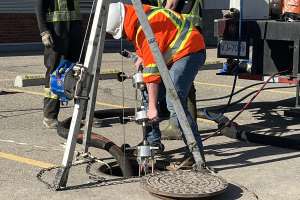
Sewer Operations has also added acoustic assessment technology (Infosense SL-RAT) that helps identify problem areas more strategically, allowing maintenance activities to be focused where they are needed most.
Together, these tools support the department’s broader goal of using better information to improve efficiency and maximize resources. “We’re trying to be smarter about where we spend our time,” Hillis says. “If we know where the issues are, we can focus on those areas instead of treating everything the same.”
Rethinking repairs
For all the benefits that GIS and condition assessment technologies provide, some of Saskatoon’s most impactful innovations have come from reexamining routine field operations. One example involves curb stop repairs.
In a city where water services are typically buried approximately 9 feet below grade, even a relatively straightforward repair can quickly become labor intensive. Historically, crews relied on conventional excavation methods that often required large trench boxes, multiple pieces of equipment, and significant restoration efforts once repairs were complete.
The process worked, but it wasn’t always efficient. “Our crews are set up to respond to emergencies, so we traditionally had fairly large crews on site,” Hillis explains. “A typical response might involve an excavator, multiple tandem-axle trucks, laborers and supervisory personnel. While that level of staffing made sense for larger emergencies, it often exceeded what was required for a single curb stop replacement.”

The department began looking for alternatives. After observing a contractor using a round, aluminum trench-shoring system from EasyDig on a project, Saskatoon crews decided to test the approach themselves. The system was initially evaluated on approximately two dozen repairs before the city ultimately acquired its own units. The results were significant.
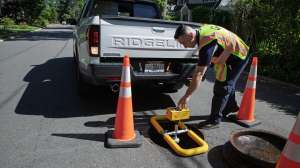
Instead of excavating a large area and installing a conventional trench box, crews could use hydroexcavation to sink the modular EasyDig circular shoring system (EasyTech Infrastructure Group) directly around the repair location. The approach reduced excavation footprints, minimized surface restoration and allowed smaller crews to complete the work safely.
Just as important, it improved productivity during cold-weather months. “In the winter seasons, we previously would have been taking two days to do those two jobs,” Hillis says. “Now we’re doing two jobs in a day.”
The smaller excavation footprint also provides benefits for residents. In situations where curb stops are located beneath driveways, near retaining walls or adjacent to landscaping features, crews can often avoid the extensive restoration work that larger excavations previously required.
“If your curb stop was in your driveway, we would take out half your driveway,” Hillis explains. “Now it’s a lot easier to keep the hole size smaller and it’s a lot cheaper to remediate afterward.”
The technology itself is only part of the story. For Hillis, the more important lesson is what the experience represents: a willingness to challenge long-standing practices and evaluate whether there might be a better way to accomplish the work.
Trenchless thinking
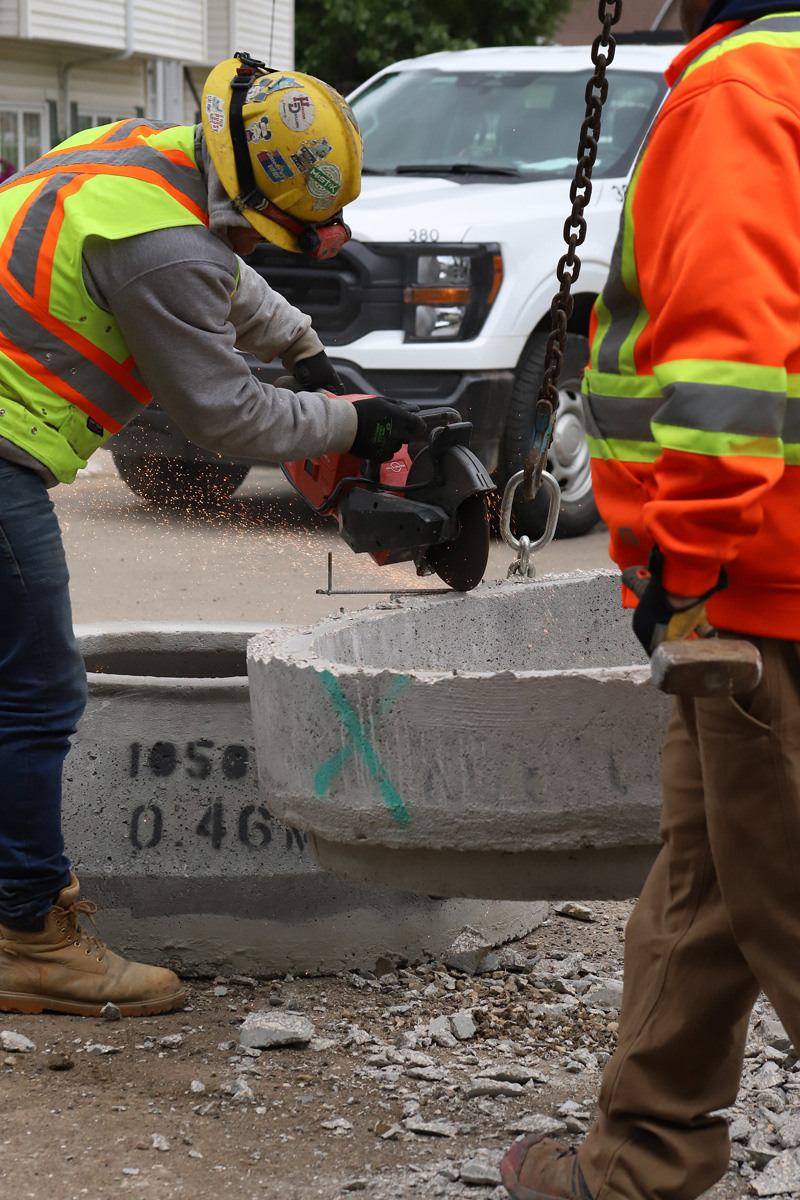
Another innovation helping Saskatoon improve productivity is its use of trenchless replacement methods.
Recently, the department added a Kobus KPP 400-line puller to its toolbox, allowing crews to replace service lines using a trenchless installation process. The excavator-mounted system functions as a pulling unit that installs new service lines between excavation points without the need to open a continuous trench.
The impact has been substantial. While crews are already excavating access points at the curb stop and water main, they can now replace the entire city-owned portion of the service connection with minimal additional effort. Because hydroexcavation crews are often working simultaneously on the excavation and shoring portions of the project, the replacement process fits naturally into existing workflows.
For a relatively small additional investment in materials and labor, the city can perform a full service replacement rather than simply repairing an isolated component. “We’re getting the full city side of the water service replaced for nearly the same cost that we previously would have repaired a curb stop for,” Hillis says.
The approach aligns closely with Saskatoon’s broader philosophy of futureproofing repairs whenever possible. Rather than repeatedly addressing the same aging infrastructure over time, crews increasingly look for opportunities to solve larger problems while they are already on site.
The city has applied a similar philosophy to sewer service repairs. Rather than performing spot repairs on aging clay tile connections, Saskatoon increasingly favors full PVC replacements when practical. The approach reduces future maintenance needs, minimizes root intrusion opportunities and often delivers a longer-term solution for costs comparable to traditional spot repairs.
Culture of improvement
While many of Saskatoon’s recent operational improvements can be measured in reduced excavation footprints, lower restoration costs or fewer water main breaks, Hillis believes the department’s most important transformation has been cultural.
When Hillis became operations superintendent in late 2022, he brought a unique perspective to the position. Having spent approximately 12 years working as an excavator operator within the department, he had firsthand experience performing many of the tasks he now oversees.
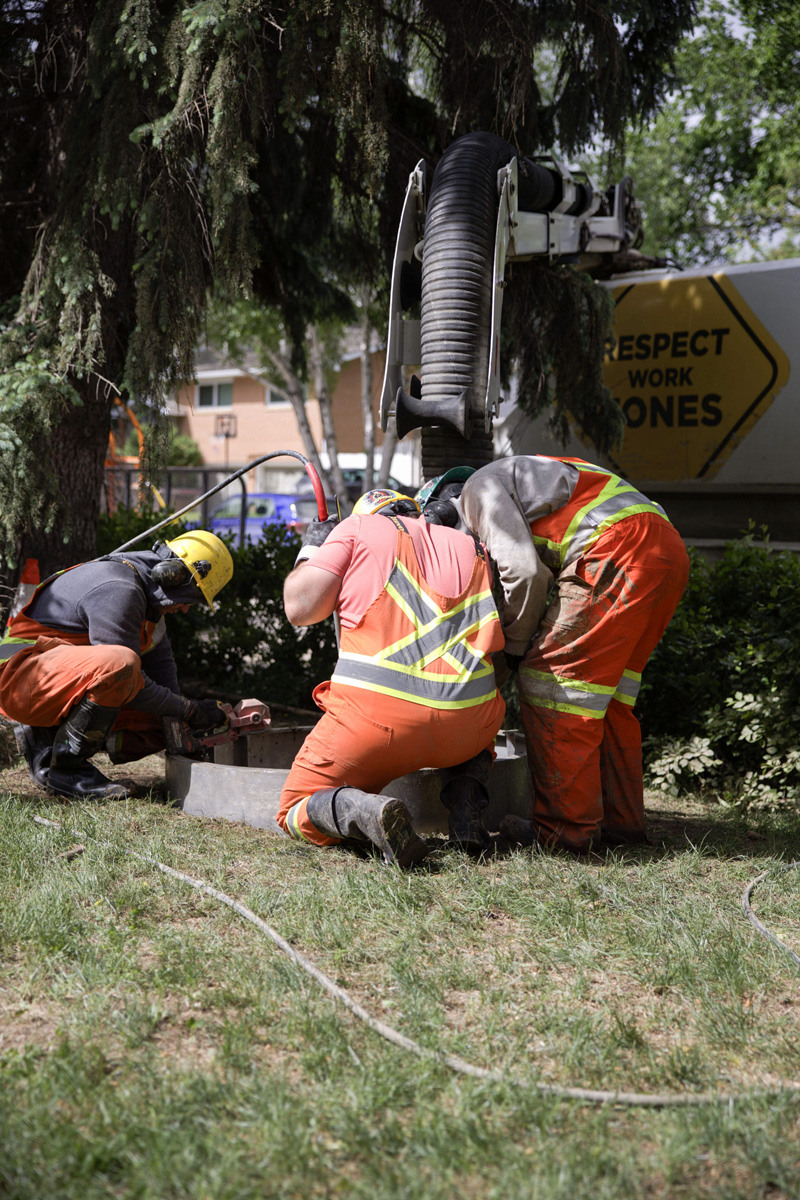
“I saw a lot of work that we did that didn’t make sense to still do that way,” Hillis says. “It was work that we were doing just because it’s how we’d always done it.”
At the same time, fellow superintendent Darcy Sander brought extensive private-sector construction experience to the organization. Together, the two began evaluating long-standing processes through a different lens. Rather than asking how work had traditionally been completed, they began asking how it could be completed more effectively.
The transition was not always easy. Like many organizations, Saskatoon’s workforce includes employees with decades of experience and deeply established work practices. Introducing new methods often requires overcoming understandable skepticism and concerns about risk, training and uncertainty.
“Changes are always difficult,” Hillis says. Over time, however, successful pilot projects began building confidence. Whether introducing new excavation methods, changing repair strategies or evaluating different approaches to replacement work, crews repeatedly discovered that many of the proposed improvements delivered the benefits leadership anticipated.
“There have been multiple instances where we’ve told our staff that we’re going to do something different and they say, ‘Well, we can’t do that,’” Hillis explains. “Then we say, ‘Well, you’re going to try,’ and they go out and it goes perfectly.” While Hillis and fellow managers may propose the changes, “it is ultimately our crews who have carried them out. We could not have had the successes that we have without them.”
Over time, successful pilot projects helped build confidence throughout the organization. Many of the practices that once seemed unconventional are now standard operating procedures.
“Support of upper management for teams to try [and potentially fail] at some of these initiatives has been instrumental in helping staff feel confident to push beyond comfort levels even in the face of uncertainty,” shares Water & Waste Operations Director Branden Lemke. “Being innovative requires a shift in understanding the risk, and that sometimes the higher risk is in not evolving.”
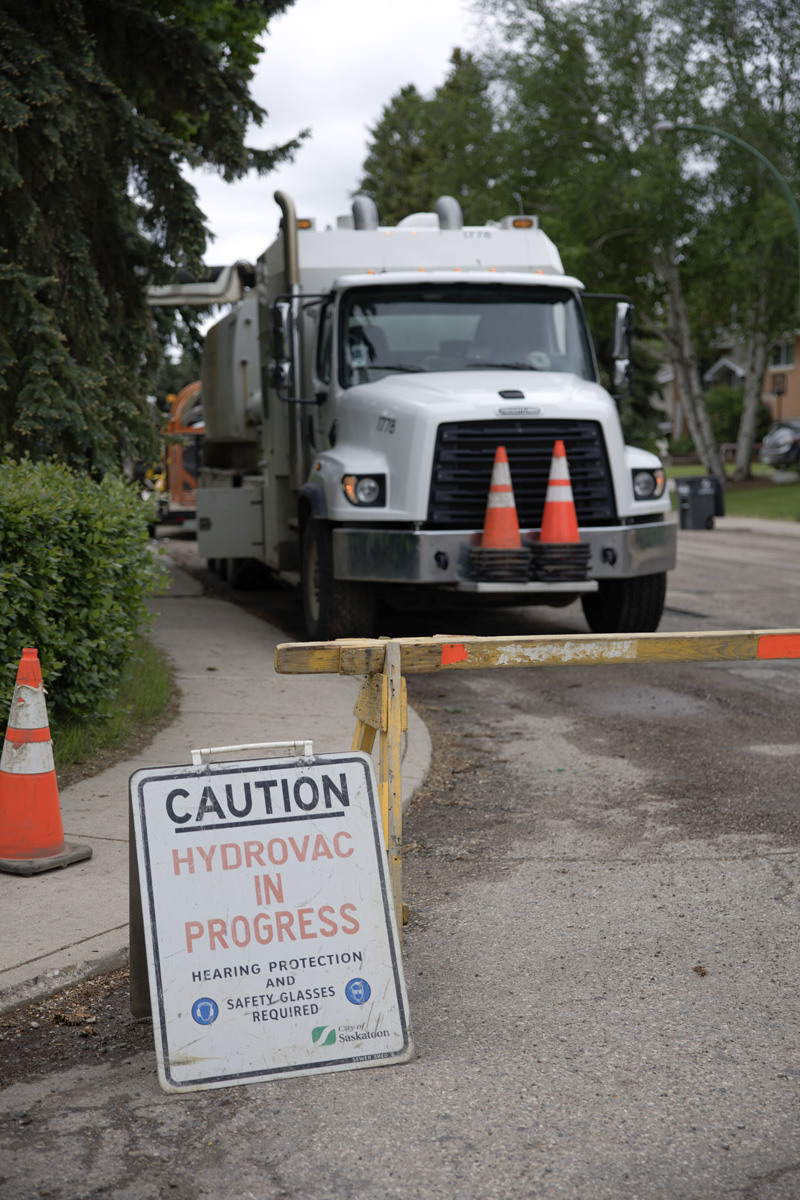
As replacement programs continue reducing emergency failures, Saskatoon is finding opportunities to take on more proactive work internally. Historically, most replacement projects were completed by contractors, but declining emergency workloads have begun creating capacity for city crews to tackle smaller replacement initiatives themselves.
Looking ahead
Despite the progress achieved over the past decade, Hillis is quick to point out that the work is far from finished. Saskatoon continues to grow, infrastructure continues to age and new technologies continue to emerge.
The department plans to continue expanding replacement efforts, evaluating new tools and refining existing practices. For Hillis, the goal is not innovation for its own sake, but finding practical ways to improve service, increase efficiency and make better use of available resources.
“Don’t be afraid to try new things. There is a cost associated with learning,” he says. “And there is no shame in finding out where your ceiling is.” For Hillis, the greater risk is allowing fear of failure to prevent improvement.
That does not mean every innovation will succeed. Some ideas will prove impractical. Others may require refinement before delivering results. The important thing, Hillis believes, is maintaining the willingness to explore possibilities.
From GIS-based asset management tools and trenchless service replacement methods to smarter excavation practices and future-focused repair strategies, the department continues to demonstrate that innovation often begins with a simple question: Is there a better way? For Saskatoon, the answer increasingly appears to be yes. And by moving beyond “the way we’ve always done it,” the city is helping ensure its utility infrastructure remains resilient, efficient and ready for whatever comes next.
Continue reading for free