Few moments test a public works organization the way a consent decree does. The order arrives with the weight of a federal court behind it, a schedule that does not bend, and a level of scrutiny that reaches into budgets, field operations, and the way decisions get documented. For a director, it can feel like an indictment of years of work. For a supervisor, it can feel like an impossible new workload landing on an already stretched crew. For an engineer, it can feel like being asked to defend data that was never collected in a defensible way.
That reaction is understandable. It is also the single biggest predictor of how the next decade will go.
The organizations that come through a consent decree stronger are not the ones with the most funding or the newest pipes. They are the ones that decided, early and deliberately, to treat the decree as a turning point rather than a punishment, and to run the entire program on a single, trusted source of truth. When condition data from the field, work orders, and capital projects all live in one connected system, a decree becomes a program a utility can actually manage. When that information is scattered across spreadsheets and disconnected databases, every milestone becomes a scramble.
That is the throughline of everything that follows. The legal language of a decree is daunting, but the day-to-day reality comes down to a simpler question: can you see the true condition of your system, and can you prove it? Utilities that can, because their inspection data and asset records are connected and current, spend their energy improving the system rather than reconstructing what they already did. The ones that cannot spend years catching up. First, though, it helps to understand what a decree is and why it arrives.
A consent decree is rarely a surprise
In short, a consent decree is a court-enforced agreement with the EPA or a state regulator that resolves Clean Water Act violations, most often a pattern of sanitary sewer overflows or chronic maintenance gaps. The label is heavy, but the substance is rarely a surprise. Aging mains, deferred rehabilitation, and inconsistent inspection are usually visible internally long before they become a legal matter. The decree does not change the diagnosis. It changes whether the utility is allowed to keep deferring the cure, and the improvements it requires are almost always ones the utility had already identified but struggled to fund.
It is also far from rare. By Bluefield Research's count, the EPA has issued 91 municipal consent decrees for Clean Water Act violations since 1998, tied to roughly $51.6 billion in compliance costs. A decree is not a sign that one organization is uniquely broken. It is one of the most common tools regulators use to force long-deferred infrastructure investment, and the systems on that list include some of the largest and most respected utilities in the country.
Leadership sets the trajectory in the first 90 days
The tone a director sets in the opening months tends to stick for the life of the program. Organizations that treat the decree as an emergency tend to stay in emergency mode for years, lurching from milestone to milestone and overflow to overflow. Organizations that treat it as a structured transformation program move with far more composure.
That composure matters because these programs are long. Compliance schedules frequently stretch across 15 to 25 years. No organization can sustain emergency intensity for two decades. The ones that succeed convert urgency into routine early.
The difference usually comes down to ownership and routine. Assigning a single accountable program manager, establishing recurring progress reviews, and creating predictable coordination between operations, engineering, and finance does more to stabilize a program than any single capital project. It signals to staff that this is how the organization works now, not a temporary fire drill.
It also reshapes the relationship with the regulator. Regulators do not expect perfection. They expect honesty, early communication when something slips, and evidence that the utility is in control of its own program. Leaders who share progress transparently, including the problems, consistently find the process more workable than those who go quiet between deadlines.
Build the systems that let you see it and prove it
Here is where engineers and data owners carry the program. Effort alone cannot sustain a decade of escalating reporting requirements. Systems can.
The most common failure point is fragmented data. When inspection records live in spreadsheets, work orders sit in a separate system, and field findings never make it into a central record, the organization cannot answer the questions that matter. Why was this main not inspected? How was this rehabilitation priority chosen? An organization that cannot reconstruct its own reasoning is in a weak position, not because the decisions were wrong, but because the documentation to defend them does not exist.
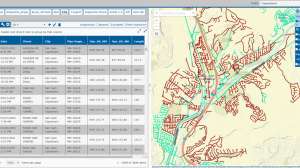
A consent decree accelerates the need for a single source of truth. Asset inventories, inspection histories, work orders, and capital project status all need to be visible in one place, available to every department at once. Modern inspection platforms that sync field data directly to office teams make that possible without piling administrative work onto crews.
Inspection programs are the engine. Decrees typically require aggressive, prioritized inspection schedules, weighted toward overflow history, asset age, proximity to sensitive waters, and environmental justice considerations. But the value goes beyond hitting a footage target. Every inspection result should feed condition ratings, rehabilitation sequencing, and long-term capital planning. When inspection software integrates with asset management and GIS, the data a crew collects in the field directly informs the decisions made in the boardroom.
Standardize so the work survives turnover
Supervisors know the quiet risk that rarely shows up in a milestone report: too much institutional knowledge lives in people rather than systems. When an experienced crew member retires, years of context about why a route is cleaned on a certain schedule or how a work order should be documented can walk out the door with them.
Standardization is the insurance policy. That means CCTV footage captured to a documented protocol, defects coded to a recognized standard such as NASSCO's Pipeline Assessment Certification Program, condition ratings applied the same way regardless of which crew performed the inspection, and cleaning schedules driven by system data rather than habit. AI-assisted coding tools can tighten that consistency further by reducing human variability, while keeping certified reviewers in the loop.

None of this is glamorous, and it rarely earns headlines. But it is what makes every downstream number defensible. A decree, for all its pressure, creates the rare conditions to define what good work actually looks like, document the process and make it repeatable.
Early wins build credibility, but they are not the finish line
In the first year, visibility matters. Regulators and the community want to see action, especially in the places that have failed repeatedly. Addressing known overflow hotspots and neglected maintenance routes early builds credibility and creates momentum that carries the program forward.
The trap is mistaking visible fixes for structural progress. Quick wins that are not paired with investment in inspection programs, standardized workflows, and asset management tend to unravel later, often right when reporting requirements intensify. The strongest approach runs both tracks at once: solve the urgent, visible problems while quietly building the capacity that makes the next nine years sustainable. Condition-based inspection data is what connects the two, turning a reactive repair into the first data point in a defensible, long-term capital plan.
Plan for life after the decree before it ends
The most overlooked stage of a consent decree is the one that comes after it. A decree officially ends when regulators determine the required improvements have been made and sustained. That milestone is the goal, and it is also where many organizations quietly undo their own progress.
When external pressure lifts, drift sets in. Inspection programs contract. Platforms go underused. Standardized procedures give way to old habits. Budgets shift. None of it is a deliberate decision to backslide, which is exactly what makes it dangerous.
The utilities that hold their gains do a few things on purpose.
- They convert compliance-driven activities into permanent standard operating procedures, embedded in asset management plans and capital programs.
- They assign lasting ownership of the data infrastructure so inventories stay current.
- They set internal performance targets that exceed what the regulator required, building a buffer so a temporary dip never becomes a new violation.
This is also where the national conversation is heading. Frameworks like Integrated Planning, advanced by the National Association of Clean Water Agencies, give communities a way to sequence Clean Water Act obligations around the investments that deliver the most benefit. Utilities that already run disciplined, data-driven programs are far better positioned to take advantage of that flexibility.
The real measure of success: still seeing it, still proving it
A consent decree is temporary. The systems, standards and habits built under it do not have to be. The platforms and workflows put in place to satisfy a regulator are the same ones that make a utility more reliable and more efficient long after oversight ends.
That is the reframe worth holding onto across every level of the organization. For the director, the decree is a mandate to fund what mattered all along. For the engineer, it is permission to build the data foundation the system always needed. For the supervisor, it is the structure that finally lets good fieldwork be repeatable.
Jefferson County, Alabama, offers a striking example of what that looks like over the long haul. The county entered a federal consent decree in 1996 after sewage discharges violated the Clean Water Act, then spent nearly three decades rebuilding a collections system that spans more than 3,100 miles of pipe. It leaned on a disciplined asset management program and a calibrated sewer model to assess thousands of assets and prioritize them for rehabilitation, replacement and repair. In 2024, after meeting the infrastructure, operations and maintenance benchmarks the decree required, a federal judge released the county from it. The decree did not just end. It left behind a data-driven, professionally run system the region will rely on for generations.
The decree itself will be lifted one day. Whether the organization is still operating with the same discipline five years later is the only measure of success that lasts. Utilities that treat compliance as a floor to build on, rather than a hurdle to clear, do not just satisfy a court order. They come out of it as better-run organizations than they were before the trouble started.
Platforms like ITpipes SmartVision were built for exactly that: a single source of condition data that lets a utility see the true state of its system and prove it on demand, long after the decree is lifted. That is what turns the data collected under a court order into a permanent operational advantage.