The confined-space entry permit is signed. Atmospheric readings are acceptable. An attendant stands outside a wet well as two maintenance workers prepare to enter. But before either worker crosses the opening, the supervisor asks: “If someone becomes incapacitated, who will get that person out?”
The permit lists an emergency telephone number, but no one can establish whether the designated rescue service has been evaluated for this wet well, whether its equipment suits the opening, or whether it is available within a time appropriate to the hazards. Accordingly, the supervisor withholds entry until the deficiencies are resolved and the authorization is reviewed under the utility’s permit procedures.
This hypothetical illustrates a critical consideration in confined-space entry: A completed permit should reflect verified safeguards, not serve as a substitute for them. Acceptable atmospheric readings alone are not sufficient. Other hazards, including engulfment and hazardous energy, need to be addressed.
For entries governed by a full permit-required confined-space program, three questions can help supervisors expose gaps before work begins. They supplement, not replace, the applicable requirements for hazard assessment, entry controls, permits, training and rescue planning.
1. Can the rescue service perform the rescue?
A telephone number establishes a contact but does not ensure rescue capability. Under OSHA’s general-industry standard, 29 CFR 1910.146(k), employers must evaluate rescue services for timely response and proficiency with the tasks and equipment needed for the particular spaces involved. Response time must be appropriate to the specific hazards; a single response-time target does not fit every entry.
Consider a wet well with a narrow vertical opening and internal piping. A rescue team might have experienced personnel, yet lack equipment suitable for removing an incapacitated worker through that opening. Another team might have suitable equipment but be unable to respond in time for the hazards present.
To be compliant, the utility must evaluate and select an appropriate service, inform it of relevant hazards, and provide access to permit spaces for rescue planning and practice. The evaluation does not have to be presented as a particular OSHA-mandated form; the practical question is whether the utility can substantiate that the required evaluation occurred.
The entry supervisor has a separate duty under 1910.146(j)(4): verify that rescue services are available and that the means of summoning them are operable. A service evaluated previously may be unavailable today.
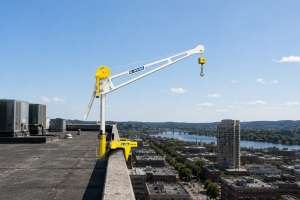
Non-entry retrieval also deserves attention. Under the general-industry standard, retrieval systems or methods generally must be used unless they increase overall risk or would not contribute to rescue. A mechanical retrieval device must be available for vertical permit spaces more than 5 feet deep.
The complete retrieval arrangement — not simply a tripod or line on site — must be suitable for the opening, access, internal configuration and hazards. The mere presence of equipment does not prove that the planned rescue method will work.
The evidence check: Can the utility explain the rescue service’s suitability for this space? And has the supervisor verified current availability and a working means of summoning help? If not, the entry must be withheld until the gap is resolved.
2. Are responsibilities coordinated and controls verified?
Rescues can fail when responsibilities are assumed rather than assigned. Imagine a valve-vault repair involving utility personnel and a contractor. Utility team members isolate the equipment. The contractor prepares the permit. The utility assumes that the contractor has arranged rescue coverage; the contractor assumes that the utility’s emergency procedures apply. Each believes the other has handled the issue.
This is unacceptable. Before entry, the parties need a shared understanding of the hazards, applicable procedures and their respective duties. Who performs isolation? Who verifies its effectiveness? How is that verification communicated? Who has authority to terminate entry, monitors conditions, maintains contact with entrants and summons rescue if required?
For covered general-industry work, OSHA establishes responsibilities for authorized entrants, attendants and entry supervisors. Its host-employer and contractor provisions also require the exchange of specified hazard information, including relevant experience with the space. Coordination does not eliminate either party’s applicable obligations.
Regulatory coverage must be determined from the work and jurisdiction. Qualifying construction activities fall under OSHA’s construction confined-space rules rather than 1910.146. Federal OSHA generally does not cover state and local government employees, although OSHA-approved State Plans may do so. Alternative entry procedures may apply only when their conditions are met.
The evidence check: Can both utility and contractor explain their obligations, confirm that assigned controls have actually been implemented, and demonstrate that emergency arrangements are coordinated? Any unresolved responsibility is a reason to delay entry.
3. Will the crew respond correctly when conditions change?
Training should establish proficiency in assigned duties. Short scenarios can reveal uncertainty, although discussion cannot replace required training or rescue practice.
First, imagine an evacuation alarm during a wet-well entry. Under the general-industry standard, entrants must exit as quickly as possible when an evacuation alarm is activated. The attendant must carry out applicable monitoring, communication and evacuation duties. Can the crew describe the immediate actions that must be taken, without improvising?
Second, imagine that an entrant becomes incapacitated. The crew must follow the established rescue procedure, not rush into an unplanned entry rescue. A suitable non-entry retrieval method may be appropriate, but only where it can function safely. For covered construction permit-space entries using non-entry rescue, the entry employer must confirm before entry that emergency assistance would be available if retrieval fails.
Third, imagine that the designated rescue service reports while work is underway that it is unavailable. In this event, the crew cannot continue on the assumption that rescue coverage remains adequate.
The utility must address the loss of required capability, and personnel must follow applicable evacuation, entry-termination, and emergency procedures. Under the construction rule, the selected rescue service must agree to notify the utility immediately if it becomes unavailable.
These scenarios test different decisions: evacuation, rescue, and loss of emergency support. Exercises must be conducted safely, without exposing participants to actual permit-space hazards. A discussion is not a substitute for required rescue-team practice.
The evidence check: Can workers explain when to evacuate, when to summon rescue, and when work must stop because a required safeguard is unavailable?
Behind the signature
Before entry, a supervisor should ask the crew to identify the principal hazards, explain how controls were verified, confirm individual responsibilities, and describe rescue arrangements for the specific space, and then ask what changes would warrant stopping the work.
This short discussion is a recommended supervisory technique, not an additional OSHA-mandated briefing format. It reinforces the employer’s permit program; it does not replace required evaluation, testing, training or rescue planning.
The objective is not to create another checklist. It is to uncover uncertainty while there is still time to correct it. A signature should confirm that people, controls and emergency arrangements are ready. When that cannot be demonstrated, entry should not proceed. The most important rescue decision may be the one made before anyone enters the space.
Gerald Stafford (gstafford@fdtec.co) is president of Fourth Dimension Technologies, Gerald a professional instructor-development and workforce education organization.
Continue reading for free