Everyone in this industry shares concern for the future of clean, safe drinking water. While that’s critical for life as we know it, not everyone is as aware of the challenges and threats as you. And few understand the work you’re doing to secure and protect those resources for future generations.
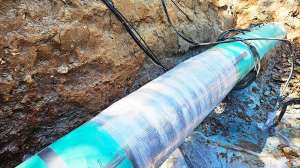
The city of Winter Haven, Florida, profiled in this issue, addressed its future water security by constructing a $14 million, 4-plus-mile transmission main that provides the city with the capability to use more reclaimed water for irrigation in the years ahead. In a system that distributes nearly 40% of its water for irrigation, that’s a big deal.
Other communities are developing new water sources from new wells to new reservoirs, system redundancies and desalination, water utilities are doing everything they can to make sure future generations have the resources necessary to live prosperously.
But it’s not that simple. Securing water isn’t the only challenge. Protecting it is another critical piece of the puzzle. In the past, that’s typically meant protecting against pollution and contamination. Today, the threats are more diverse. They’re more difficult to see, and in some cases, even detect.
Earlier this year, the EPA noted that “Disabling cyberattacks are striking water and wastewater systems throughout the United States. These attacks, carried out by countries and criminals, have the potential to disrupt the critical lifeline of clean and safe drinking water as well as impose significant costs on affected communities.”
I’m guessing a good percentage of the people reading this were born before the end of the Cold War. The Berlin Wall came down when I was a sophomore in high school. I didn’t grow up with an outsized fear of nuclear war or a Russian invasion — I’d already seen Rocky Balboa defeat Ivan Drago, and a group of strong-willed kids from Calumet, Colorado defeat the Russian invasion — but it was impossible to grow up in that time and not view the Soviet Union as a threat.
Today, many of those fears are reborn with the rise of new threats that have the ability to reach directly to our homes, no matter where we live.
Water is essential for life — disrupt that flow and suddenly the Cold War is flowing directly to your tap.
Small Texas utilities were targeted in a series of attacks earlier this year. The attacks brought quick responses from local officials who were able to mitigate the damage, but a crisis averted doesn’t equal a threat eliminated. And that threat extends to every utility in the country, and by extension, virtually every resident.
It might be easier for the average person to allay the threat of cyber attacks on water systems than the possibility of nuclear annihilation, but they both have deadly consequences, and dead is dead.
If your utility, regardless of its size, hasn’t taken real, significant steps toward bolstering your cyber security, the clock is ticking. The time is now. Because the threat of cyber attack on your systems is more real than most of the things we feared during the Cold War.
Stay safe, and enjoy this month’s issue.
Continue reading for free