When a sanitary sewer overflow occurs, every minute counts. A delayed response can result in environmental harm, regulatory violations or even public health risks. For public agencies in California — where strict reporting requirements govern every aspect of spill response — having the right people, equipment and documentation is essential.
But what happens when an agency doesn’t have enough resources to respond quickly on its own? For the Inland Empire Utilities Agency, the answer has always been clear: You don’t go it alone.
IEUA serves over 950,000 residents in a 242-square-mile service area in western San Bernardino County. Since 2004, it has led one of the state’s most effective regional wastewater emergency response programs, coordinating mutual aid between cities and water agencies through a formal agreement and annual spill simulation training program.
The IEUA Mutual Aid Program isn’t just a partnership. It’s become a blueprint that utilities across California and beyond are trying to replicate.
Behind the program
Formed in 1950, IEUA is a regional wastewater treatment and water recycling agency. It operates five regional wastewater treatment plants, manages 46 groundwater recharge basins and supplies imported water from the Metropolitan Water District to local retailers. IEUA also runs the Chino Desalter, one of the largest reverse-osmosis groundwater treatment plants in the region and operates the Inland Empire Regional Composting Authority, a partnership with Los Angeles County Sanitation District and the largest indoor composting facility in North America for biosolids reuse.
IEUA is responsible for wastewater treatment on behalf of seven local contracting agencies. These cities and water districts operate their own sewer collection systems, but rely on IEUA for treatment, discharge and regional compliance.
This overlapping infrastructure — and shared interest in emergency preparedness — made the idea of formalized mutual aid a natural next step.
Origins of mutual aid
In the early 2000s, several cities in IEUA’s service area began discussing how to better coordinate emergency sewer response.
“Crews from different cities were already helping each other out,” recalls Lucia Diaz, manager of facilities and water system programs at IEUA. “It was informal — we’d see each other in the field, responding to the same types of incidents. That led to a conversation: What if we formalized this?”
In 2004, the first Mutual Aid Agreement was signed. It established the basic framework: IEUA customer agencies could call one another for help during SSOs, pump station failures or other collections system emergencies. Support could include field crews, combination trucks, bypass equipment or other assistance. There would be no invoicing unless a third-party contractor was required.
“It’s built on trust,” says Ed Makowski, IEUA’s collection systems supervisor. “You help your neighbor, knowing they’ll be there for you when it’s your turn.”

Participating agencies
The current list of agencies and municipalities participating in the IEUA Mutual Aid Program includes:
- City of Chino
- City of Chino Hills
- City of Montclair
- City of Ontario
- City of Upland
- Cucamonga Valley Water District
- Fontana Water Company
- Jurupa Community Services District
These cities and agencies operate independently, but their sewer systems connect — either physically through regional pipelines or operationally through shared treatment responsibilities. Each agency has designated points of contact, standard operating procedures and access to a shared list of equipment and staff capabilities.
The program is coordinated by IEUA, which hosts quarterly meetings and maintains documentation.
A powerful process
Here’s how the Mutual Aid Program response process works:
- An agency experiences an emergency; typically an SSO, equipment failure or staffing shortage
- That agency contacts IEUA or a participating neighbor, using the shared contact list
- Support staff or equipment is dispatched from the closest or most capable agency
- The agency experiencing the incident retains lead responsibility for documentation and regulatory reporting
The program is designed to be fast, low-bureaucracy and responsive.
“Everyone knows who to call. Everyone knows what to bring. We’ve trained together,” Makowski says. “That makes a huge difference.”

Building readiness
In 2022, IEUA expanded the program with a new training component: a full-scale, live-action Spill Simulation Training series that prepares participating crews for the kinds of emergencies they’re most likely to face.
For the last few years, a different agency hosts or helps coordinate the training event. It includes both a classroom component and field simulation.
In the classroom portion, teams review:
- WDR spill categories (1, 2, 3, 4)
- Volume estimation techniques
- Regulatory response timelines
- Field reporting and documentation
- Proper containment, recovery and site safety
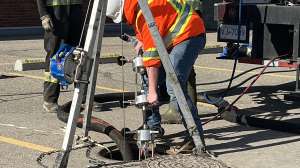
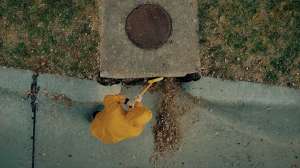
After the classroom session, the simulation begins. Using recycled water and nontoxic dye, IEUA and the host agency stage a mock sewer spill. Participants must respond in real time using their own or shared equipment. They deploy berms, document volumes, protect storm drains and simulate site decontamination and crew coordination.
“We make it as real as we can, without putting anyone in danger,” Diaz says. “It’s loud, it’s messy and it gives them a chance to think on their feet.”
In 2025, the city of Chino hosted the training, with more than 100 participants from multiple agencies. Crews were divided into rotating response roles and had to work within designated areas, simulating an urban spill scenario with traffic control considerations.
Training as compliance strategy
One of the most important aspects of the Spill Simulation Training is how directly it supports regulatory compliance. California’s Sanitary Sewer System Waste Discharge Requirements are among the most stringent in the country. Agencies must:
Report Category 1 SSOs to the California Integrated Water Quality System within two hours
Submit certified documentation within five business days
Include spill volume estimates, containment actions, start/end times and public notification records
The Mutual Aid Program prepares crews not only to respond, but to document. During training, each team completes spill forms using standardized templates modeled after actual CIWQS reporting requirements. These forms include entries for start/stop times, field notes, flow estimates and containment summaries.
“Crews are getting real experience with the same paperwork they’ll use in a real event,” says Diaz. “It’s not theoretical. It’s practice for the real thing.”
That practice has real benefits. Agencies that participate in the training are better equipped to pass audits, submit timely reports and respond effectively under pressure. For smaller cities with lean staffing, that preparedness is invaluable.
What participants say
Quotes from mutual aid members reinforce the value of the program.
Shawn Spromberg, operations supervisor at Cucamonga Valley Water District shares: “The crux of the program was that we knew the strength was in combining resources. We already saw each other during real spills. Making it official just made sense.”
Spromberg emphasizes that beyond resource sharing, the program improves relationships. “You’re not just calling a stranger for help, you’re calling someone you’ve trained with. That builds confidence across the board.”
Alex Perez, maintenance lead worker with the city of Montclair, praises the training aspect. “It’s especially helpful for new hires. They get to see what a real SSO response looks like before they’re in the middle of one. Even for experienced guys like me, it’s a great refresher.”
He shares a real incident where Mutual Aid support made a difference: “I was out of town, and we had a spill. Mutual Aid came through. They were there fast and knew exactly what to do.”
Keith Martinez, Public Works services manager for the city of Chino, echoes that sentiment. “You’ve got six agencies that can respond at no cost, and everyone knows their role. Because we’ve trained together, there’s no hesitation.”

Workforce development
The benefits of the program also extend to workforce development. Training events give participating agencies the chance to observe field staff from other cities — an informal, but powerful way to identify talent, mentor new workers and spot emerging leaders.
“Sometimes we see someone take charge during a drill, and it’s their first year on the job,” says Makowski. “That’s how you know who’s ready to move up.”
As the wastewater industry faces a wave of retirements and struggles to attract younger workers, programs like this offer a compelling tool: real, hands-on training with a sense of mission and impact.
Built on relationships
One of the reasons the Mutual Aid Program works so well is that it’s rooted in relationships, not just regulations. The participating agencies meet regularly, both formally and informally. They attend each others’ trainings. They share meals. They check in. “We keep the structure light and the communication strong,” says Diaz. “That’s why it works.”
The agreement itself is just a few pages. It defines roles, outlines reimbursement rules and emphasizes that the host agency retains control of its own infrastructure and regulatory reporting. It’s deliberately simple.
“It’s not about legal complexity,” says Makowski. “It’s about clarity and cooperation.”
Recognition and leadership
In 2025, Lucia Diaz was honored with the Richard D. Pomeroy Award by the California Water Environment Association, recognizing her for the practical application of original concepts that expand wastewater collections system knowledge and practice. She is only the second woman to receive the award in the organization’s history.
Diaz was also presented with the PICK Award and inducted into the Select Society of Sanitary Sludge Shovelers (5S) in 2025 — alongside Makowski and fellow IEUA staff members. These honors reflect not just administrative leadership, but long-term, boots-on-the-ground contributions to the wastewater profession.
Still, Diaz is quick to deflect praise. “I’m honored, but this program works because of the people. It’s not just IEUA — it’s every agency that shows up and contributes.”
Regional influence
The program’s success has drawn attention from beyond the Inland Empire. Other regions in California — particularly the Central Valley, the High Desert and parts of the Central Coast — have contacted IEUA for guidance on starting similar programs.
Diaz, Makowski and others have shared templates, contact lists and training outlines with cities as far away as Fresno and Bakersfield. The core message: Start with trust, build with simplicity and let the field crews shape the process.
“The paperwork matters, but the relationships matter more,” says Diaz. “If you can get a few public works supervisors in a room and talk through what’s possible, that’s all it takes to get started.”
IEUA is also developing a downloadable toolkit for other regions that includes:
- Editable agreement templates
- Mutual aid rosters and equipment tracking forms
- Training agendas and registration sheets
- Regulatory reporting documentation samples
Although the IEUA Mutual Aid Program was developed specifically for wastewater collection and SSO response, its structure and success have prompted conversations about its broader applicability. Climate variability, aging infrastructure and increasing regulatory scrutiny have created new challenges for public works departments across sectors.
IEUA and its Mutual Aid Program partners may explore how the model might support:
- Stormwater response coordination during heavy rains and flooding
- Emergency pump failures during power outages or heat waves
- Field crew redeployment following earthquakes, fires or other natural disasters
The flexibility and trust baked into the existing program make it a logical foundation for multihazard preparedness.
“We already have the contact lists, the agreements and the working relationships,” says Makowski. “The next step is expanding the types of emergencies we’re ready for.”
Future simulation trainings may include multiple hazard types or larger, coordinated field events involving more agencies and overlapping responsibilities.

Culture of confidence
One of the most lasting impacts of the Mutual Aid Program has been its effect on workplace culture. For many crews, the program instills a sense of belonging and pride. Mutual Aid Challenge Coins — issued to those who participate in training or emergency responses — serve as a visible token of trust and commitment.
“It might seem small, but the coin really means something,” says Perez. “It shows you’re part of a team that’s bigger than just your city.”
Supervisors report that crew members look forward to training days, take their roles seriously and come away from events with a deeper appreciation for both their peers and their profession.
For many public works teams, morale is often an afterthought. But for Mutual Aid Program participants, it’s a strategic asset — especially when it strengthens team cohesion before a crisis hits.
Lessons learned
For utilities or public works departments considering their own mutual aid program, the IEUA team offers these key takeaways:
- Keep the agreement simple. Overly legalistic contracts can slow down participation. Focus on clarity, not complexity.
- Train together early and often. Field crews are the heart of the program. Their confidence and chemistry are what make it work.
- Let the field drive the framework. Supervisors and operators know what works in practice. Their voice should shape procedures.
- Start small, but start now. Even two neighboring cities can create mutual value with the right intent and a few good conversations.
- Note that IEUA’s success didn’t happen overnight. It took sustained commitment, leadership support and an understanding that preparedness is a process, not a product.
“The best time to start a program like this is before you need it,” says Diaz. “The second-best time is today.”
A changing industry
As the industry faces increasing regulatory expectations, workforce shortages and evolving environmental risks, IEUA’s Mutual Aid Program stands out as an adaptable, replicable model. But it’s also a living system — constantly reviewed, refined and improved.
Each year, agencies debrief after simulation events and identify opportunities for growth. Updates are made to contact lists, equipment inventories and training formats. Supervisors rotate responsibilities to prevent burnout and keep perspectives fresh.
This continuous improvement loop ensures that the program remains agile and useful — even as the challenges facing local government evolve.
“We don’t see this as a finished product,” says Diaz. “It’s a tool that we’re sharpening all the time.”
The legacy of leadership
While the Mutual Aid Program is a regional success story, it’s also a reflection of the leadership values that guide IEUA’s broader operations: collaboration, innovation and public service.
IEUA’s board of directors and executive team have supported the program every step of the way, not just by approving agreements; but by investing time, staff and resources to ensure it has staying power.
“We’re fortunate to have that top-down support,” says Makowski. “That’s what lets us keep the program focused on what matters — serving the community.”
The program’s recognition through CWEA awards and its adoption by other regions reinforce IEUA’s leadership role in the wastewater industry — not just as a service provider, but as a convener, educator and trusted regional partner.
Valuable blueprint
As California and the nation face complex infrastructure challenges, the Mutual Aid Program stands as proof that some of the most effective solutions are also the most human.
By investing in relationships, building practical systems and treating training as an essential part of public service, IEUA and its partners have created something rare: a model that works — and that’s built to last.
It’s not a high-tech solution or a budget-heavy overhaul. It’s a handshake between neighbors. A well-timed phone call. A combo truck arriving just when it’s needed. And a group of field staff who already know how to work together, because they’ve practiced side by side.
As Diaz puts it, “This isn’t just a plan. It’s a partnership. And it’s making all of us better.”
Continue reading for free