Liner a fit for pressurized water pipes in Grand Canyon
Problem: In the fall of 2023, the National Park Service was faced with leaks from pressurized water pipelines in a reclamation area of the Grand Canyon. The reclaimed water is essential to local wildlife and critical tourism destinations in and around the park and serves the restaurants and hotels inside the national park. With initial information in hand, Insituform suggested installing CIPP to rehabilitate the critical waterlines. However, following site visits, significant challenges — including terrain and the presence of wildlife — were apparent. The rough terrain presented multiple access issues for CIPP equipment, and the client needed the project to be completed on an accelerated timeline.
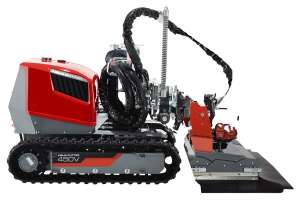
Solution: With more information in hand, the team determined that the Primus Line from Manufactured Technologies was the best approach. The product meets the standard for ASTM F-3708-25, has limited access requirements, utilizes a smaller footprint and results in a shorter install time. In just two weeks, the teams successfully installed 5,500 linear feet of 6-inch-diameter and 800 linear feet of 8-inch Primus Line liner.
Result: The finished pipe passed key pressure tests, reclaimed waterline leaks were eliminated and disruptions at the beloved national park were minimal. In fact, the Grand Canyon rehabilitation project timeline was reduced by 50% versus the original plan. 636-530-3330; www.azuria.com/mtc

Eliminating sewer spills with manhole upgrades
Problem: Fulton County, Georgia, struggled with ongoing sanitary sewer overflows, creating environmental hazards and increasing operational costs. Traditional manhole covers were prone to corrosion and leakage, allowing river overflows from the Chattahoochee to enter the sewer system, exceeding the sewer capacity, resulting in sewer spills back into the river. This excess water overwhelmed the infrastructure, leading to frequent spills and compliance challenges. The county needed a durable, long-term solution to prevent I&I and improve system performance.
Solution: To combat these issues, Fulton County Deputy Director of Public Works Roy Barnes turned to Composite Access Products for an advanced manhole cover and frame system. The chosen solution provided a watertight, corrosion-resistant seal, preventing unwanted stormwater from entering the sewer system. Its lightweight design made installation and future maintenance more efficient while ensuring long-term durability. By upgrading their infrastructure with CAP’s composite technology, the county aimed to eliminate SSOs and improve sewer system reliability.
Result: “It was the first time in the history of the county that we reported no spills,” says Barnes. Additionally, Fulton County reported a 50% decrease in lift station pump times. With the normal inflow CAPs eliminated, less pumping was required, reducing electricity use, equipment wear and carbon emissions. 844-344-2271; www.justcapthat.com
Smart metering implementation reduces nonrevenue water
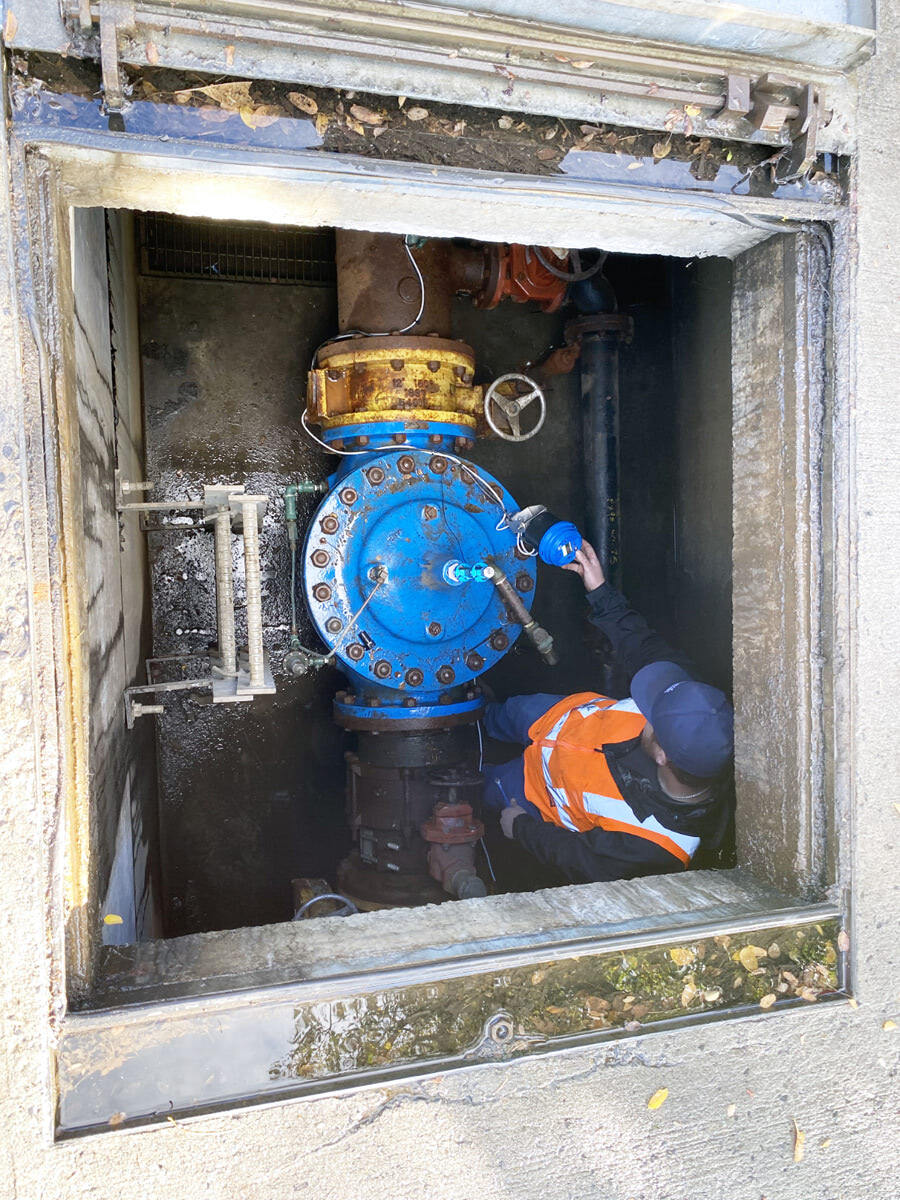
Problem: Walla Walla, a city of 34,000 in eastern Washington, faced severe nonrevenue water challenges, with losses reaching 40% in some years. Located in an arid region dependent on an unpredictable mountain snowpack, water conservation was critical. By 2022, nonrevenue water had been reduced to 13.4%, but the city set an ambitious goal to achieve less than 10% by 2028 while reducing pipe breaks and implementing better pressure management.
Solution: In early 2022, Walla Walla partnered with Cla-Val and Sensus to create smart District Metered Areas using existing infrastructure, a process that typically takes 3 to 5 years and can cost millions. The city retrofitted all 28 existing automatic control valves with XP2F instrumentation package, integrating them with the Sensus FlexNet AMI communications system. This solution provided real-time monitoring of flow, pressure and valve position data. The system was installed using solar power and transmitted data to SCADA networks via 4-20mA signals. Funded through a WaterSMART federal grant providing 50% cost share, the entire water distribution system came online within two months at a total cost of $211,746. The technology enabled the city to quickly identify irregularities, including faulty meter readings and leaks, while optimizing water movement to improve chlorine residuals.
Result: Upon implementation, Walla Walla immediately identified a major discrepancy in Zone 1, pinpointing several leaks including a significant 65 gpm leak. After repairing these issues, the city achieved its under-10% NRW goal four years ahead of schedule. 800-942-6326; www.cla-val.com
Pumps meet demands of massive bridge project
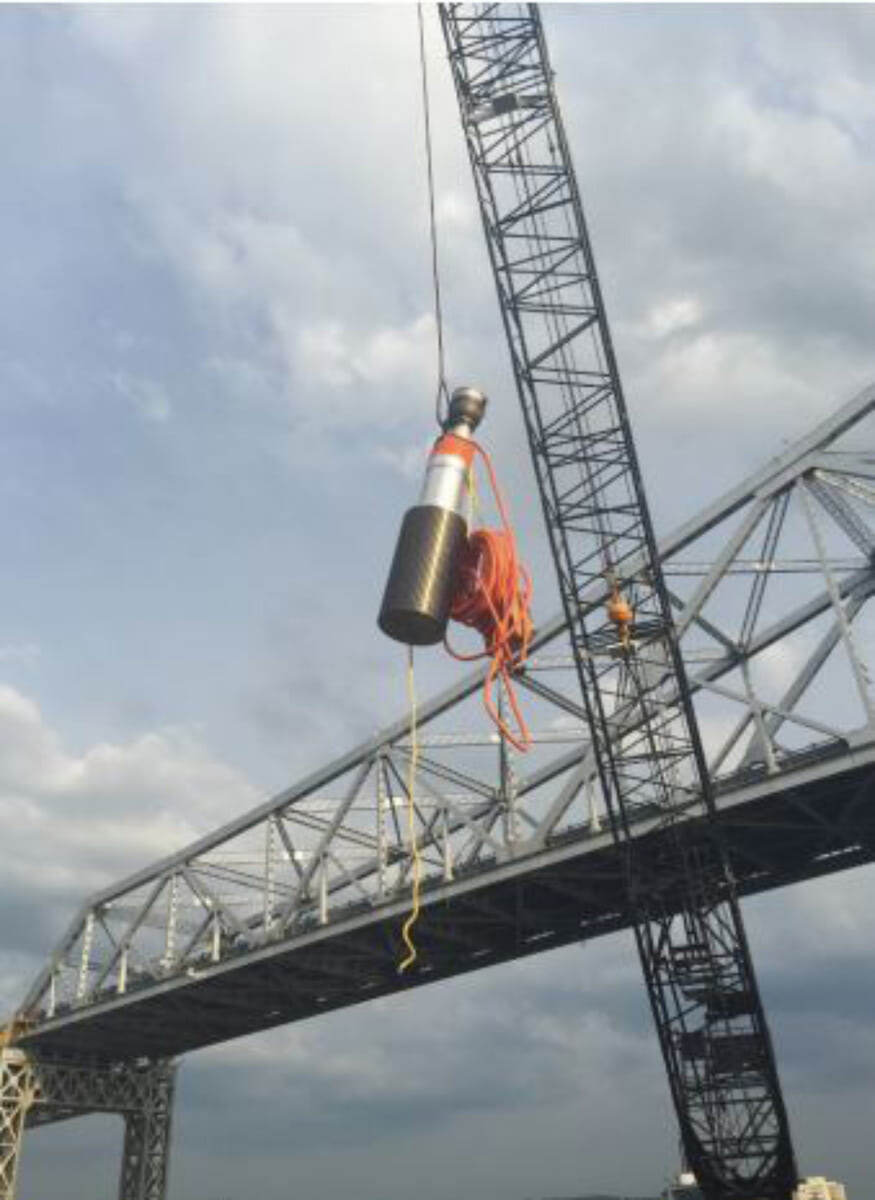
Problem: The New York Bridge project, a $3.98 billion initiative to replace the aging Tappan Zee Bridge, presented a unique combination of engineering and environmental challenges. The 3.1-mile span over the Hudson River carried over 138,000 vehicles daily, requiring that the replacement be built quickly, safely and without disrupting existing traffic patterns. In addition to tight time and budget constraints, construction required the controlled movement of large volumes of river water to support proper curing of massive concrete pylons, without compromising structural integrity. At the same time, strict environmental regulations mandated that the surrounding river ecosystem remain protected throughout the process. This included preventing harm to fish, larvae and aquatic habitats, and ensuring minimal impact on water temperature and quality.
Solution: Stancor P/S Series heavy-duty dewatering pumps from Industrial Flow Solutions were selected for their ability to deliver consistent high-pressure flow — up to 430 gpm and 165 psi — critical for curing concrete in the tower pylons. To meet environmental requirements, each pump was equipped with 5 mm wedge wire screens to prevent the intake of fish and larvae. Temperature controls were also implemented to ensure that water used in the operation did not raise the river’s temperature by more than 3 degrees.
Result: More than 50 pumps were deployed across the site, performing reliably without failures. Stancor’s engineering team provided ongoing technical support, helping to optimize pump performance, ensure regulatory compliance and keep the project on time and within budget. 860-631-3618; www.flowsolutions.com

Turnbuckle risers make raising valve boxes easy
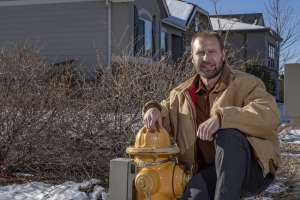
Problem: Newport News, with a population of about 183,000, is Virginia’s fifth most populous city. The city’s Water Distribution Operations Coordinator Jim LeVasseur says, “We have a complex water distribution infrastructure that delivers water to five districts and includes 1,700 miles of pipe, 11,000 fire hydrants and three water treatment plants.” Those are the big pieces, common to any municipal water system. “The problem is, when we raised streets with a paving lift, we didn’t have a good way to raise our valve boxes to grade,” LeVasseur explains. “We used cast iron risers for a while, but they would rattle loose, even if they were epoxied, leaving open holes. And 16-inch holes are a real problem for cars, and our system.”
Solution: In 2006, Newport News began using a custom riser solution that is much faster than raising valve boxes by traditional methods, cost-effective and absolutely secure. As valve maintenance specialist Michael Lawson says of the custom risers, “Once you tighten the turnbuckle, they do not fail.” The secret is the “pivoted turnbuckle”; American Highway Products manhole risers are an open, flexible ring of high-quality, galvanized steel with a turnbuckle that can be expanded or contracted with a screwdriver to fit snugly into original utility rims.
Result: The adjustable risers make it possible to raise dozens of manholes in a day, all while avoiding extensive traffic closures. The city keeps about 100 of the risers on hand at all times in a couple of different thicknesses, reordering as needed. It may have taken Newport News a while to make a commitment to a new infrastructure solution, but now that they have, they are making up for a lot of lost time and making their system safer and more efficient. 888-272-2397; www.ahp1.com

Chopper pump solves persistent clogging issue for municipality
Problem: Municipalities often face pressure to support growth while keeping critical systems reliable, safe and cost-efficient. A Midwestern municipality recently encountered these difficulties when preparing for a significant residential and commercial expansion. A key lift station in the community had been struggling with persistent clogs and maintenance demands, threatening daily operations and long-term planning. Operators needed a solution that could handle solids, run continuously and increase their confidence in the system as the population increased.
Solution: After consulting with Tsurumi, the municipality believed that AVANT MQC chopper pump would be the answer they were looking for. The pump combines high-efficiency IE3 motors with FM certification for hazardous location use, meeting the highest levels of safety. It operates in both wet and dry pit installations and includes a closed-loop cooling system, giving municipalities flexibility for new builds or retrofits. The pump’s cast iron chopper impeller breaks down large solids and debris while maintaining efficiency. In the town’s duplex lift station upgrade, two MQC chopper pumps were installed to replace previous units that repeatedly clogged and required frequent service calls. With horsepower options from 4 to 215 and discharge sizes from 2 to 16 inches, Tsurumi’s MQ Series gives municipalities room to scale.
Result: Since the installation, the station has continued to run without interruption. Operators report reduced maintenance and service callouts, saving both time and money while proving to be a cost-effective decision. 888-878-7864; www.tsurumipump.com

Saving money and time with SIPP
Problem: When the city of Ringgold, Georgia, experienced a rupture in one of its old cast iron main waterlines, it had to deal with repairing a line that fed the city’s entire industrial park, carpet mills and more, accounting for approximately one-quarter of the total water produced daily. This main also ran under the interstate, making traditional repair or replacement methods difficult, time-consuming and disruptive. A further complication was the presence of a pipe that connected to the mainline — so close to the edge of a 30-foot-wide creek that excavation could have resulted in the creek washing in on the pipe. And while pipe boring was a possible solution, it would have been extremely expensive and taken approximately three months to complete.
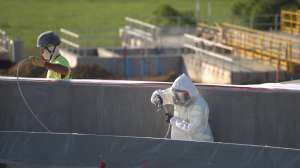
Solution: The city opted to use USG Water Solutions’ Spray-in-Place-Pipe Rehabilitation Process to address the needed repair. This process can extend the pipes’ service life, help reduce the frequency of maintenance and increase the flow capacity for greater system efficiency. Importantly, no major road or sidewalk tear-ups are necessary, and this solution works on pipes made of different materials, ranging from 4 inches to 36 inches in diameter. The solution can yield an estimated cost saving of around 30% when compared to direct replacement where it is necessary to dig up and replace the entire length of the pipe that needs attention. It also minimizes inconvenience to consumers by lining water pipes rather than digging them up and replacing them.
Result: The repair and rehab of approximately 1,000 linear feet of 12-inch main took only a week and was completed before the onset of the rainy season, when the area being rehabbed was often underwater because of the neighboring creek. 855-526-4413; www.usgwater.com
Continue reading for free