In April 2024, the federal government issued a set of regulations including defined maximum contaminant levels for five per- and polyfluoroalkyl substances and an equation called the Hazard Index for a combination of four PFAS.
After the administration transitioned to new leadership, the regulations were scaled back to only maintain the National Primary Drinking Water Regulations for perfluorooctanoic acid and perfluorooctane sulfonic acid at 4 parts per trillion. This change also extended the timeline of required compliance an additional two years before action can be taken by the federal government against a municipality for failure to comply.
Municipalities must still complete testing by the end of 2027 but now have until 2031 to install effective remediation technology.
Sampling and testing
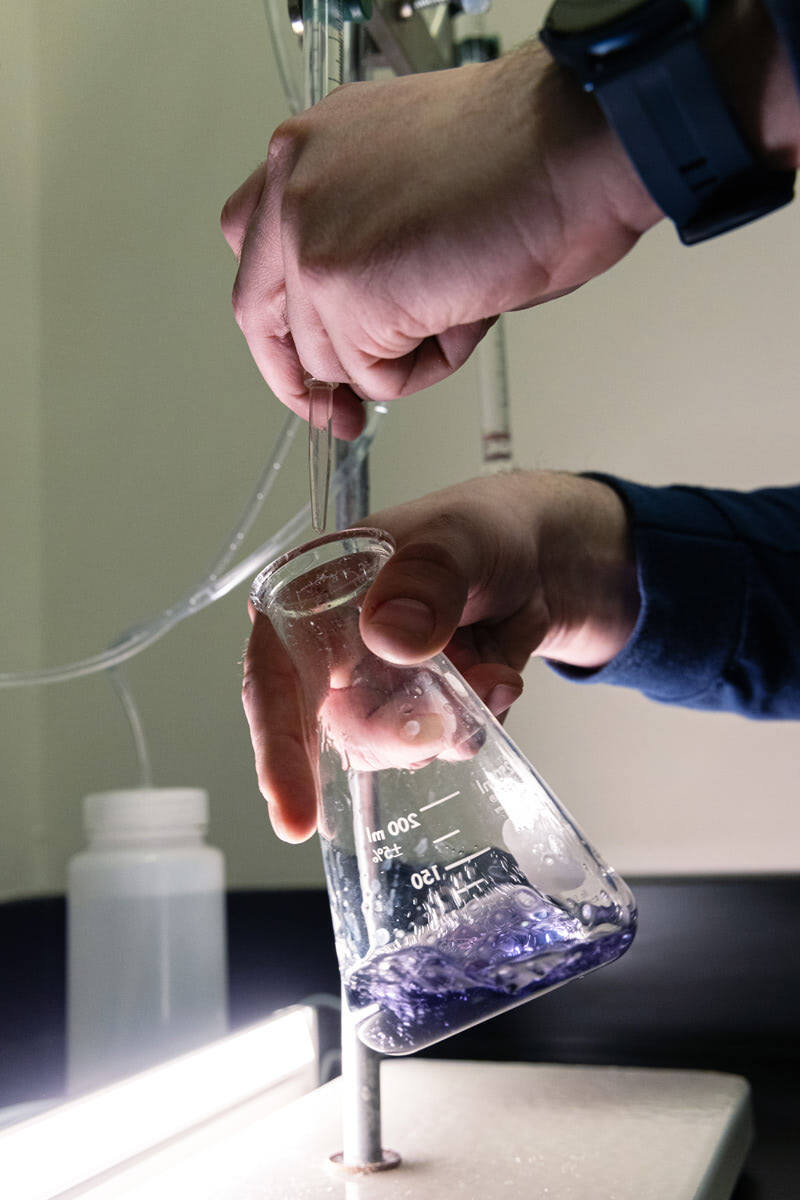
In order to trigger remediation intervention, municipalities must test above 4 ppt on average over a year. Testing must be completed by surface water and large groundwater systems quarterly with two to four months between samples. Small and transient groundwater systems must test biannually with 5-7 months between samples.
All systems must have their initial testing completed by 2027 using EPA Testing Methods 533 and 537.1; if testing was completed by participation in the Fifth Unregulated Contaminant Monitoring Rule, those results may be considered as an applicable data point. Any systems that remain below the 4 ppt maximum may revert to testing annually; all other systems will require a remediation system. It is generally at this point that a consulting engineer is engaged to assist with planning and funding the required items.
Selection and funding
Developing a relationship with a consulting engineering firm can help a municipality, which may be limited in its administrative resources and labor hours, to acquire the necessary funding to complete a remediation project. Many firms have staff dedicated to grant and loan applications, the acceptance of which can increase the speed at which a project is initiated. Additionally, established relationships between engineers, laboratories and manufacturing partners can provide municipalities with direct access to the materials and capabilities they require.
Early in the process, a feasibility study may be conducted on the area where remediation is required. This will allow the engineer to determine what infrastructure will work best for the space and contaminants. There are a number of different remediation technologies available for use in potable and wastewater applications.
Adsorbtion – Traditionally, a pressure vessel with granular activated carbon would be used; as the water passes through the GAC, the contaminants adsorb onto the porous structure of the carbon. Modern science has led to the development of ion exchange resin and other novel media that achieve a similar result but may be better suited to the modern contaminants faced by municipalities today. Media selection will depend on water composition as mineral content can impact effectiveness. Pressure vessels can be quite large, depending on the necessary quantity of media for a given flow rate, but have the likely benefit of co-contaminant removal.
Reverse Osmosis – A newer technology available to the public, reverse osmosis utilizes a membrane filter to remove contamination by forcing pressurized water through the membrane and rejecting the contaminated monovalent ions. This method is highly effective at removing contamination but also generates a great deal of impacted byproducts that must be handled as waste. Reverse osmosis also remains primarily a point of entry treatment, which makes it less effective for full-size treatment plants but very useful for remote areas where a centralized remediation method may be too expensive.
Nanofiltration – Another newer technology, nanofiltration works similarly to reverse osmosis by using pressure and membrane filters to separate contaminants from clean water. It is generally less wasteful than reverse osmosis because it rejects comparably fewer monovalent ions but still produces a considerable amount of contaminated byproduct.
Generally, when large amounts of water require remediation, pressure vessels are selected based on the familiarity of operation within treatment facilities and their data-supported efficacy. With vessels able to scale to process millions of gallons per day, they are the standard choice for treatment centers.
Piloting
Once testing and a feasibility study have been completed, the use of a pilot study can help a municipality dial in their media selection to what will provide the best results for their water composition. There are two ways that pilot testing can be completed:
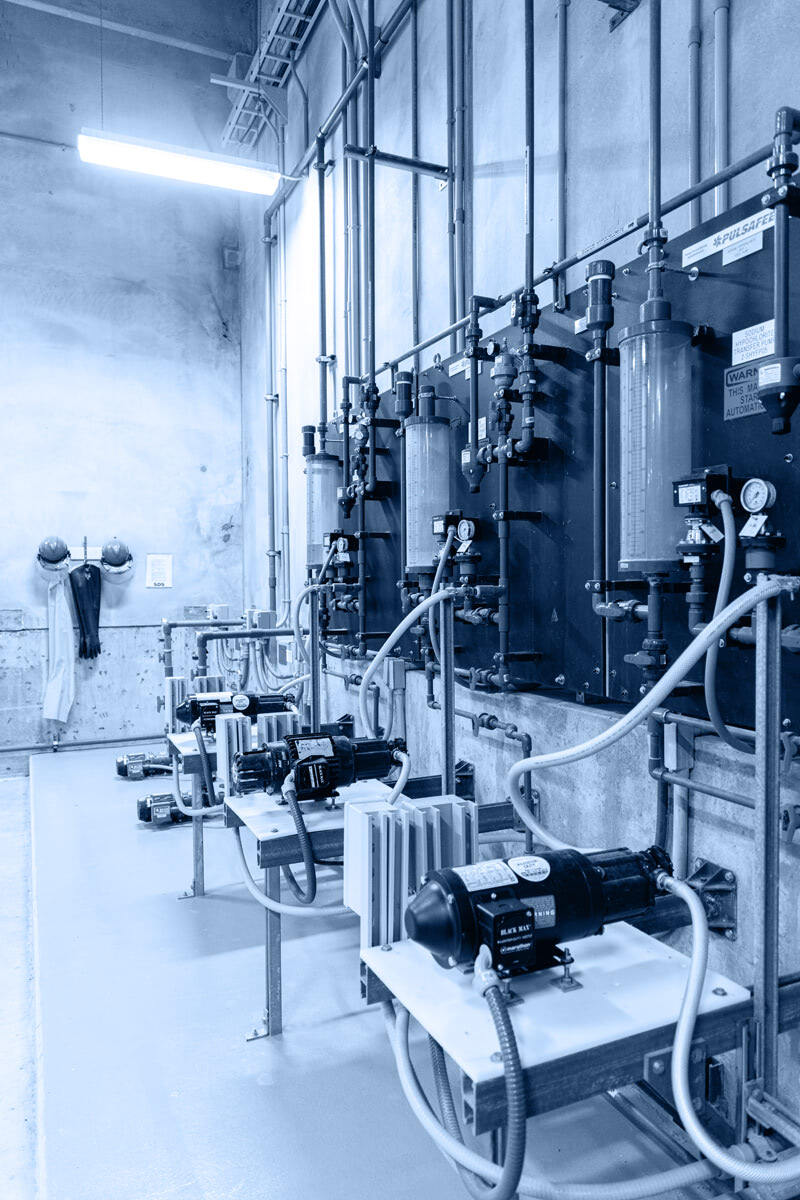
Rapid Small Scale Column Testing is used when a longer testing time is either desired or required based on state regulations. Transparent columns are set up in a vertical alignment on a skid to allow water to pass through the selected media, usually between two and eight, in a miniature version of what would occur within a pressure vessel. Some states require up to a nine-month pilot to permit a new media to be used in a public bid. This method of piloting is more representative of real-world results as the water being pumped into the skid is from the source in question, which lowers the risk of contamination, but does have a higher up-front cost associated with it. Municipalities may pay less over the course of the pressure vessel’s lifespan in media costs with more precise real-world data points.
Bench-Scale Testing is completed in a laboratory setting, using as many media options as desired. Costs are lower and speeds are quicker, but municipalities run a higher risk of contamination or degradation of their sample during transport and holding periods. There is also an increase in the chance of incomplete data results; a media may prove to be highly efficient at first but, once the contaminants begin to adsorb, require faster change-outs due to fouling.
Funding of a pilot study is often considered the first step of a remediation project, so it qualifies for State Revolving Fund consideration. The SRF is the primary source of infrastructure funding in the United States, though from 2026 on the federal government’s contribution will be minimal. Should an SRF grant or loan be unavailable, local water coalitions and nonprofit entities are often able to provide grants and low- to zero-interest loans for municipalities. As a final option, private bank loans can be utilized for infrastructure projects, but the risk of high interest rates can heavily impact payment rates for constituents in order for the municipality to afford the repayment schedule.

Design
At this point of a project, an engineering partner would be required. Assuming a pressure vessel was selected as the remediation technology to be used, the design of the vessel would be heavily impacted by the media selection. GAC requires a longer Empty Bed Contact Time to sufficiently remove contamination which subsequently requires a taller shell wall. It is generally more efficient overall with considerably less required contact time allowing for shorter tanks, but it might be eliminated as an option due to naturally occurring minerals. If a municipality is unsure of the permanence of their choice — for instance, if a pilot study was not a possibility — sizing to GAC requirements would allow for the largest selection of media options in the future.
Identifying permitting requirements in advance is an invaluable portion of the design process. In areas regularly reaching freezing temperatures, vessels will need to be housed within a facility to ensure external piping does not freeze. The feasibility study will have determined where the project site would be most effective, which could require permitting from federal and state environmental departments and potentially Army Corps of Engineers in environmentally fragile areas. Some permits will be needed prior to breaking ground, others may not be needed until substantial completion.
The final portion of the design development is the notice to consumers that is required for nonemergency public bids. The public must be offered the opportunity to provide comment on a project that will utilize ratepayer funding to complete. In some states, town codes may culminate this comment period in a public vote, the results of which could send the project back for design revision or move the project forward to the bidding phase.
Bidding
Most municipalities will be using a public bid process to award the construction contract to a private company. Once the bidding window has closed, the end user will review the bid submissions in consultation with the engineer. Each municipality may determine their own criteria of evaluation, but the method of award may be impacted by state guidelines. An expected date for a notice to proceed is issued alongside the award in order for the contractor to begin setting their installation timeline.
Procurement and installation
Provided a decision was not made by the municipality to pre-procure major construction materials, the winning contractor will procure the materials necessary for project completion. Scheduling installation timeframes around contract dates of substantial completion or milestones identified within the contract determines the booking process and delivery of materials to the work site. Delays in this procurement can have costly consequences for both the end user, in terms of public goodwill, and vendor timeline penalty costs. Installations impact the neighborhoods they are being installed in; maintaining open, consistent communication with the public around what is happening in the project and when major items will be completed is key.
Moving forward
Once installation is complete and units have been running, sampling for impact is recommended. If test results are still above MCLs, additional steps must be taken, whether in the form of additional prefiltration to lessen the impact of organics on media or in additional well supply mixing to dilute the overall concentration of contamination to any one given vessel system. After quarterly testing remains below the MCLs for one year on average, municipalities are able to reduce testing to once annually.
The water industry is currently facing a myriad of contamination issues. From PFAS and microplastics to lead service lines, there always seems to be a new issue pulling focus and funding. That said, providing water that is safe and healthy for all should be the top concern for everyone in the water industry. Establishing the needed relationships early on will allow the necessary work for compliance to be completed on time and on budget.
Silvia Santana is the director of channel partner management with AqueoUS Vets.
Continue reading for free