Calgary, Alberta, made headlines in December 2025 as a failure of its Bearspaw South Feeder Main disrupted the city’s water supply — the second major break in two years. The breaks have only underscored the urgency for the city of Medicine Hat, Alberta, to complete its own water main twinning project to build redundancy into the system.
Medicine Hat is a city of 65,000 people, located about 200 miles southeast of Calgary. The city began to proactively examine its own water infrastructure five years ago and initiated a plan to twin its Kipling Street feeder main to ensure reliable potable water delivery to residents in the south end of the city while increasing opportunities to repair breakages in either line.
Pat Bohan is the managing director, Development & Infrastructure Division, with the city of Medicine Hat. He joined the city in 2020 as director of its Environmental Utilities Group, which includes water, sanitary sewers, treatment plants, solid waste and recycling.
Taking stock
“One of the first things I asked my manager of field operations and the manager of engineering was to produce a list of critical infrastructure and single points of failure,” Bohan says. “They were to tell me what we needed, and my job was to advocate for funding to get the preliminary and detailed design work done.”
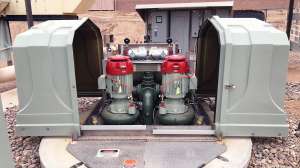
While the sanitary sewer infrastructure includes alternative routes, water was the primary consideration. Concerns about water mains converged on the Kipling Booster Station located in the southeast corner of the city. The large-bore, high-pressure line from the booster station serves about a third of the city’s population.
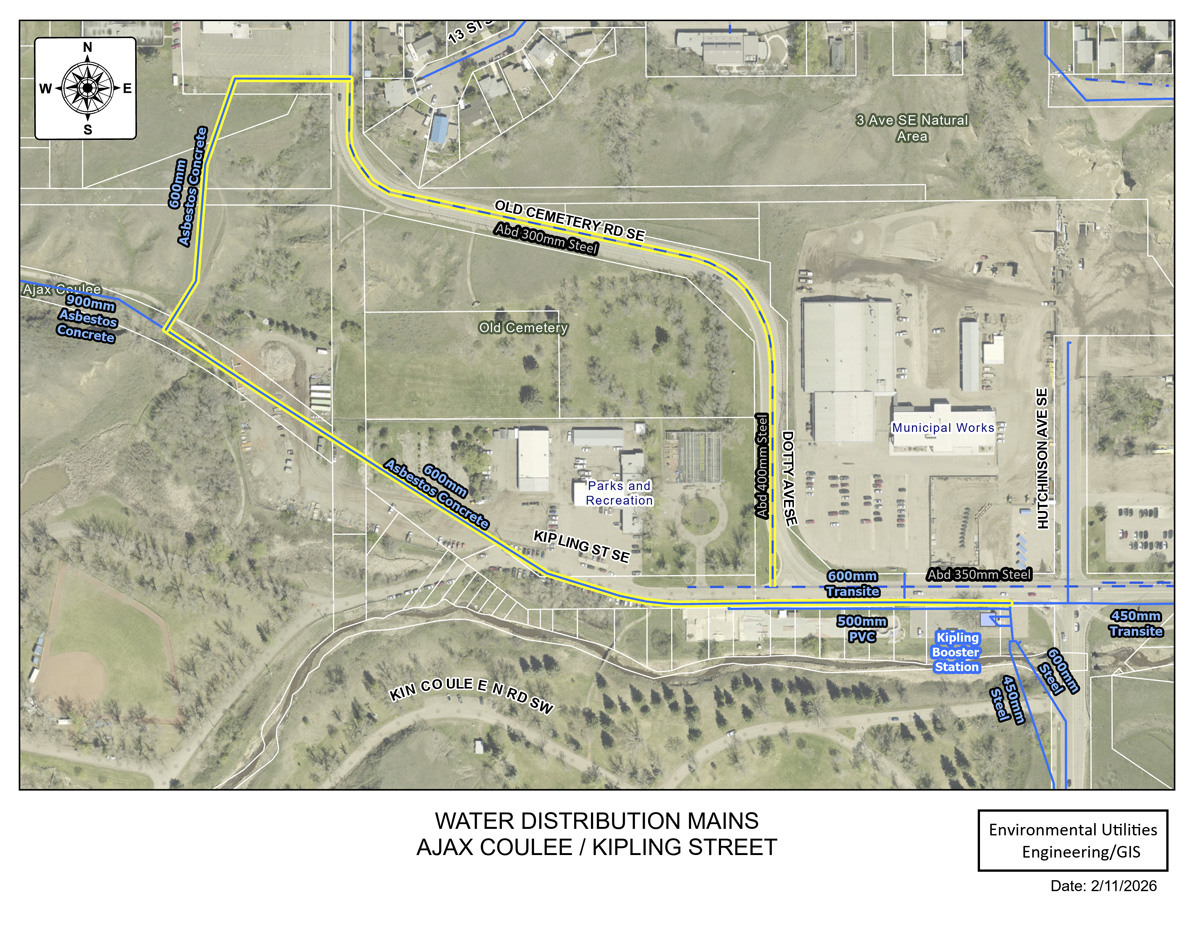
The original plan to provide redundancy involved twinning a 2,000-foot length of 600 mm AC pipe installed in the 1970s. Assessed as pipe with a high consequence of failure, it begins at the Kipling Booster Station and heads northwest along Kipling Street East until it joins another length of 900 mm AC pipe heading north.
New thinking
“When we looked closely at the design, we realized it wasn’t going to work,” Bohan says. “There was a high-pressure gas main adjacent to this AC line. So we asked ourselves how we were going to trench next to a 55-year-old AC line that already had a history of leaks. We got nervous about the constructability of that design, until one of our really smart engineers found an alternate solution.”

The engineer identified an abandoned steel line constructed in 1912 that ranged in diameter from 300 mm to 400 mm. The line runs past the Kipling Booster Station and heads northwest along Old Cemetery Road, where it reaches the northbound spur of the 600mm AC pipe — offering the potential to completely bypass the length of 600mm AC in question (see map above).
The current director of Environmental Utilities, Jamie Garland, had just returned from the Canadian Water and Wastewater Association conference in Victoria, British Columbia, where he’d learned about the latest technologies for pipe relining. He suggested that the department consider rehabilitating the old steel pipe before working on the problematic section of AC. Advantages of that approach would allow the utility to increase resilience with a twin feed with little construction disturbance.
“I get so excited when I hear about staff going to these conferences, and they get their eyes opened to new tech and new thinking,” Bohan says. “We’ve been doing CIPP for our sanitary lines for years, but we’ve never done potable water. Suddenly, we went from open-pit construction of a parallel line to relining the 1912 pipe, putting it back into service and isolating the 600 mm AC pipe that’s been a little jittery for us.”
Cutting costs
While the city council was initially reluctant to approve the budget for the original proposal, council members were much more amenable to the new one. Although the project has not yet gone out to tender, its budget is set at approximately CA$6.3 million — about half the capital costs estimated for the original twinning proposal. Work will start in summer 2026 with an anticipated completion date of no later than 2027.
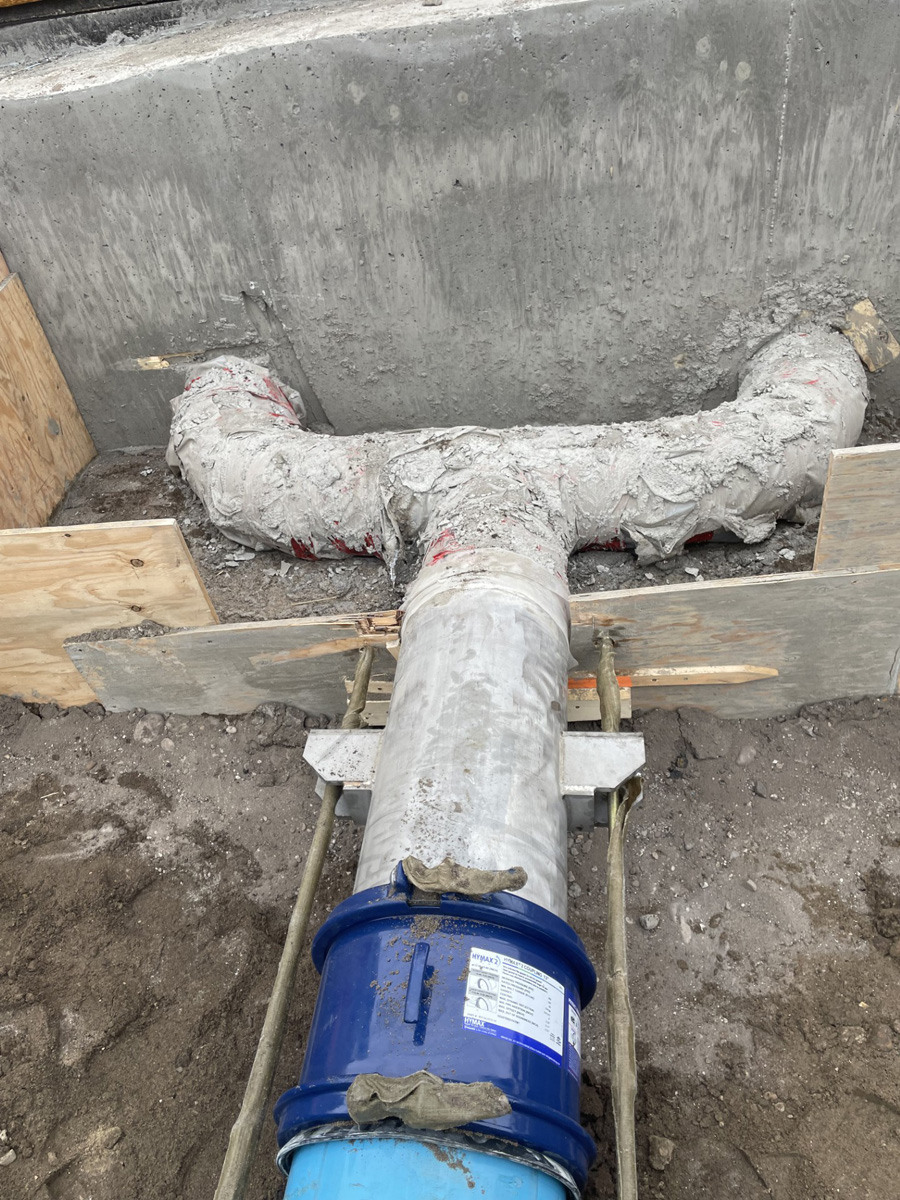
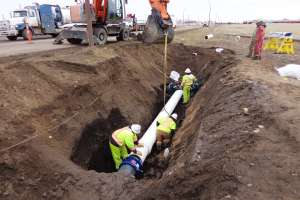
“We’ll probably have to dig a half-dozen pits to provide access to the contractors so they can move in the equipment for the relining operation,” Bohan says. “But that’s significantly less disruption than we had anticipated.”
While the current project is top of mind, the city remains proactive in determining the condition of all of its water and sewer infrastructure.
About 52% of the city’s 437,000 meters of water pipe are made of PVC. AC is 31% and dropping, where opportunities exist to replace it, and cast iron constitutes 11% of the system. The remaining pipe includes polyethylene, concrete pressure pipe, steel, ductile iron and copper.
“We have a pretty robust maintenance program,” Bohan says. “We were one of the first cities in Canada to employ advanced metering infrastructure (Sensus) for water pipes. In fact, we’re just going through our second revision of it as the batteries are wearing out after having been in service for 10 years. I won’t say we haven’t identified any challenges, but we continue to evolve our list of critical infrastructure and single points of failure.”
Alternate routes
The utility is also mindful of the city’s 411,000 meters of sanitary sewer infrastructure, which is largely twinned.
“A challenge that we found on the sanitary sewer side is that we didn’t alternate that service with enough frequency,” Bohan says. “We have to make sure that we are exercising those lines frequently. It can’t be a set it and forget it solution.”
The sewer system is made up of 40% vitrified clay tile pipe, 40% PVC, 7% clay, 5% HDPE and 4% concrete.

The city flushes about 100,000 meters of sewer each year and uses an assortment of Envirosight CCTV equipment to inspect between 18,000 and 19,000 meters annually.
Manhole maintenance
The department also began a sanitary sewer manhole asset management program in 2025 to keep tabs on the city’s 5,000 manholes.
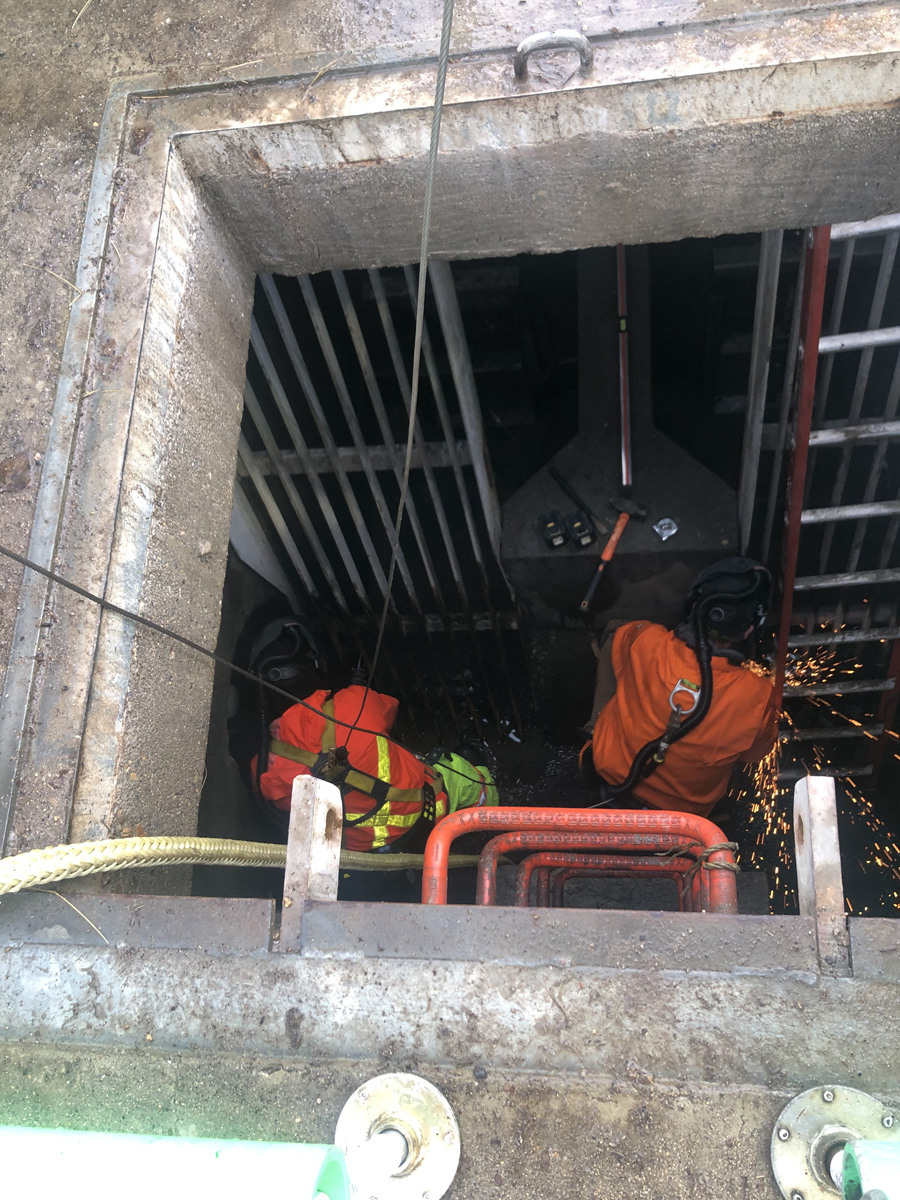
“We’re doing video inspections and rehabbing them with shotcrete when they start to fail,” Bohan says. “We’re slowly ticking down on getting every one of them videoed and logged.”
When smaller sewer or water projects require repair or maintenance, the city’s own crew are taking on an increasing share of the work.
“We call it sustaining capital,” Bohan says. “We’ve been encountering a lot of price escalation, both for materials and labor, since COVID. We don’t do the heavy-lift CIPP stuff, but we will do emergency repairs, and we’ve started to take on more self-design and self-execute projects to try and save money and to control the process a bit more.”
Infrastructure funding
The recent release of an independent review panel report for the city of Calgary on the initial failure of the Bearspaw South feeder main in June 2024 also highlights important issues for Medicine Hat and cities across North America.
“One of the findings identified in the report highlighted risk prioritization in the analysis of water incidents,” Bohan says. “It has to do with governance and unclear escalation pathways. I’ve heard this said, even within our organization, that when a municipality is faced with constraints on capital funding, decisions about infrastructure upgrades can sometimes not make their way to the decision table with as much priority as needed.”
The report recommended the establishment of clear pathways for those who monitor infrastructure assets to have a voice at the table when it comes to infrastructure funding allocations.
“I can’t control pipe that fails prematurely,” Bohan says. “But I can control making sure that our staff feels comfortable and safe to bring forward the hard news that we need to spend some money to solve a problem. What I found is that if we give our team an environment where they feel safe to innovate, they come up with crazy good ideas like putting a 114-year-old steel waterline back into service to save the city a lot of money.”
Continue reading for free