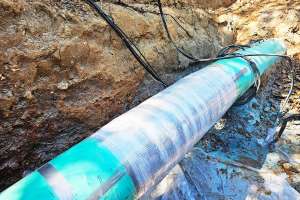
During a routine renovation project, a construction crew removing a foundation to lay a sewer pipe near Brussels, England, unexpectedly unearthed a hidden cache of gold valued at over $10 million. The workers surrendered the gold fortune to local police.
The is currently in the custody of the building owner, CAW Oost-Vlaanderen, a local welfare organization that hopes to use the unexpected wealth to fund its charitable work for Dendermonde residents. In the meantime, police have warned ambitious "gold diggers" flocking to the area to steer clear of the dangerous demolition site. Under Belgian law, the rightful owner has a five-year window to claim the hoard; if it remains unclaimed and isn't tied to a crime, the fortune could eventually be split between the property owners and the workers who discovered it.
Federal Court Approves Historic PFAS Settlements in New Jersey
New Jersey Attorney General Jennifer Davenport and Department of Environmental Protection Acting Commissioner Ed Potosnak recently announced judicial approval of two groundbreaking settlements to remedy longstanding statewide contamination from PFAS.
The settlements resolve the state’s claims in years-long litigation against E.I. DuPont de Nemours and Co. (now known as EIDP, Inc.) and other DuPont-related entities, and separate litigation against 3M. The settlement with the DuPont entities, valued at over $2 billion, is on its own the largest environmental settlement ever achieved by a single state. Together, the settlements resolving the claims against the DuPont entities and 3M are valued at approximately $2.5 billion
Read more about it from the New Jersey Department of Environmental Protection.
EPA Issues Checklist to Help States Strengthen Water Systems
The U.S. Environmental Protection Agency recently released an important guidance document for state partners that are working to ensure public water systems are meeting drinking water standards.
“Communities across the US deserve access to safe, reliable and high-quality drinking water," says Anthony DeRosa, executive director of the Association of State Drinking Water Administrators. "With that commitment in mind, ASDWA supports the release of the Systemic Issues Checklist developed in partnership with states and EPA as a practical resource that will help drinking water primacy agencies and public water systems identify and address challenges before they become risks to service reliability or public health."
EPA has developed this guidance document to help state agencies identify, track and address systemic issues that could eventually lead to a disruption of water services if a failure were to occur. These challenges could include demand in source water nearing capacity, malfunctioning treatment equipment or frequent water main breaks.
Continue reading for free