Grease – known in the wastewater industry as fats, oils and grease (FOG) — is the most common cause of reported sewer blockages, accounting for 47% of them, according to the U.S. Environmental Protection Agency. Downey Ridge Environmental Company (Greasezilla) has announced the operational opening of its second regional processing hub in Ashland, Virginia, advancing an additional 30-site national infrastructure expansion designed to take the burden of processing hauled grease-trap waste off municipalities. The regional hub advances a national rollout with a potential infrastructure value exceeding $150 million.
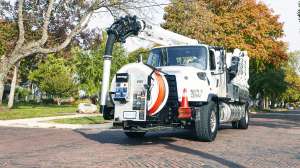
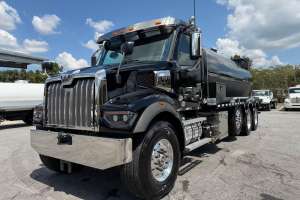
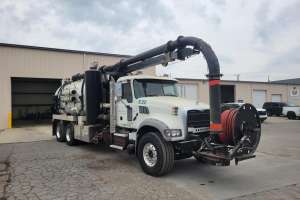
The challenge extends beyond keeping FOG out of sewer systems. Even when FOG is properly captured in grease traps, millions of gallons of collected waste must be hauled away for processing, requiring dedicated infrastructure to receive, process and manage the material.
“Cities have spent years working to keep FOG out of sewer systems, but the infrastructure for managing what gets captured hasn’t kept pace,” says Brian Levine, executive vice president of Greasezilla. “Our model is to invest the capital, build and operate a national network of regional processing centers, taking the burden off municipalities while giving haulers a fast, reliable place to unload.”
The Ashland facility is the second build-own-operate hub in Greasezilla’s national network, following Knoxville, Tennessee, and builds on Greasezilla technology already operating at 24 independently owned sites nationwide. Greasezilla is now applying that proven technology to a build-own-operate model in which the company develops turnkey regional infrastructure to receive, process and recover hauled grease-trap waste.
“Cities enforce grease trap rules to protect sewer lines, but haulers still need an efficient place to unload. It’s like requiring trash pickup without providing a landfill,” says Ron Crosier, CEO of Greasezilla. “Ashland gives haulers a reliable destination while protecting municipal infrastructure, without requiring municipalities to develop and operate their own FOG processing infrastructure.”
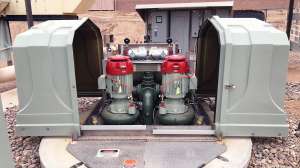
Strategically positioned between Richmond and Washington, D.C., the Ashland facility can process up to 15 million gallons of FOG annually. Intelligent receiving bays allow approved haulers to use fobs or access cards for around-the-clock access and offload in under 30 minutes, reducing truck turnaround time. A SCADA interface enables remote plant access, while automated traceability systems help ease the burden on drivers.
The system processes grease-trap waste without chemicals, separating out brown grease that can be used as a feedstock for renewable fuels. Other recovered materials can be directed to applications including anaerobic digestion and composting, supporting Greasezilla’s operating principle that “nothing goes to waste.”
With Ashland now joining Knoxville, Greasezilla is moving ahead with its nationwide expansion. The company’s site development team is actively pursuing locations in Wisconsin, Louisiana, Texas, Florida, Georgia and New Jersey.
“We’ve spent years perfecting and deploying our core technology,” Levine says. “Now we’re scaling it as a nationwide infrastructure platform. Ashland demonstrates how we can build regional capacity around market demands and replicate that model across the country.”
Greasezilla will showcase its FOG receiving, processing and resource-recovery platform at WEFTEC 2026 in New Orleans, Sept. 26–30, at Booth 2253.
Continue reading for free