Loading...

Videos Webinar

Webinar: Don't Get Stuck Downstream: Smarter Water Infrastructure with Directional GIS

Webinar: Don't Get Stuck Downstream: Smarter Water Infrastructure with Directional GIS

Managing water infrastructure, whether drinking water distribution, wastewater collection, or stormwater drainage, requires more than knowing where your assets are. You need to understand how water moves through them. In this webinar, we’ll show how directional styling in OpenGov Enterprise Asset Management empowers utilities to visualize the flow of water across all systems: water mains, sewer laterals, storm drains, and more. These tools turn static GIS maps into operationally intelligent visuals that enhance response, planning, and compliance. With features like flow arrows, pattern rules, and color-coded lines, your team can: Support faster emergency response during main breaks, backups, or floodingImprove shutdown planning by clarifying upstream/downstream pathsEnable cross-team coordination for maintenance, inspections, and repairsStrengthen compliance with MS4, EPA, and local reporting requirements Whether you're managing drinking water, storm, or wastewater systems, this session will show how smarter GIS symbology delivers the clarity and context your water teams need. Presenter: Will Newton, Solutions Specialist Entry 340836 Will is a Solution Specialist at OpenGov’s Atlanta office, focusing on the company’s Permitting & Licensing and Enterprise Asset Management solutions. He holds a Master’s in Public Administration from the University of Georgia and previously spent five years working in local government and community and economic development. Will is passionate about helping governments streamline operations and better serve their communities.
Screen Shot 2025 09 18 at 12 54 36 PM

Webinar: Unlocking the Power of AI for Proactive Infrastructure Planning

Artificial Intelligence is no longer just a buzzword—it's a practical tool that's reshaping infrastructure management. In this session, we'll explore how AI is being applied to sewer pipeline inspection and asset management to improve accuracy, boost efficiency, and lower costs. We’ll break down the myths, walk through what AI can and cannot do, and explain how AI models are trained and implemented. You'll also get key insights into what it takes to succeed with AI—from both a technical and operational perspective. Whether you're just curious or ready to dive in, this webinar will provide actionable takeaways to help you make smarter, data-driven decisions.Key Learnings:Why AI Is Gaining Momentum – Explore the rising adoption of AI in infrastructure management and its practical impact today. Separating Myth from Reality – Address common misconceptions about AI and clarify what it really means for your workflows. Core Benefits of AI – Learn how AI drives operational efficiency, cost savings, and consistent decision-making. Demystifying AI Training – Understand the basics of how AI models are trained and what outcomes you can expect. Enhancing Pipeline Management – Discover how AI streamlines inspections, reduces manual effort, and improves accuracy. Keys to Success – Identify critical factors for implementing AI effectively and ensuring long-term success. Entry 340839 Presenter: Jax Vollmer - Technical Services Manager, ITpipesExpert in sewer and stormwater CCTV inspections with over 24 years of experience in underground utility management, inspection, and repair Leads NASSCO’s ADR (Automated Defect Recognition) workgroup and contributes to many other NASSCO committees, drawing on over a decade of experience with NASSCO standards. Transitioned from contracting with hands-on expertise in utility installation, rehabilitation, and maintenance to consulting to software, with a strong focus on data collection and artificial intelligence
Screen Shot 2025 07 16 at 1 42 32 PM

Webinar: Small Utility Optimizes Water Operations

St. Albans Municipal Utility Commission Water Plant is a surface water treatment facility in Kanawha County, West Virginia, producing an average of 1.3 MGD. Though small in size, this utility has embraced modern water data management technology to improve operations, reduce inefficiencies, and deliver high-quality water to their community. Over the past 20 years, the utility has modernized with SCADA, upgraded to the Hach Source Water Panel, and adopted mobile sensor management. Most recently, they implemented Hach WIMS™ Rio —the final component that brought all of their data into one system.With centralized data, automated reporting, and easy access to trends, the team now saves time, supports compliance, and makes operational decisions with greater confidence.Watch this webinar to hear firsthand from the St. Albans operations team about how they:Simplify compliance and improve data quality by pulling all systems into one platform Save time and reduce risk through automatic data capture and reporting Optimize decision-making with easily accessible trends and insightsThis is a great opportunity to learn how a small plant made a big leap in operational efficiency—without increasing staff or complexity.Presenters:Teri Merrifield, Technical Account Executive, Aquatic InformaticsTeri worked for Hach previously before joining Aquatic Informatics as a Technical Account Executive. Teri has been elected president of the West Virginia Water Environmental Association twice in the last 15 years.Entry 340842 Levi Sturgill, Chief Operator, St. Albans Municipal Utility CommissionLevi leads day-to-day operations at the St. Albans water treatment plant, with a focus on delivering safe, reliable drinking water through modernized processes.Entry 340843 Nick Harvey, Operator, St. Albans Municipal Utility CommissionNick plays a key role in managing the plant’s WIMS Rio, MSM, and SCADA systems, ensuring smooth data flow and optimized performance.

Screen Shot 2025 05 21 at 2 51 03 PM

Webinar: Flush the Paper, Fix the Process: Smarter Water & Wastewater Management

Water and wastewater utilities are under constant pressure to stay compliant, dodge disruptions, and do a lot more with much less, especially when it comes to complex treatment systems. In this webinar, discover how agencies simplify asset tracking, inspections, and reporting with smarter, AI-powered utility management solutions. From water and wastewater collection to treatment, learn how agencies are using OpenGov Enterprise Asset Management to stay ahead by: Tracking assets across water distribution, wastewater collection, and treatmentAutomating inspections and ensuring compliance with regulationsIntegrating with SCADA and GIS systems to visualize asset health in real timeScheduling and prioritizing preventative maintenanceImproving reporting and collaboration across departmentsEntry 340847 Presenter: Madigan Ellis, Solutions Specialist, OpenGov Madigan Ellis serves as a Solutions Specialist at OpenGov, focusing on solution engineering for Enterprise Asset Management. In her role, she provides innovative solutions to community development, public works and water departments, enabling them to operate more efficiently, adapt to change, and strengthen public trust. Madigan draws inspiration from change-makers in public service who aspire to leave their organizations better for the next generation.
Screen Shot 2024 11 06 at 2 55 38 PM

Webinar: Optimize Valve Exercising & Hydrant Flushing with Asset Management

This webinar will demonstrate how water utility professionals can use Cartegraph Asset Management to improve valve exercising and hydrant flushing programs. Attendees will learn how an asset management approach helps streamline maintenance processes, minimize operational risks, and boost system efficiency. Designed for water utility managers, public works directors, and field crews, this session will showcase how Cartegraph Asset Management tracks maintenance activities, predicts potential issues, and supports regulatory compliance. Implementing these practices leads to better service reliability, extended asset lifespan, and more strategic resource allocation. Key learning objectives: 1. Learn how to effectively manage valve exercising and hydrant flushing schedules to prevent costly failures. 2. Discover how Cartegraph Asset Management simplifies field data collection, tracks estimated vs. actual costs, and integrates with GIS for real-time asset updates. 3. Understand how to use data-driven insights to plan, prioritize maintenance, and trigger automated follow-up tasks. Presenters: Jamie Birkett, Solutions Engineer, OpenGov Entry 340850Jovana Dacic, Asset Management Administrator, Village of Lombard, Illinois Entry 340851
Screen Shot 2024 08 14 at 1 41 25 PM

Webinar: Navigating Public Waterworks Optimization for Horizontal & Vertical Water Assets

Juggling water asset management is no small feat. Trust us; we understand, and we don’t blame you. However, we want to help you keep everything flowing in the right direction! This online discussion will cover a new way to strategize water asset management, from water treatment and distribution to wastewater collection, using digital tools that drive efficiency and growth. During this online discussion, we’ll: Discuss the current water asset management landscapeUse clean and clear data to strategically plan for the futureImprove supplier relationships and response timesUncover best practices that keep your community compliant Presenters: Jamie Birkett, OpenGov, Solutions Engineer Samantha Sosa, City of Horseshoe Bay, Texas, Utility Systems Administrator George Watson, City of Horseshoe Bay, Texas, Field Utility Supervisor
Screen Shot 2024 09 10 at 2 19 31 PM

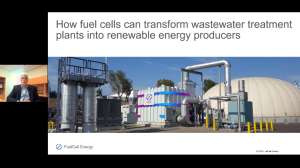
Webinar: How Wastewater Plants Can Cut Costs and Emissions with Fuel Cell Technology

How can wastewater treatment plants become more sustainable and efficient with fuel cell technology? Join us for a webinar where we will showcase some of the latest technology developments. You will learn how fuel cells can reduce greenhouse gas emissions, lower energy costs and generate renewable power from biogas. Don't miss this opportunity to discover how fuel cells can transform wastewater treatment operations and benefit nearby communities.Presenter: Anthony LeoFuelCell Energy, Executive Vice President and Chief Technology OfficerTony joined FCE in 1978 and has held key leadership roles in research, development, and commercialization of electrochemical systems during his tenure. He is well known throughout the battery and fuel cell industry, and has authored numerous papers, contributed to technical books, holds several US Patents, and has served as Chairman of the American Society of Mechanical Engineers PTC-50 Fuel Cell Performance Test Code committee and as a member on the Department of Energy's Hydrogen and Fuel Cell Technical Advisory Committee. Tony has held numerous positions in the company and is involved in managing advanced research and development as well as the commercialization of the company’s fuel cell products. He holds a Bachelor of Science degree in chemical engineering from Rensselaer Polytechnic Institute.
Webinar: How to Meet This Year's Lead and Copper Rule Revisions Deadline

Webinar: How to Meet This Year's Lead and Copper Rule Revisions Deadline

Does the date October 16 ring a bell? It’s the deadline for the EPA’s Lead and Copper Rule Revisions (LCRR) — just nine months away. To be compliant, all public water systems have to meet a list of requirements, including the creation of a lead service line (LSL) inventory. Also nine months away is the implementation of the new lead pipe replacement rule, the Lead and Copper Rule Improvements. Creating an LSL can be incredibly complex, and many water systems are struggling to comply. Tap into our step-by-step process to ensure compliance. Join this webinar to learn how to create your lead service line inventory, including information on: ● Establishing guidelines for inventory and tracking methods ● Tips for collecting your inventory data — one of the most labor-intensive parts of the entire process ● Best practices for verifying your inventory ● How to prepare for the new Lead and Copper Rule Improvements requirement to replace 100% of lead pipes in the next 10 years Entry 340855 Tim Larson, Sr. Product Marketing Associate at OpenGov Specializing in both product and market knowledge, Tim has worked with asset management customers and stakeholders for the last three years. In his role, he frequently engages in conversations with local government experts and fellow industry professionals, working to remain up-to-date on the latest trends and insights in infrastructure asset management. Entry 340856 Daniel Johns, Director of Geospatial Technologies at ETM Daniel plays a crucial role in overseeing GIS, asset management, client solutions and partnerships. An award-winning expert, he has more than 19 years' leadership in technology, asset management and operational excellence. Before his current role at ETM, Daniel dedicated over 16 years to the public sector, working as a GIS and asset manager. Entry 340857 Sarah Grimsley, Client Solutions Manager at ETM Sarah holds a Bachelor of Science in Environmental Spatial Analysis from the University of North Georgia. Her academic background is in earth systems engineering and geospatial technology. She has worked as a GIS Analyst, managing GIS and Asset Management Systems. She currently works at ETM to develop and implement tailored asset management and GIS solutions.
Screen Shot 2023 11 07 at 7 42 37 AM

Webinar: From Pilot to Full Scale, the Ins and Outs of Implementing Deammonification at the Fresno-Clovis RWRF

This webinar describes the City of Fresno’s drivers for implementing sidestream treatment at the 90 mgd RWRF and how the ANITA Mox deammonification technology fits into the City’s nitrogen management plan. You will hear from experts that were directly involved in the pilot project and be given some insight about the background of the plant, what the pilot performance looks like, and how the pilot results are being leveraged in the design of the full scale facilities. This webinar will provide invaluable information for similar utilities who are interested in implementing sidestream as a first step towards nitrogen removal, or for those who already remove nitrogen and need to achieve more stable and/or stringent nitrogen limits.Presenters:Entry 340862 Andre Gharagozian, P.E. Andre is an Associate Vice President out of Carollo’s Walnut Creek office and has more than 24 years experience as a consulting engineer. He supports Carollo’s wastewater practice as their Northern California Wastewater Process Lead and is an expert in the evaluation, planning and design of nutrient removal facilities including activated sludge BNR, intensification, and sidestream technologies.Entry 340863 John Witter, P.E. John is a Lead Engineer out of Carollo’s Fresno office and has over 7 years of experience assisting Central California wastewater utilities performing capacity and performance assessment, biological process modeling, treatment process alternatives, and the piloting and design of nutrient removal and solids handling processes.Entry 340864 Rodrigo Lara Rodrigo Lara is a regional manager for Veolia. He supports the Western Region of the US and covers biological products including ANITA Mox, IFAS/MBBR, Biostyr DUO and Oxidation Ditch.
Screen Shot 2023 11 07 at 11 56 37 AM

Webinar: How to Avoid Fines With Defensible Reporting & Compliance

Are you among the 88% of utilities that still collect their operations data on paper and then store it across multiple, static spreadsheets?Don’t let errors creep into bench sheets, paper records, and spreadsheets and add to your workload—and your risk. By improving visibility and data access across your facility, you avoid violations, fines, and ensure you’re operating within your permit.Developed in partnership between Aquatic Informatics and Hach, Rio is a cloud-based data management solution that can optimize your operations—from field data collection to auditable compliance reports, and every step in between with centralized data from the field, SCADA, LIMS, GIS, WIMS, and other sources.Learn how you can:1. Improve data quality & compliance: eliminate human errors and duplicated efforts by collecting data at the source with digital bench sheets.2. Optimize analysis and decision-making: centralize compliance and operations data in one secure, accessible online platform, and automatically generate sophisticated charts to quickly gain insights, and identify trends.3. Empower remote field work: access historical data, information, and exceedance notifications.Presenters:Entry 340869 Kevin Koshko, Product Manager, Water Treatment, Aquatic Informatics Kevin is the product manager for water treatment software solutions. He has worked in the water industry for the last 23 years and has been building water software since 2002.  Kevin is also a licensed water distribution and wastewater treatment operatorEntry 340870 Teri Merrifield, Technical Account Executive, Aquatic Informatics Teri has been working in water for over 35 years. Teri worked for Hach previously before joining Aquatic Informatics as a Technical Account Executive. Teri has been a leader in this space and has been elected president of the West Virginia Water Environmental Associated twice in the last 15 years.
Screen Shot 2023 06 14 at 2 59 56 PM

Webinar: Get the Lead Out: Responding to EPA Lead and Copper Rule Revisions (LCRR)

Is your municipality facing challenges in making the lead to copper transition to comply with the EPA’s Lead and Copper Rule Revisions (LCRR)? One of the most difficult parts of the transition is knowing the location and status of your water service lines. Watch this webinar to learn how the City of Plano, Texas did just that by: ● Creating and maintaining a water service line inventory ● Collecting and storing required material data and documentation ● Sharing information through a map accessible to the public The result was complete compliance with EPA LCRR requirements, as well as a full inventory of water service lines in the City — join the session to learn the step-by-step process they followed. Speakers: ● Brendon Lockette, Asset Management Coordinator for the City of Plano, Texas Entry 340874 Brendon is an accomplished professional currently serving as the Asset Management Coordinator for the City of Plano, Texas. With a diverse background in several roles, he has gained hands-on experience in assessing and maintaining assets in the field, managing the city's signage infrastructure, and collecting and analyzing data related to the city's assets. Since coming to Plano, Brendon’s focus has shifted to Water and Wastewater infrastructure. ● Kurtis Warne, Solutions Engineer for OpenGov Entry 340875 Kurtis has spent the last 15+ years working in the water industry developing ways to make security, water quality compliance, and utility asset management more effective, efficient, and productive. As a Solutions Engineer at OpenGov, Kurtis works with the customers as a technical expert to design the best workflow processes ensuring the software meets/exceeds the customer goals.
Screen Shot 2023 05 24 at 11 42 19 AM

Webinar: Optimize Sewer Cleaner Training to Deliver Immediate Performance

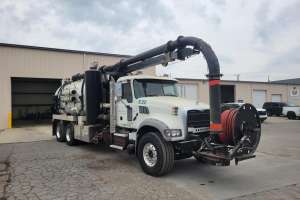
In this webinar, Tod Ebetino, Director of Vacall Products at Gradall Industries, discusses the importance of sewer cleaning equipment operator training with workforce turnover to optimize machine performance and deliver immediate returns with a new, younger workforce. Presenter: Tod Ebetino Entry 340879 Tod Ebetino has been in the sewer and water industry for over 30 years. Tod started his career working for a water and sewer contractor before becoming the Midwest Account Manager for Vacall products at Gradall Industries. Today he is the Director of Vacall Products. Over his career, Tod has been involved with various trade organizations including training presentation to municipalities and contractors, and utilizes a commonsense approach with real life applications.
Screen Shot 2021 10 27 at 3 36 12 PM

Webinar: How to Channel Your Sewer Data Into Actionable Insights

Summary:Up to your eyeballs in sewer data, but struggling to harness that information into actionable insights or a strategic plan? You're not alone. Learn how the City of Plano team was able to clean up their "dirty" sewer inspection data, calculate asset conditions, perform a risk-based assessment, and more to prioritize their rehabilitation work and inspections. By attending this webinar, you'll uncover Plano's tips for:Cleaning up data sources, identifying what's most important, and clearing the clutter Integrating disparate solutions to better understand your sewer system Proactively tracking, inspecting, and maintaining every sanitary sewer main Using data to maximize your investments in people, technology, and infrastructurePresenters: Abby Owens | Public Works Strategic Planning and Compliance Manager with the City of Plano, TXEntry 340882 Abby Owens is the public works strategic planning and compliance manager for the City of Plano, Texas. Her interest in local government comes from a drive to work with residents to improve city services and programs. Abby has a passion for data analysis and problem-solving. She oversees the asset management programs and Cartegraph software implementation for the City of Plano Public Works Department.Stephen Johnson, PE, PACP | Project Manager, Water/Wastewater Master Planning Group with Freese and NicholsEntry 340883 Stephen Johnson is a project manager in FNI's Water/Wastewater Master Planning Group. He has experience in water and wastewater master plans, physical and desktop condition and risk-based assessment programs, water and wastewater CIPs, and impact fee programs. Stephen has experience working with multiple hydraulic modeling software packages and a variety of data management programs such as Innovyze products, ITPipes, GraniteNet, and Cartegraph. He is the assistant project manager for the City of Plano's Wastewater Master Plan.
Screen Shot 2021 06 23 at 11 57 15 AM

Webinar: High-build, Applied Epoxy Lining Systems: Which to Use and When to Specify

In this presentation, Epoxytec will introduce some of the most popular epoxy-based rehab and protective systems used today in water, wastewater, and sewer environments. These rehab and protective systems are primarily intended to restore deteriorated structures, seal to prevent I&I, and protect against H2S. Why does high-build epoxy lining typically outperform other polymer systems? Epoxies have been modernized and improved throughout the last several decades. From a formulation standpoint, epoxy systems have been designed to address specific water/wastewater project challenges. This has led to the development of high-build epoxies, hybrids, modifications, and various thicknesses. Attendees will learn more about these systems, explore some of the different high-build epoxy technologies entering the market today, and discover the advantages of high-build, 100 percent solid hybrid epoxy coatings, epoxy-modified-cementitious lining, and the increasingly popular ultra-high-build structural-grade epoxy lining. Attendees will leave the presentation understanding what they need to consider in order to choose the correct product, depending on conditions, intentions, and expectations, and understanding the advantages and disadvantages of various systems. The goal is for Epoxytec to assist those who have specific needs by equipping them to select the right rehab and protective system for their upcoming projects. The presentation will also help contractors learn about the Epoxytec advantage, and how to join its network of certified contractors to offer attractive warranties. Presenter: John Thompson John Thompson has been a coating professional for over 25 years.  Thompson is certified by both NACE and SSPC as a coating’s inspector and holds a Master’s degree in Business Administration. He is currently the Sales Manager and Technical Consultant for Epoxytec and specializes in solutions for Water Wastewater rehabilitation. Entry 340887
Hachphone

Webinar: Show FOG Who’s the Boss

Boost your efficiency with purpose-built FOG Management Software Fats, Oils and Grease – FOG – can be a real bully, wreaking havoc on collections systems, upsetting treatment processes, and creating hassle and massive inefficiencies for maintenance teams. But you can fight back, taking control of FOG prevention and management with software specifically developed to efficiently manage this tormenter. Listen in as three FOG management professionals discuss proactively managing FOG and demonstrate software designed to tackle the 4 most common challenges for FOG management programs. You’ll even hear how the City of Seattle has efficiently increased their number of FSE inspections by over 300% in the last 4 years. Start putting FOG in its place with purpose-built FOG Management Software. Presenters: Chris Weinandt: FOG Software Product Manager, Hach Partner: Aquatic InformaticsChris has 19 years of experience developing and supporting software solutions for FOG, industrial pretreatment, liquid-hauled waste, and backflow prevention.Brandt Slivken: FOG Technical Sales Engineer, Hach Partner: Aquatic InformaticsBrandt has spent 18 years working with customers to build and support software solutions that drive digital transformation and workflow automation.Gary Christiansen: Wastewater Source Control Supervisor, City of Seattle/Seattle Public UtilitiesGary has over 15 years of experience in Pretreatment and FOG, including the use of Linko CTS and FOG software. He holds Florida Industrial Pretreatment Association Pretreatment Levels A, B, & C Certifications, as well as FOG Level A & B Certifications. In 2015, Gary moved to Seattle, Washington where he leads the Wastewater Source Control Program and is transforming the Seattle Public Utilities Fats, Oils, and Grease program from a reactive enforcement-driven program to a proactive knowledge and maintenance driven program.
Screen Shot 2021 03 11 at 3 48 34 PM

Webinar: Engineer and Contractor Agree: Sealing and Stabilizing Service Laterals is Essential

We know from the US-EPA, nearly half the flow to treatment facilities nationwide is clean groundwater. That means twice the cost to pump, transport, and treat the inffluent. The question is, can we afford to ignore this fact or are there proactive measures we can take to mitigate I&I with less than one year pay-back on investment? For very compelling reasons, our experts will weigh-in on all corrective methods, outline a holistic approach, but pay particular attention to service laterals and connections to mainline pipe because of cost, value, and reward. PANELISTS: Michael Vargo, Vice President Prime Resins, Inc.  Recognized world-wide, Prime Resins is well-known for its infrastructure repair solutions and Mike has devoted much of his professional career to the well-being of customer and partners. George Kurz, P.E., DEE Independent Researcher. Over 33 years working with state and municipal agencies to measure and correct I&I problems, George conducted groundbreaking studies to analyze 500 sewer systems. Randy Belanger, Sales Manager, Visu-Sewer, Inc.   Providing contracting services to keep underground infrastructure optimum, Randy has driven the sales & business development practices of Visu-Sewer for 16 years and currently serves on the Board of Directors at NASSCO. Marc Anctil, President, Logiball, Inc.  Manufacturer of inflatable pipe plugs & sealing solutions for underground structures since 1983.  Marc has served on the NASSCO Board and as President in 2008, and currently serves as Chairman of ICGC.
Screen Shot 2020 08 26 at 9 38 24 AM

SEEPEX Progressive Cavity Pumps 101

Progressive Cavity Pumps 101 This presentation provides a general overview of progressive cavity pumps at a novice level for those who may not be familiar with progressive cavity pump technology. This course is hosted by three seasoned professionals from SEEPEX, sharing their real-world experiences. Viewers are introduced to concepts related to progressive cavity pumps such as how they work, mechanical components and common water and wastewater applications. Pump benefits are discussed including maintain-in-place technologies and operating efficiencies, along with an overview of operating characteristics. Further into the presentation, a deeper dive is taken to examine the basic operating principals to elaborate on how progressive cavity pumps mechanically offer the benefits they provide. For questions regarding this training, contact SEEPEX directly at sales.us@seepex.com or 937-864-7150.Aaron RenickAaron Renick, the director of sales – West for SEEPEX, has been with the company for 25 years. Renick is well versed in the design of pumps, having worked in varying roles including production, assembly and engineering. His 25-plus years of experience in the pumping world have shown him a spectrum of applications ranging from pumping chocolate to dewatering sludge.Chris BrooksChris Brooks, a territory manager for SEEPEX, is responsible for operations in the Southeastern U.S. Before starting with SEEPEX, Brooks worked in distributor sales for more than 20 years including operating his own distributorship and then working for the largest SEEPEX distributor in the U.S. He has more than 30 years’ pump experience including four years as a machinist mate in the U.S. Navy. Brooks holds an Associates of Arts degree from Liberty University and attended Southern Polytechnic State University. He completed the U.S. Naval Propulsion Engineering School, Machinist Mate Class “A” Course.Chris OaksChris Oaks, the applications engineering manager at SEEPEX, has been with the company since 2013, starting as an applications engineer, primarily focusing on the municipal market. Oaks is a 2010 graduate of Wright State University, where he earned a bachelor’s degree in mechanical engineering, and is a 2016 graduate of Ohio University, where he earned a master’s degree in engineering management.
Screen Shot 2020 08 24 at 3 19 55 PM

The Effect of Screen Design on Capture Rate and Plant Maintenance

Wastewater treatment plants have become sophisticated in collecting data on the costs associated with maintenance, repair, replacement and efficient operation. Operations personnel are generally the first to identify persistent maintenance and repair expenses and trace them back to the source. That source for many repetitive maintenance and repair expenses can be found at the headworks of the plant. This presentation will help you understand the various designs for headworks screens and how those designs impact trash capture; the financial impact that solids entering the downstream processes has on plant operations; how screen opening affects capture; and the difference between a high-performance fine screen and other fine screens, as well as how high performance is verified. This information is important for plant personnel, who are on the front line of plant operations and should be knowledgeable in the design and capabilities of various types of screening equipment. More and more plant operations personnel are part of the decision-making process when new headworks screens are being purchased. Basing that decision on a clear understanding of the capabilities of each type of screen will lead to better, more cost-effective screen selection.Matt Bodwell is the national sales manager for Illinois-based Enviro-Care, a WAMGROUP company specializing in the manufacture of headworks equipment for screening and related solids and grit management for the North American market. Bodwell graduated from the University of Maine with a bachelor’s degree in mechanical engineering, providing him with a solid background in mechanical design that has helped him throughout his career in the water and wastewater industries. Bodwell started his career working for Hydro International where he spent eight years as an applications engineer, working internally to support the sales team in the field with headworks and combined sewage treatment equipment. He eventually transitioned to join the external sales team and was in the field for more than 2 1/2 years before joining Enviro-Care. At Enviro-Care, he has continued working as an external sales resource while covering the Midwestern U.S. and eastern Canada, becoming the national sales manager in 2018.
Screen Shot 2020 08 10 at 11 01 47 AM

CIPP with UV: A Professional's Point of View

iMPREG manufactures GRP UV CIPP liners for the no-dig rehabilitation of sewer lines and culverts using a UV light train. The company regularly gives educational seminars to municipalities on its eco-friendly alternative to traditional CIPP rehab. The product does not leak into the waterways or air once it's cured. Once installed, it will last 50- 80 years in the ground.Gary Shutts received his degree in Business Management from Nichols College in Massachusetts. He has been involved in the pipe rehabilitation industry for approximately 15 years. His experience has entailed field operations, project management and business development. Gary is iMPREG's business development manager for the East Coast, and aides in project coordination. Troy Cubero has been in the heavy construction industry for over 30 years. Over the last nine years his focus has been in underground rehabilitation, specializing in UV and robotic sales, training and development. His previous experience includes working at Aries for the launch and support of Prokasro equipment in the U.S. He is employed at Innovative Sewer Technologies of North America as a technical/sales manager for UV curing system and robotic rehabilitation equipment.