NASSCO’s Health and Safety Committee is excited to announce the release of a new confined space safety video available on nassco.org. This video focuses on the inherent dangers associated with sewer and culvert rehabilitation and how to best eliminate these hazards.
It is important to note that the underground infrastructure industry has many safety risks and certainly near the top of this list is confined space. According to data from the Bureau of Labor Statistics, there are approximately 130 deaths per year involving confined spaces in the United States, with the most common causes being hazardous atmosphere changes during entry.
The NASSCO “Confined Space Safety” video will walk you through some key elements of the standards that are designed to protect workers from unknown hazards and potential injury while working in confined spaces. These topics include:
- Completing a written confined space program
- Evaluating confined space hazards
- Developing a written rescue plan for crews entering confined space
- Completing a confined space permit prior to entering the confined space
- Conducting continuous air monitoring and atmospheric testing. Before an employee enters the space, the entire internal atmosphere shall be tested. In addition, when conducting air monitoring of a confined space, be sure to test all levels of the confined space (top, middle and bottom).
- Beginning continuous ventilation. After the initial air sampling has occurred, you may begin the ventilation process while continually monitoring the air
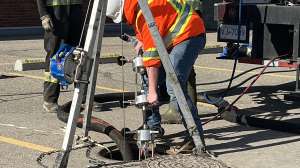
- Wearing a properly fitted harness. When entering a confined space, the entrant must wear a harness for both retrieval and fall protection
- Learning proper attachment procedures for a retrieval winch and fall protection device. When the entrant is being lowered into a sewer structure access point, the entrant must be attached to a self-retracting lifeline to prevent a fall in addition to the retrieval winch.
- Outlining the key aspects of confined space training, This includes not only classroom training, but hands-on training to allow workers to demonstrate the skills needed to safely work in a confined space.
NASSCO has taken the lead in safety education and training programs to assist member companies and the industry by providing this video that breaks down the OSHA standard as well as identifying critical components that companies should focus on when completing confined space tasks. By better understanding these hidden dangers and the critical importance of proper preparedness in confined spaces, companies can provide the safest work conditions possible while working in an extremely and ever-changing environment.
Also, stay tuned for the next video from NASSCO’s Health and Safety Committee on the topic of styrene monitoring during the installation of cured-in-place pipe. It will cover the challenges, benefits and understanding of the styrene monitoring equipment available.
To view NASSCO’s library of videos and to learn more, visit nassco.org/resources.
Continue reading for free