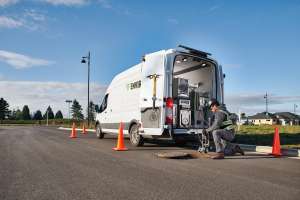
As governments worldwide implement stricter emissions regulations and prioritize sustainable practices, municipalities and utility providers face the increasing challenge to electrify their fleets. Transitioning from traditional internal combustion engine vehicles to electric vehicles is no longer just an environmental initiative, it is increasingly driven by legislative requirements and emissions reduction mandates.
Several major cities and states have already set ambitious electrification targets. California’s Advanced Clean Cars II regulations aim for 100% zero-emission vehicle sales by 2035, accelerating the shift toward EV adoption across both public and private fleets. In New York City, all newly purchased municipal vehicles must be zero emission by 2035, reinforcing the city’s commitment to sustainability and air quality improvements. Montreal aims to electrify 50% of its municipal fleet by 2030, recognizing the operational and environmental benefits of reduced dependence on fossil fuels.
As utility providers explore sustainable solutions, the integration of EV technology will play a pivotal role in shaping the future of infrastructure maintenance, emergency response and fleet management.
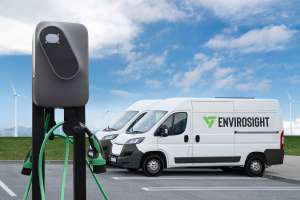
Electric van technology has advanced significantly in recent years, providing municipalities and utility providers with new solutions for pipeline inspection and maintenance. Early EV models faced limitations in range and charging speed, making them impractical for field operations. Modern EV vans now offer extended ranges, fast-charging capabilities and increased payload capacities, while also being well-suited for sewer and water system inspections, pipeline assessments and other essential municipal services.
Battery technology has seen notable improvements, with lithium-ion and solid-state batteries providing greater energy density, faster charging times and longer lifespans. Many new EV vans are also equipped with regenerative braking systems, which improve energy efficiency and reduce wear on braking components — ideal for stop-and-go urban environments where municipal service vehicles frequently operate.
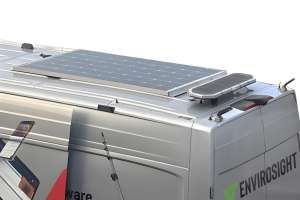
For water and sewer departments that rely on mobile inspection and diagnostic equipment, uninterrupted power is essential. Some EV vans now feature hybrid power systems that combine battery power with solar energy, creating a reliable and sustainable power source for onboard equipment. This provides continuous operation of CCTV cameras, lighting and data collection systems, even in remote areas where access to charging infrastructure may be limited. By harnessing solar power, these vehicles can extend operational hours and reduce reliance on external generators, minimizing fuel costs and emissions.
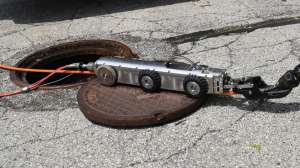
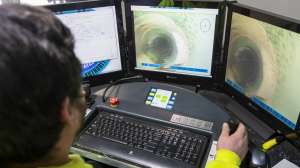
Specialized EV vans now integrate electric vehicle technology with advanced CCTV capabilities, enabling real-time sewer and pipeline inspections with less environmental impact. Their reliable onboard power and reduced maintenance needs allow for uninterrupted operations, helping municipalities detect blockages, leaks and structural issues more quickly and accurately. By leveraging EV technology alongside cutting-edge inspection tools, water and sewer departments can reduce operational costs and contribute to broader sustainability initiatives.
Municipalities are searching for vendors offering EV solutions, but many lack the specific expertise and experience to meet the unique requirements of the water industry. By partnering with an experienced vendor with deep industry knowledge, municipalities and utility providers can confidently navigate the transition to electric fleets and achieve their sustainability goals.
Beyond regulatory pressures, the transition to EV fleets presents significant opportunities for utilities and municipalities to improve efficiency and service. From lower maintenance requirements to optimized energy use, EV vans are emerging as a crucial component of modern utility operations, providing a variety of benefits that go beyond sustainability alone:
1. Reducing operational costs
One of the most significant advantages of EV vans is their lower total cost of ownership. Unlike internal combustion engine vehicles, EVs require fewer moving parts, reducing maintenance needs and associated costs. There are no oil changes, fewer brake replacements due to regenerative braking and less wear and tear on critical engine components. Additionally, the cost of electricity is generally lower and more stable than gasoline or diesel, leading to further savings in fuel expenses over time.
2. Minimizing downtime and extending work hours
EV vans enable teams to operate more efficiently by reducing the need for frequent refueling. Since these vehicles rely on battery power, they can run for extended periods without interruption, making them ideal for utility work that requires continuous operation, such as CCTV sewer inspection, infrastructure assessments and maintenance tasks. Some models integrate solar panels or auxiliary battery storage, further extending their usability in the field.
3. Reducing noise pollution for urban and residential work
Traditional utility vans generate considerable noise, which can be disruptive in residential and urban environments, especially during nighttime or early-morning operations. EV vans operate much quieter than their gas-powered counterparts, reducing noise pollution and enabling teams to work in noise-sensitive areas without causing disturbances. This can be particularly beneficial for tasks such as emergency response or maintenance in densely populated neighborhoods.
4. Enhancing sustainability and compliance
With cities and states worldwide enforcing stricter emission regulations, utility providers must adapt to evolving environmental standards. EV vans produce zero tailpipe emissions, reducing greenhouse gas emissions and improving urban air quality. This shift also not only aligns with corporate sustainability goals, but also ensures compliance with local and national mandates. Many government programs also offer tax credits, rebates and infrastructure support to incentivize EV adoption, making the transition more financially viable.
5. Demonstrating environmental leadership
Adopting EV vans not only meets regulatory requirements, but also reinforces an organization’s commitment to sustainability. By integrating EVs into their existing fleet, utilities and municipalities position themselves as forward-thinking leaders in green technology. This commitment can enhance public perception, strengthen stakeholder confidence and even open doors to additional funding opportunities tied to environmental initiatives.
6. Preparing an emergency response plan
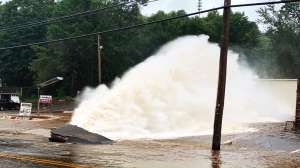
Extreme weather events, natural disasters and infrastructure failures require a swift response from municipal water and sewer teams. EV vans provide a reliable and energy-efficient alternative for emergency operations, ensuring that crews can quickly deploy to affected areas without relying on fuel availability, which is often disrupted during widespread power outages and supply disruptions.
In disasters such as floods and wildfire, EV vans can play a critical role in recovery efforts. Floods and fire often cause extensive damage to underground water and sewer infrastructure, leading to contamination risks, broken pipelines and service disruptions. EV vans equipped with CCTV inspection systems allow utility teams to assess damaged pipelines, identify structural weaknesses and determine the extent of repair needs, all while operating with reduced emissions in sensitive environmental areas.
As municipalities continue to prioritize resiliency, the ability to integrate EV vans into emergency response fleets can improve overall preparedness while reducing operational costs. By leveraging these vehicles for both routine and urgent tasks, water and sewer providers can enhance their infrastructure management capabilities while supporting long-term sustainability goals.
The transition to EV vans offers significant benefits for utility providers, but successful adoption requires careful planning. Strategic fleet integration involves assessing charging infrastructure, understanding operational needs, and ensuring staff are trained to maximize the technology’s advantages. By taking a proactive approach, utilities can seamlessly incorporate EV vans into their CCTV fleets without disrupting essential services.
Municipalities and utility providers have a unique opportunity to modernize their fleets while advancing sustainability goals. Exploring EV van solutions with a knowledgeable provider can lead to long-term efficiency gains, cost savings, and improved delivery service. With the right planning, these vehicles can become a key component of a smarter, more sustainable future for infrastructure management.
Andrew Wicker is the national sales manager for Envirosight.
Continue reading for free