There was a time when paying for a bottle of water seemed absurd to most. Now bottled water is a part of everyday life. Whatever the resource — water, oil, minerals or precious metals — it was once easy to assume the planet would never be running on empty. Today, we know better.
The human population has exploded in the past 100 years. Development has greatly altered the landscape. The crops we grow in the Midwest are as likely to be feeding people on the opposite end of the earth as they are local families. Water pumped in Pennsylvania might be bottled to quench the thirsts of people 10 states away. We face local problems, but the solutions have to be bigger.
I was struck by a headline I saw the other day: Population boom means the end of ‘cheap’ water in Texas, researchers warn.
The story noted that even with conservation efforts, existing water sources “likely won’t be able to meet Texas’ long-term water demands, especially when you couple population growth with persistent drought conditions, which have impacted most of the state for the last 25 years.”
Research from the Texas Real Estate Research Center at Texas A&M University, cited in the story, points to the need to invest in new water sources. “That means developing reuse infrastructure, expanding the use of desalination processes and finding ways of replenishing aquifers. But it won’t be cheap: Shoring up Texas’ water supply for the future could cost as much as $154 billion — nearly double the investment the Texas Water Development Board called for in its 2022 plan.”
There were several others that came across my news feed:
- Texas faces water shortage by 2030: It’s time to fix Houston’s pipes
- New York hit by ‘rainfall bomb’ – 1.85 inches in 2 hours kills 2
- Plan to pump billions of gallons of water from East Texas appears on hold
- Life-threatening flash floods hit Arizona
- Inside the Texas town where locals are running out of water
The interesting thing to me was that for every story about looming water shortages, there was another about flooding and stormwater damage. I’m not an engineer. I don’t work in a water treatment plant or operate a stormwater system. But within the unwanted deluges of stormwater there seems an opportunity to begin capturing more and treating it as a resource.
Easy for me to say, I know, without the knowledge to lay out how it could work or even to fully understand the impediments to making it work. Still, conservation can only take us so far. Whether it’s stormwater capture, aquifer recharging methods, desalination or something else entirely, we need to invest in ways to produce enough freshwater to support everyone on the planet. If we don’t, our communities could be circling the drain.
We need to have our eyes on the future of water, even if it isn’t cheap.
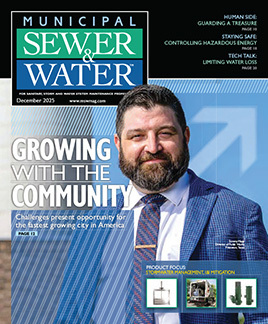
Enjoy this month’s issue.
Continue reading for free