Faced with sandy soils, a consistently high groundwater table and decades-old sanitary and water infrastructure, the city of Staples, Minnesota, is steadily modernizing its approach to maintaining critical Public Works systems.
The city’s small Public Works team has invested in new tools, improved workflows and better data management to strengthen day-to-day operations across water, wastewater and stormwater services. These efforts are happening while the department works to keep more tasks in house, reduce injury risks and prepare for the next generation of system stewardship.
Staples, a community of roughly 3,000 residents with about 1,122 water connections and 1,000 sewer connections, is no stranger to challenging field conditions. High water tables require regular dewatering, often beginning days before a contractor or crew can safely dig. The city’s sandy soils demand careful erosion control and silt protection on many water and sewer service projects. As lead street operator Steve Statema explains, “You cannot put that water into the sanitary system, so we set up silt protection and send it to storm. You have to stay ahead of erosion every time.”
Aging materials add another layer of complexity. Much of the vitrified clay pipe still in service has long exceeded its expected life, and older cast iron water mains require ongoing monitoring and flushing. Even with a lime softening plant constructed roughly 20 years ago, operators must contend with the realities of an older system spread across a growing community.
Staples has embraced practical innovation. Public Works Director Scott Grabe describes the shift as both cultural and operational. “You learn to work with the conditions you have,” he says, noting that better tools and better planning are now central to daily operations. This approach is helping the team reduce contractor dependence, use equipment more effectively and prepare for what the next generation of system maintenance will look like for the community.
A varied system
The city of Staples may be small in population, but its infrastructure footprint is anything but simple. The system includes 1,122 water services, 29 miles of water main, approximately 30 miles of sanitary sewer, around 350 manholes and seven lift stations. The community also operates the lime softening plant along with a new extended-aeration mechanical wastewater treatment facility planned prior to Grabe’s arrival in November 2019, with construction beginning in 2020.
System age varies considerably. Many of the oldest vitrified clay pipes remain in service and experience recurring root intrusion. Older cast iron mains still deliver water reliably but require close monitoring for corrosion and discoloration. The community’s growth within existing boundaries does not strain capacity, yet it does create a steady increase in service connections and customer support needs.

Despite the complexities, the department stays focused on practicality and proactive planning. “We only have five guys covering water, wastewater and streets,” Grabe says. “So we have to be efficient. We look for tools and processes that actually make a difference.” Their work reflects a steady, methodical approach to maintaining a diverse system while preparing for the next stages of investment and improvement.
Challenges beneath the surface
Staples’ subsurface conditions shape nearly every maintenance decision the Public Works team makes. For decades, Staples relied on a trailer-mounted jetter to handle blockages in the sanitary system. Without a vacuum component, crews were simply pushing debris farther down the line, which meant recurring backups and more sediment reaching the treatment plant. When conditions became too severe, especially in clay tile segments with heavy root intrusion, the city had to call in a contractor with a combo unit to saw out roots and remove material. That dependency cost time, strained the small staff and limited how proactive they could be with maintenance.
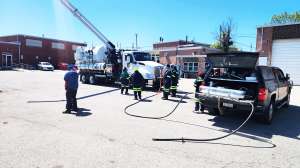
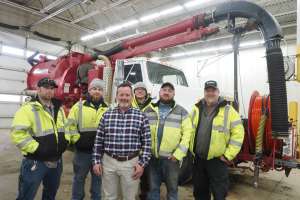
Recognizing this gap, in 2025 the city purchased a used Vac-Con combination jet/vac truck, then invested an additional amount into repairs and upgrades to get it field-ready. Grabe and Statema saw the purchase as an important turning point. “Now we can do a complete job,” Grabe says.
The investment prepares the department to maintain more of its own system, reduce contractor costs and respond faster when problems occur.
Transforming daily operations
Modernization has become one of Staples’ most important strategies for doing more with a small staff. Over the past several years, the department has introduced new tools, digital systems and updated equipment to improve accuracy, reduce manual effort and give workers a clearer view of system conditions.
Grabe describes the shift as a practical necessity. “If we are going to ask our staff to take on more responsibility, we have to give them the tools to make it possible,” he says. That mindset has shaped each upgrade the city has made, particularly in GIS mapping and automated metering infrastructure.
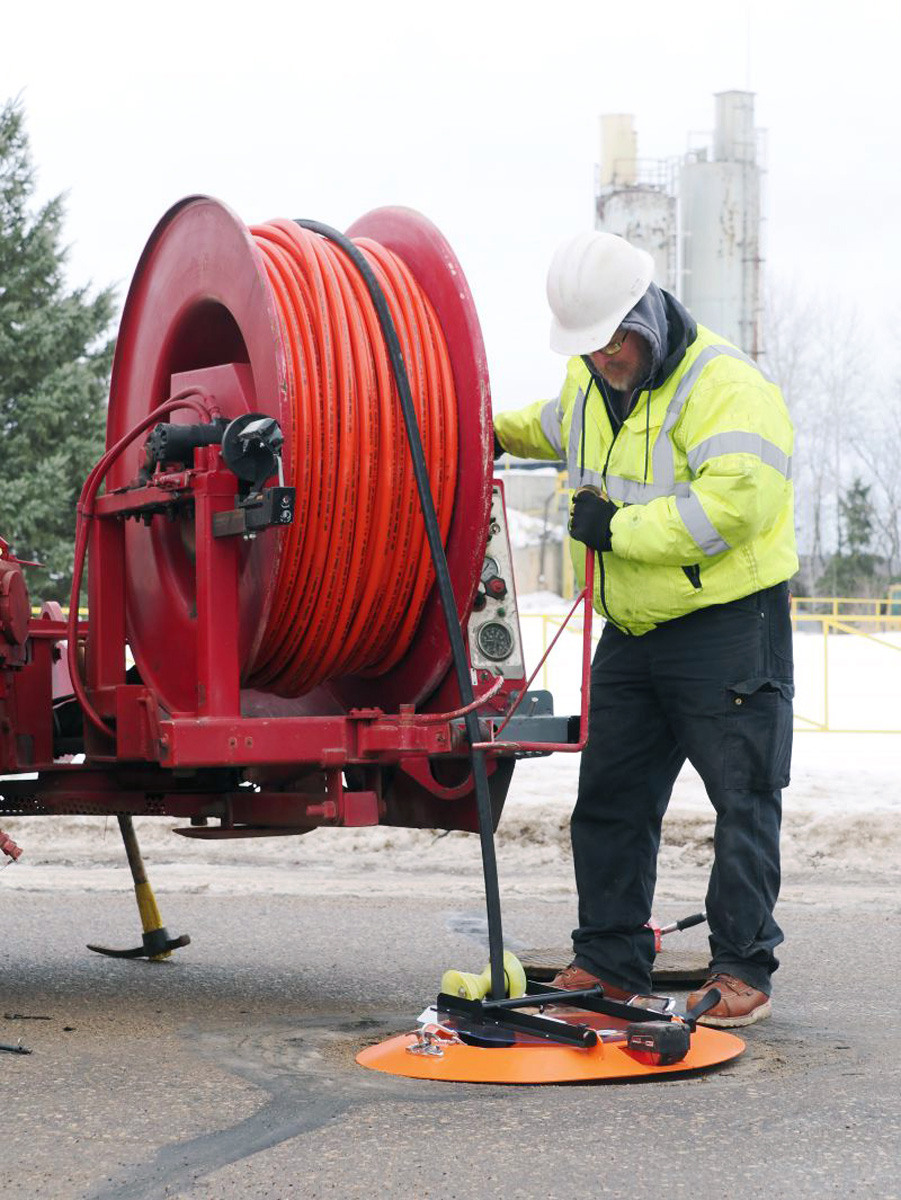
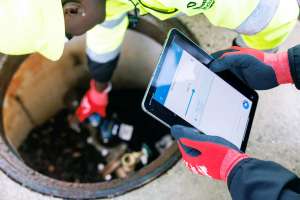
The upgrades are not flashy, but they have delivered measurable benefits: faster troubleshooting, better data for planning, fewer blind spots in the system and improved communication between field and office staff. Operators report that simple improvements, like having current maps available on an iPad in the field, have saved significant time during repairs, flushing or service calls.
Grabe emphasizes that each investment is evaluated through a practical lens. “We are careful about what we buy,” he explains. “Every tool has to make a real difference for the staff. If it helps them work safer or more efficiently, then it is worth considering.”
The modernization effort is still ongoing. As remaining water meters transition to AMI and more data is layered into the GIS system, Staples expects these technologies to support long-term planning, regulatory compliance and future system replacement strategies.
GIS has quickly become one of the most important tools in Staples’ day-to-day operations. Before its adoption, field crews relied heavily on memory and scattered notes to locate curb stops, confirm material types, track past cleaning routes or understand where problem areas existed. Today, those same tasks are handled with far greater accuracy.
“When we finally locate one of the tricky curb stops, it goes into GIS right away,” Grabe says. “Next time, we know exactly where to go.”
The platform is hosted through DGR Engineering, and operators access it through iPads in the field. The system maps past televising and cleaning routes, helps pinpoint areas that need inspection and supports compliance work such as the lead and copper service line inventory. Crews can now visualize where galvanized, copper or unknown materials are located and where remaining meters and water nodes need to be installed.
Major projects on the horizon
Staples is preparing for several significant capital projects that will reshape portions of its water, wastewater and stormwater systems over the next few years. The most imminent is a coordinated infrastructure replacement planned along Fourth Street Northeast, a busy corridor. The county notified the city that the roadway was scheduled for reconstruction, and Grabe immediately saw an opportunity to address aging underground infrastructure before new pavement was placed.
Although the project will take place on a county road, it is a city of Staples project, managed by the city and its engineering firm, with Todd County sharing costs for its portion of the work. The coordination allows both entities to maximize efficiency and minimize disruption. With the road slated for full reconstruction, the project will include complete dig-and-replace installation of new water mains, sewer mains and stormwater lines. Even with a contractor performing the physical construction, the work will require heavy involvement from Staples staff, responding to locates, providing system history and addressing the inevitable surprises that emerge once the ground is opened.

Looking slightly further ahead, Staples has an even larger two-year project slated for 2027 on the south side of town. This effort will replace roads along with water, wastewater and stormwater infrastructure across a wide area. For a system maintained by a five-person crew, the scale of this project will be substantial.
These major projects reflect the city’s long-term commitment to modernization, coordinated planning and taking advantage of every opportunity to replace aging infrastructure efficiently.
Passing down knowledge
With much of the department’s workforce in their late forties to mid-fifties, Staples is beginning to take a serious look at the future. Grabe acknowledges that a wave of retirements within the next decade will carry off decades of hands-on institutional knowledge with it. “There is going to be a lot of knowledge walking out the door,” he says. While the department has not yet formalized a succession plan, both Grabe and Statema see the need for better documentation and practical ways to transfer field expertise to newer operators.
One early step has been strengthening internal communication. Operators now share written guidance on recurring maintenance tasks, chemical handling, sewer flushing patterns and plant operations — basic resources that did not previously exist. Grabe and Statema also expressed interest in expanding this into a more structured system, potentially including video capture of equipment nuances and task-specific procedures to preserve the real-world insights that only experienced operators can provide.
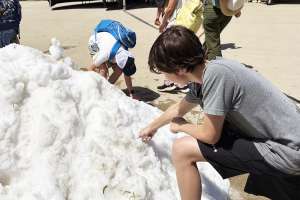
As Staples strengthens its internal training and cross-department collaboration, the team is also looking outward at how to cultivate future public works professionals. One promising opportunity came recently through the Hometown Careers Collective, a new event hosted by the local school district to highlight nondegree career pathways available right in the community.
Grabe and Delavan Cole, lead water and wastewater operator, staffed a booth, meeting with students who had little exposure to what municipal operations actually involve. “A lot of kids don’t understand what goes on to make a city go around,” Grabe says. “We had some really good conversations.”
While the department does not yet have a formal mentoring or apprenticeship program, events like this are helping plant early seeds. They also reinforce the growing importance of succession planning. The outreach effort gave the department a chance to begin building awareness among future applicants while showing the community the essential work happening behind the scenes every day.
Looking forward, both Grabe and Statema say success depends on adaptability, teamwork and preparation for the future. “And not to sound repetitive, but you must learn to work and adapt to the conditions you have,” Grabe says, “and you keep finding ways to make the job better for the people doing it.”
Continue reading for free