Some contractors line pipe. Others excavate or specialize in pipe bursting or emergency utility work. At R.A.H. Solutions, President and CEO Bud Humphries has built the company around a different proposition: The repair method shouldn’t be dictated by the contractor’s limitations.
Sometimes the right answer is lining. Sometimes it is pipe bursting. Sometimes there is no substitute for digging. And on more complicated projects, solving the problem may require a combination of methods.
That versatility has taken the South Carolina contractor from its plumbing roots into trenchless rehabilitation, excavation, stormwater work and increasingly, municipal wastewater infrastructure. Today, the company is carving out a place for itself not by trying to compete head to head with the largest national contractors, but by focusing on work where responsiveness, field experience and the ability to solve an unusual problem matter.
Learning the work
Humphries has spent virtually his entire working life around plumbing and utilities. He started plumbing at 15 and, through a work-based program at his high school, was working close to full time during his junior and senior years. His father and grandfather were builders and general contractors, so construction was already familiar territory.
What kept him there was the work itself. “I just fell in love with it,” Humphries says. “I was good at it.”
He was also fortunate, he says, to learn from experienced mentors who taught him how to do the work correctly. That mattered in a trade where much of the knowledge comes from encountering real conditions in the field. Humphries learned early that troubleshooting requires more than knowing how something is supposed to work. It requires understanding what is actually happening underground and knowing how to respond.
Humphries eventually worked across residential, commercial and heavy industrial plumbing and utilities before starting R.A.H. Solutions in 2020. The company began modestly. “It was me and a helper,” he says. From those two people, R.A.H. grew into an operation that today typically employs between 15 and 20, depending on staffing needs. Humphries readily acknowledges that finding and retaining people for demanding underground work remains difficult. The work can be physically tough, and the company’s service mentality also means someone is always available when a customer needs help. That willingness to respond has remained part of R.A.H. as the company itself has changed considerably.
One of the biggest changes came when Humphries moved into trenchless rehabilitation. His plumbing and utility background gave him a strong understanding of pipe, excavation and conventional repair, but he quickly discovered that experience did not automatically make him an experienced liner. Trenchless had its own learning curve.
R.A.H. made mistakes along the way, and Humphries doesn’t attempt to hide them. Instead, those experiences changed how he thought about the business and what it takes to perform trenchless rehabilitation consistently. For Humphries, learning how to install a liner was only part of the education. Just as important was learning what could go wrong and what to do when it did.
Changing direction

As R.A.H. gained experience in lining, Humphries reached a conclusion that would fundamentally change the company: Trenchless rehabilitation couldn’t simply remain another service offered alongside everything else.
“This is a very detail-oriented thing that we do,” he says. “The challenge, as I see it, is consistency. A contractor might have an employee capable of performing lining work, but if that same person spends most of the week running plumbing service calls, the company isn’t necessarily building the repetition and experience required to become proficient at trenchless rehabilitation.” Employee turnover can compound the problem when specialized knowledge leaves with the person who had it.
Humphries decided R.A.H. needed to choose a path. “We completely shut down the plumbing operation and went headfirst into the lining world,” he says. “It was tough from time to time, but it’s what we did.”
The decision also changed how Humphries thought about being a trenchless contractor. Doing the work well, in his view, means more than being capable of installing a liner when everything goes according to plan. Contractors also need to understand where the technology is appropriate, recognize when it isn’t and have the capability to see a project through when something goes wrong. That’s where R.A.H.‘s conventional construction background continued to matter.
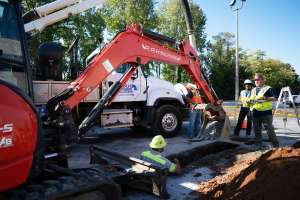
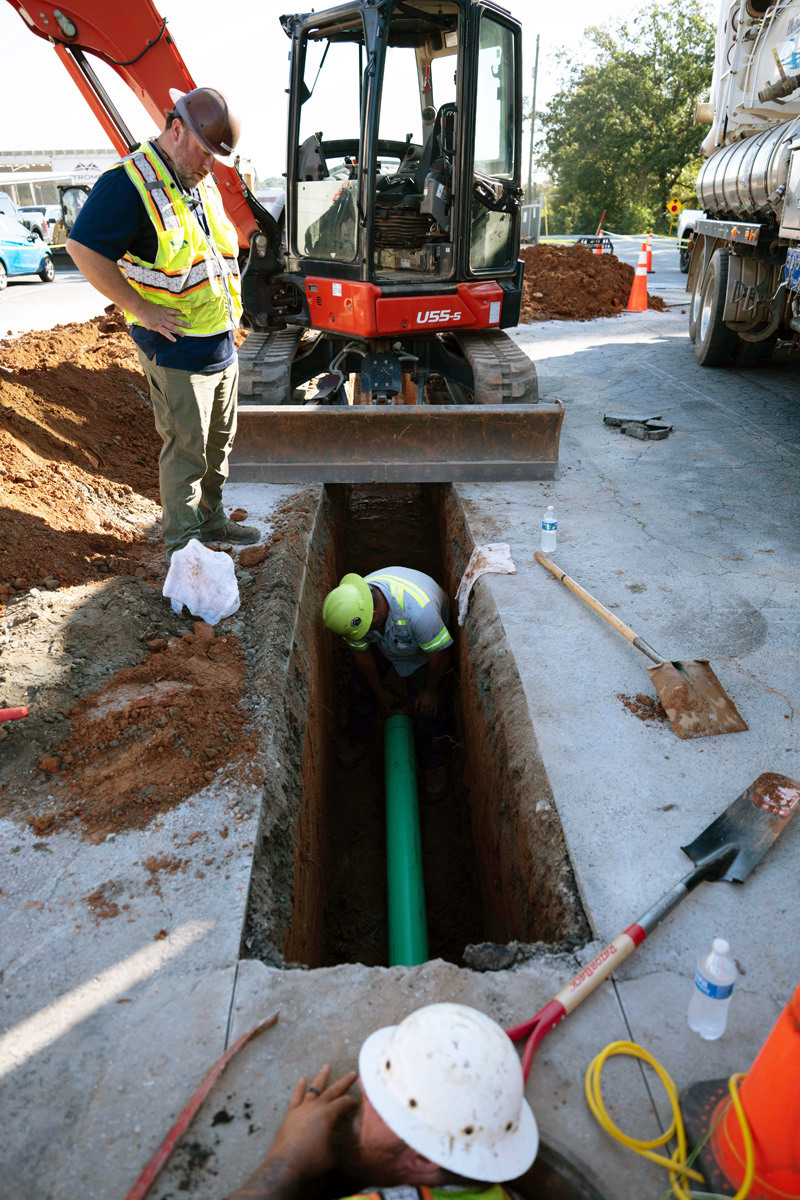
“If it goes bad, you’ve got to dig it up,” Humphries says. “Excavation isn’t a competing philosophy to trenchless rehabilitation, it is part of the company’s ability to take responsibility for the outcome.“ If conditions call for a technically difficult excavation, the company has the capability to perform it. If a pipe cannot be lined but can be burst, R.A.H. can pursue that option instead. That flexibility also removes some of the pressure to make a particular technology fit a project simply because it is the only service the contractor provides.
That ability to recover when a project doesn’t go as planned is an important part of what Humphries believes it means to specialize in trenchless rehabilitation. And for him, that proficiency comes from repetition. Trenchless work is no longer something R.A.H. crews fit between unrelated service calls. It is the work they do every day, building the experience and judgment that only come from doing the work consistently.
Finding a niche
As R.A.H. Solutions became more specialized, Humphries also became more deliberate about where the company could compete effectively. He began looking for what he calls a “niche within the niche” and found it in wastewater treatment plants and municipal work where the need can be immediate and the solution isn’t always neatly defined by a bid specification.

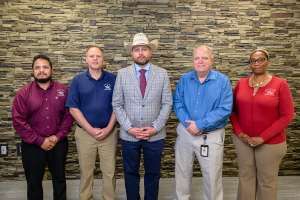
Partner and Chief Operating Officer Jeremy Israel brings significant wastewater treatment experience to that effort, complementing Humphries’ background in plumbing, utilities and trenchless rehabilitation. Together, they are applying something familiar from R.A.H.‘s plumbing roots to the municipal market: a 24/7 service mentality.
“If a clarifier goes down, you can’t wait three weeks for somebody to show up,” Jeremy says. “We want to be there in hours, not days.”
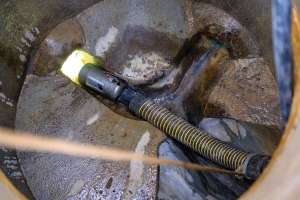
Urgent pipe repairs, pumping and hauling assistance, coatings, structural epoxy work and rehabilitation of structures and lines are some examples of the work R.A.H. can encounter. In some cases, there is sewage flowing and a problem that requires an immediate response rather than a lengthy procurement process.
That responsiveness is becoming an important part of how Humphries sees R.A.H.‘s place in the municipal market. He isn’t interested in winning work with an artificially low number only to recover profitability through change orders, an approach he believes ultimately damages the contractor’s relationship with the municipality.
Instead, R.A.H. is working to become the contractor a municipality can call when something fails, the answer isn’t obvious or the situation calls for more than one capability. For Humphries, that may be the company’s most promising niche of all.
Case in point
A call from Anderson County, South Carolina, gave R.A.H. Solutions an opportunity to put that problem-solving approach to work.
The county was dealing with a deteriorated 48-inch stormwater pipe running beneath a road in a residential subdivision. The location raised the stakes since the road provided the only way in and out of the neighborhood, while the pipe carried creek flow beneath it. Two junction boxes with curb inlets were also tied into the system.
The anticipated solution was conventional excavation and replacement. County officials and their engineers knew lining was an option, but they had reservations about whether it was appropriate for the project. R.A.H. saw another possibility.
The company proposed constructing a cofferdam upstream and bypassing the creek flow around the work area. That would allow the crew to rehabilitate the existing 48-inch pipe with a liner rather than excavating through the roadway. Once the liner was installed, the curb inlet connections could be reopened.
Then the county ran the numbers. Humphries recalls receiving a call roughly three-and-a-half weeks later. The conventional dig-and-replace option had come in at approximately $300,000. The difference between that estimate and R.A.H.‘s lining proposal was, in Humphries’ words, “astronomical.”
The comparison wasn’t solely financial. Avoiding full excavation also addressed the unusual access problem created by a road that served as the subdivision’s only entrance and exit.
For R.A.H., the project required more than identifying a pipe that could potentially be lined. The crew had to account for the active creek flow, establish a bypass, work around the existing junction boxes and curb inlets, and determine how to complete the rehabilitation without the disruption associated with removing and replacing the pipe beneath the road.
The county ultimately had two very different approaches to the same infrastructure problem: remove the road and replace the pipe beneath it or rehabilitate the pipe already there while addressing the flow and access challenges surrounding it.
The successful project also opened the door to a broader relationship with Anderson County. After working through the county’s procurement process, R.A.H. secured an emergency stormwater contract. At the time of the interview, Humphries says the company had completed six stormwater rehabilitation projects for the county, ranging from 36 to 54 inches in diameter. One challenging project had become the beginning of an ongoing municipal relationship.
Taking it seriously
As R.A.H. Solutions continues to grow its municipal work, Humphries remains focused less on the contractors around him and more on continually improving his own company.
“There’s plenty of pipe to be rehabilitated,” he says. “I’m competing with myself, not anybody else.”
Ultimately, he comes back to the quality of the work itself. Equipment and technology may create opportunities, but neither is a substitute for the judgment that comes from experience, including lessons learned when things don’t go according to plan.
As R.A.H. looks ahead, that remains the standard: keep learning, take the work seriously and stand behind what the company puts in the ground.
Continue reading for free