Modular stormwater retention system worked around obstruction
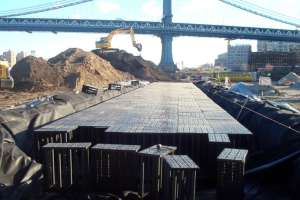
Problem: As part of a residential development in Brooklyn, New York, the Brooklyn Bridge Park Development Corporation needed an underground stormwater retention system that could maximize storage while preserving usable green space. The project presented an unexpected challenge during construction when the contractor uncovered a rock ledge in one corner of the proposed system, located close to a neighboring home. Removing the ledge would require extensive excavation and potentially disruptive blasting or chipping.
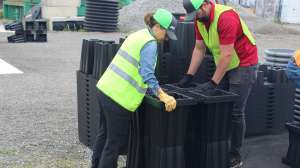
Solution: The StormTank Module system from Brentwood Industries was chosen over traditional underground pipe retention because its high void space provided the required storage volume with a smaller excavation footprint. The modular design allowed the installation team to work around the obstruction. The tanks displaced by the rock were simply relocated to other areas within the system footprint, allowing construction to continue without major site modifications. Installation was completed in just a few days following staged site preparation. The system was wrapped in a 40-mil PVC liner, protected between two layers of 8-ounce nonwoven filter fabric, to create an impervious system suitable for stormwater retention.
Result: The completed system now provides underground stormwater storage while supporting the ongoing development of the site. With two feet of cover, the system can support HS-25 loads, making it suitable for areas subject to vehicular traffic. Its modular design also provided the flexibility needed to overcome unexpected site conditions without sacrificing storage capacity or requiring significant additional excavation. 610-374-5109; www.brentwoodindustries.com

Protecting the pumps that keep downtown from flooding
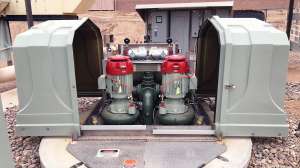
Problem: The Able No. 3 Stormwater Pump Station in Dallas, Texas, provides flood protection for three square miles of downtown Dallas. Protecting its massive pumps is critical to preventing property damage, economic disruption and public safety risks. Manually cleaned bar screens were installed to keep debris out of the pumps. Clearing the massive screens by hand was difficult, unsafe and ineffective. Debris accumulated on the screens or bypassed them, causing pump cavitation and clogging. During heavy rain events, debris accumulated along the surrounding levees — including tires and shopping carts — and was carried at high velocities toward the pump station.
Solution: Nine Duperon Self-Cleaning Trashracks were selected for their ability to automatically remove debris during rain events, even after extended periods of inactivity. Duperon also designed a custom removable screen section to provide access for clearing silt buildup behind the SCTs.
Result: Since the SCTs were installed in 2016, downtown Dallas has experienced three known 100-year storm events with no flooding, avoiding significant potential costs. With the SCTs handling screen cleaning automatically, the need for manual intervention was eliminated, reducing associated labor costs and employee injuries by 100%. The SCTs have also helped protect the station’s pumps from debris-related clogging and cavitation while the removable screen section provides access for silt removal and maintenance. 800-383-8479; www.duperon.com

City boosts capacity and meets nutrient regulations
Problem: The city of Lawrence, Kansas’s existing wastewater treatment plant could not handle wet-weather flows, which contributed to combined sewer overflows. It also lacked nitrogen and phosphorus removal capabilities. The city needed a new facility to meet current and future environmental regulations, accommodate population growth and ensure reliable service.
Solution: WesTech Engineering supplied the biological nutrient removal and clarifier systems for the new Wakarusa Wastewater Treatment Plant. WesTech installed an OxyStream oxidation ditch with anaerobic, pre-anoxic, aerobic and post-anoxic zones for biological phosphorus uptake and nitrogen removal, powered by two 100 hp Landy-7 slow-speed surface aerators. Two redundant COP spiral blade clarifiers (95-foot diameter) with dual-gate energy dissipating inlets provide fast sludge removal and efficient sedimentation. Engineers also added an automated bypass gate to control mixed liquor flow into the anoxic zone.
Result: The new plant delivers 3.6 mgd of BNR capacity, reducing biological phosphorus to below 0.5 mg/L. Each COP clarifier handles up to 3.625 mgd daily and 7.5 mgd during peak hourly flow, giving Lawrence the capacity to prevent storm-driven overflows and service disruptions. The plant’s reliability and modern technology have made it a teaching site for University of Kansas students and Kansas operators. 801-849-9692; www.westechwater.com
Restoring a municipal wastewater thickener wet well
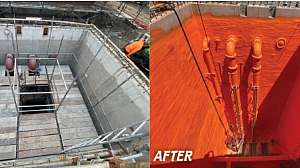
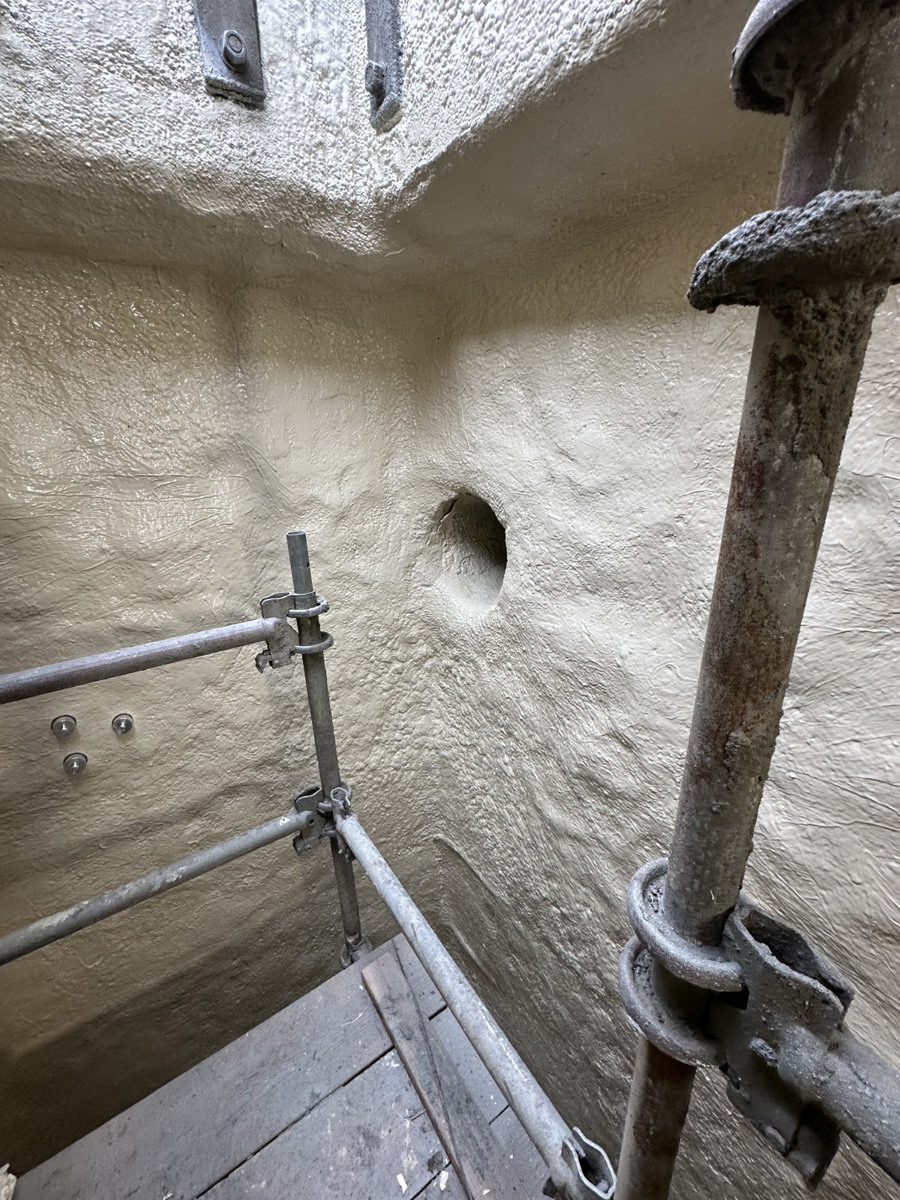
Problem: A rehabilitation project in a thickener wet well at a major mid-Atlantic wastewater treatment plant addressed extensive concrete deterioration resulting from long-term exposure to the municipal wastewater environment, which included aggressive hydrogen sulfide generated microbiologically induced corrosion, abrasion and I&I. Abrasive blasting surface preparation revealed widespread degradation that required structural restoration before a protective lining system could be installed.
Solution: The substrate was restored using Sauereisen F-120 Gunite RestoKrete Underlayment, applied by the dry gunite method over new reinforcing at depths of up to 3 to 4 inches in many areas, returning the substrate to its original dimensions. The high-strength cementitious repair material provided a structural underlayment that rebuilt the severely deteriorated concrete, creating a sound substrate for the protective coating system. After curing, the underlayment was water-blasted to remove laitance and provide the surface profile required for optimal coating adhesion. To protect the structure from future deterioration, the entire wet well (3,000 square feet) was then coated with 210XHB SewerGard high-build epoxy, spray-applied at 125 mils thick. The 100% solids, high-build epoxy coating formed a seamless, monolithic barrier designed for immersion service in wastewater environments. Its ability to be applied at thicker layers reduced the number of coats required, speeding up the return to service of this critical structure.
Result: The combination of structural substrate restoration and high-build protective epoxy resulted in a wet well with a durable corrosion protection system that will perform long term in the demanding conditions this structure is subjected to. 412-963-0303; www.sauereisen.com
Tank system enables park to manage stormwater runoff
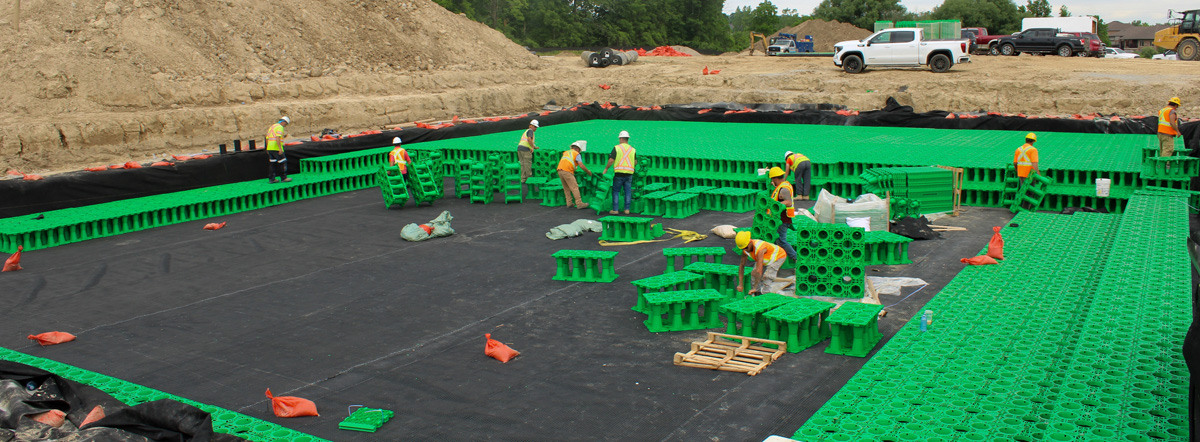
Problem: The city of Brantford, Ontario, needed a stormwater management solution for its new Southwest Community Park, located in the D’Aubigny Creek sub-watershed. High groundwater and silty clay soils created challenging subgrade conditions, while 900 mm and 1,200 mm concrete pipe connections required a system capable of accommodating larger-than-standard inlet and outlet connections. The system would also be installed beneath a cricket pitch adjacent to a school, library and community center, requiring a design that could remain fully concealed without disrupting the surrounding recreational space. With the original specified system reconsidered due to cost and technical limitations, the project required a more adaptable, practical and value-driven alternative.
Solution: Titan Environmental Containment engineered a custom StormSmart tank system using 40-mil LLDPE liner and nonwoven geotextile in a three-layer configuration for impermeability. To handle the oversized pipe connections, Titan designed custom precast structures with round and rectangular orifices sized to the required hydraulic flow. Crews subexcavated the footprint, replaced it with crushed stone for bearing capacity and installed a buried sump pump to manage groundwater during construction. Inspection ports were built to sit concealed beneath the turf for future access.
Result: The finished system met the required storage capacity and factor of safety for uplift, carries an HS-25 load rating for both recreational and vehicle traffic, replacing what would have been a surface pond, keeping the park’s usable space intact and giving the city a durable, low-maintenance stormwater solution. 866-327-1957; www.titanenviro.com
Continue reading for free