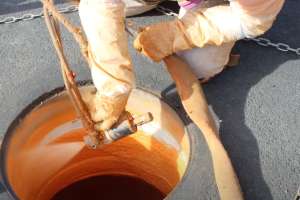
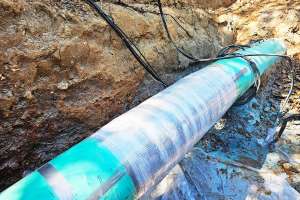
During recent underground utility upgrades in Glacier National Park and Yellowstone National Park, workers unearthed 70- to 90-year-old clay sewer pipes manufactured by the long-defunct Lovell Clay Works. Originally founded in 1919, the Lovell, Wyoming factory produced up to 50 tons of vitrified glazed clay pipes, bricks and tiles daily before changing ownership and expanding across the region during the Great Depression.
Despite being buried hundreds of miles from their origin, the hand-stamped, rock-like clay pipes remain fully functional and remarkably preserved, showcasing the enduring craftsmanship of the local industrial hub. Click here to read more about this story along with a history of mid-20th century pipe manufacturing.
Report Highlights Rapid Surge in U.S. Water Utility Costs
A report released recently by the advocacy nonprofit Food & Water Watch reveals that U.S. household drinking water bills surged 62% between 2015 and 2025, climbing 1.6 times faster than inflation and twice as fast as grocery prices. Based on an analysis of the country's 500 largest community water systems, the average household paid $531 annually for water in 2025.
The study attributes these escalating costs primarily to corporate control, noting that private, for-profit water utilities charged customers an average of $823 per year, which is 67% more than the $494 average charged by publicly owned systems. Beyond privatization, water bills are rising sharply as operators fund critical upgrades to aging pipe networks, storage tanks and treatment plants.
Rio Grande Facing Critical Depletion Amid Extreme Drought
The 1,900-mile Rio Grande is enduring a water crisis as prolonged drought and structural overuse threaten drinking supplies for roughly 15 million people across the American Southwest and Mexico. According to New Mexico’s Office of the State Engineer, the river lost 85% of its historical flows, with over 112 miles drying completely during the summer and flows dropping to just 14% of median levels by August.
The crisis stems from both climate-driven deficits and systemic overallocation, particularly in agricultural irrigation, which accounts for 87% of direct water consumption in the basin. While meteorological forecasts indicate that a historic El Niño pattern could bring temporary winter and spring relief through 2027, long-term projections estimate a permanent 25% reduction in river flows by 2070. To mitigate these structural deficits, New Mexico is implementing a 50-year action plan alongside a $150 million voluntary groundwater rights buyout program to fallow agricultural land.
Continue reading for free