In the early 2000s, South Alabama Utilities faced a huge fiscal challenge: The need to spend tens of millions of dollars to expand wastewater treatment infrastructure needed to handle an unexpected surge in population growth in western Mobile County.
At the time, the utility — based in Citronelle, about 35 miles north of Mobile — was only providing wastewater collection and treatment services to about 900 customers in and around Citronelle, says Tim Lee, wastewater superintendent of decentralized sewers at SAU.
“Gravity sewer systems are so expensive and time-consuming to install because they require lift stations, large-diameter pipes, manholes and so on,” Lee explains. “Plus we would’ve had to build a new treatment plant too.
“I don’t even want to think about how much it would’ve cost.”
The solution? Decentralized wastewater treatment systems, which essentially combine residential septic tanks, smaller-diameter sewer lines and small underground “package” treatment plants that filter effluent and discharge it into either the ground via drainfields or local waterways.
The rural utility — which also supplies water and natural gas to customers in western Mobile County — now operates 14 decentralized treatment systems. In most cases, one treatment plant typically serves about a 200-home subdivision and can handle about 30,000 gallons of raw sewage per day, Lee says.
An 80-mile network of effluent sewers and the treatment facilities are all interconnected, which allows the utility to send flows for treatment as needed and provides redundancy in case of emergencies. Some of the plants are located in the subdivisions they serve while others are up to 10 miles away.
Because the treatment plants are modular, the system can be easily expanded at low cost. And the systems require little maintenance.
A Cost-Effective Solution
The concept of decentralized waste treatment actually was proposed by developers that wanted to build subdivisions in western Mobile County, but preferred smaller lots that would allow them to build more homes in each subdivision, thus boosting profitability.
But smaller lots typically can’t accommodate the large drainfields needed for septic systems, so developers asked if sewer lines could be extended to their subdivisions. But neither SAU nor two other utilities that already provided wastewater treatment facilities in the county were interested, Lee says.
“Housing in the area was booming — growth was phenomenal,” he says. “There was a lot of cheap farmland that could be developed cheaply. But no one wanted to build more infrastructure so far away [from existing sewer systems] because the cost was so high.”
That left decentralized treatment as a good alternative. The concept received a strong boost from Kevin White, a semiretired professor and chairman of the civil engineering department at the University of South Alabama. White spent years doing research on decentralized sewer systems and is a strong and vocal advocate for the technology.
“With decentralized systems, there aren’t any drainfields in yards, so developers could sell lots as small as the county [zoning] would allow,” Lee says. “So after the developers came to us, we researched it and decided to get into it.
“Decentralized systems were just starting to become a thing in the Southern United States,” he continues. “We were among the first utilities to build decentralized systems in Alabama, as well as in the Southeastern United States.”
A Septic/Sewer Hybrid
Here’s how a typical decentralized system works. The utility installs a 1,000-gallon polyethylene septic tank on a residential lot. The tanks use a filtering system that separates solids from liquids; the utility is responsible for getting the solids pumped out periodically, Lee says.
Then the effluent is pumped through a pipe to a shallowly buried main sewer line. The sewer lines, typically made from either polyvinyl chloride or high-density polyethylene pipe, range from 1 to 6 inches in diameter, he says.
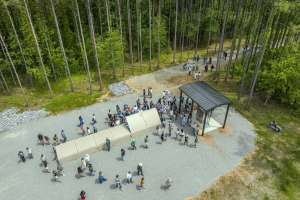
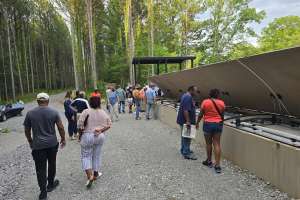
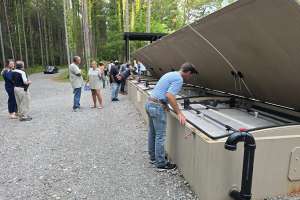
The effluent then is either pumped or flows by gravity to a small treatment plant, which usually consists of underground tanks or pods. The number of tanks varies according to the size of the subdivision the plant serves.
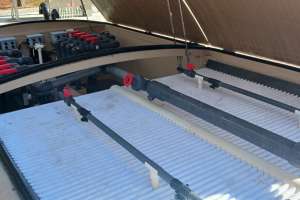
The effluent is stored in a large holding tank. A pump sends it in small, even doses to the pods, where it’s sprayed onto hanging sheets of textile “curtains,” or filters where microorganisms grow. The filters require regular cleaning, Lee explains.
“Think of them as air-conditioner filters situated above large bathtubs,” he notes.
The effluent trickles through the filters, which capture any remaining minute solids. The microorganisms naturally digest any tiny solids the filters capture.
The effluent then goes back into the holding tank, where it’s sent back through the treatment process when effluent levels in the tank are low and discharged when tank levels are high. This avoids tank overflows.
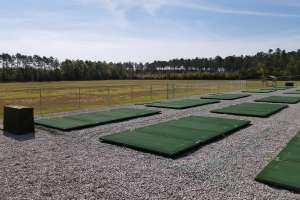
About 80% of the effluent from the treatment plants is discharged into drainfields, a process known as subsurface treatment. The remaining 20% is discharged into local waterways, usually because there wasn’t enough land available for drainfields, he says.
“At some locations, we have acres and acres of drainfields,” Lee notes. “This kind of treatment is more expensive because it requires drainfield installations.
“Treating the waste is the easy part,” he adds. “Disposal is the hard part because you need a lot of land to dispose of, say, 30,000 gallons of treated effluent a day.”
Room for Further Growth
Aside from the cost savings, a chief benefit of decentralized systems is flexibility. For example, if there’s enough land available, the utility can install a bigger treatment plant designed to handle multiple subdivisions at a time.
“If we can find enough property in an area we think is prone to growth, we buy the land and build a plant there, then pipe multiple subdivisions to that plant,” Lee says. “It’s all about economies of scale.”
A key to success is developing good relationships with contractors so the utility is always in the loop regarding potential new residential developments, he adds.
Developers also help fund system installations. They pay the utility an up-front tap fee of between $2,000 and $3,000 per lot as each home is sold and also pay for the installation of the tanks and pumps. Property owners pay an average of $30 and $40 a month for the sewer service.
The 14 decentralized systems currently handle about 4,000 customers and are capable of handling more. Moreover, they don’t serve just residential properties; a 172-unit apartment complex, a 31-lot business park and numerous commercial properties are included in the systems.
Looking back, Lee says the decentralized sewer systems, which cost about $15 million, helped ignite an economic development boom that otherwise wouldn’t have happened. It also helped the utility increase its customer base and boosted revenue about $130,000 a month in service charges.
“That whole area on the west side of Mobile County never would’ve been developed,” Lee notes. “These systems truly are a saving grace for rural areas where you don’t have millions and millions of dollars to invest in gravity sewer systems and centralized treatment plants.”