I got an email the other day from a regular Municipal Sewer & Water reader. He had kind words about the magazine, but questioned the use of a photo in one story and something that was said in another.
While no one really likes to have their mistakes pointed out, I value feedback from the readers of this magazine. I view it as an opportunity to interact with our readers on a more direct level, and ideally to improve the way we do things.
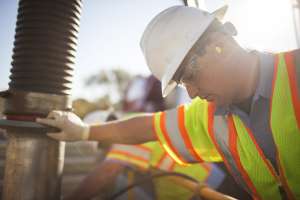
The photo in question showed a worker grouting the seams inside a large-diameter manhole, and the reader raised a couple valid safety issues with the work shown. To some extent, he was certainly right on concerns he voiced, but it was difficult to determine whether certain elements actually violated safety regulations. For instance, the fact that a photo doesn’t clearly show a gas monitor doesn’t mean one wasn’t present. A camera angle can make a trench look far deeper or narrower than it is, or a work area look like a confined space when it really doesn’t meet that definition.
Sometimes safety issues are obvious, but sometimes the issues are more about what you don’t see than what you do. It’s easy to identify glaring safety issues, but the safety measures that aren’t present or in place are often easier to overlook.
The photo in question probably shouldn’t have made the cut. There were numerous factors that led to using the photo, but in the end, in the scramble to wrap everything up and meet deadlines, the photo slipped by. I was worried primarily about getting the issue together and lost focus on something we usually give more attention.
In that way, using a photo I shouldn’t have came about in much the same way safety issues come about on the job site: You’re worried about getting the job done, restoring service and reopening the road, and you lose track of seemingly small things along the way. In my case, the result was actually a nice email pointing out the mistake. On the job site, consequences can be far more severe.
A lot of photos cross my desk every month. Some are good; some are bad. Most illustrate good safety practices, but some demonstrate poor practices, and a few reveal dangerous situations. Those photos stand out. They’re easy to recognize, just like major safety issues on your job sites. But then there are the less obvious cases. Someone running a jet/vac truck without ear or eye protection, a pit that’s on the borderline of being deep enough to require shoring, holding a jetter hose without gloves, and in many cases, a camera angle that makes it difficult to tell for sure. Any of us might miss it. In your case, that leads to workers taking chances with serious consequences. In my case, I’m promoting — or at least normalizing — that behavior. Neither is good. And again, the consequences are much more severe on your end than mine.
I’ll be reminding everyone who works on MSW to pay attention to safety issues in photos, and I hope you regularly take the time to talk safety with your crew. You couldn’t do them a bigger favor.
Ultimately, it’s a matter of vigilance. Passive attitudes toward safe practices can’t be tolerated, and everyone on your team needs to be empowered to point out and correct unsafe practices both in the shop and on the job site.
I’m glad my mistakes were pointed out, and you should be glad when someone points out a safety risk on your job site. They’re preventing potential disaster.
Enjoy this month’s issue.
Continue reading for free