Ontario’s Regional Municipality of Peel (informally known as Peel Region) is an urban/suburban community of about 1.5 million people within the greater Toronto area. Thanks to ongoing population expansion, Peel Region is growing beyond the capacity of its legacy wastewater infrastructure. As well, much of this infrastructure is decades old and suffering from wear.
To mitigate these problems, Peel Region has been inspecting its approximately 205 miles of large-diameter trunk sanitary sewers as part of a five-year plan. One of these is the McVean Trunk Sewer System, which carries wastewater from local businesses and residences to Peel Region’s McVean Sanitary Pumping Station.
The McVean Trunk Sewer System consists of the Brampton-Bolton Trunk Sewer (0.81 miles of 750 mm-diameter sanitary sewer and 11 maintenance holes built in the 1980s), the Bolton Centre Trunk Sewer (1980s, 0.55 miles of 750 mm-diameter sanitary sewer and 13 maintenance holes) and the Brampton-Bolton Twin Trunk Sewer (late 2000s, 0.53 miles of 1,200 mm to 1,500 mm-diameter sanitary sewer and two maintenance holes).
When the main pipes of the McVean Trunk Sewer System were inspected in 2019, many defects were found. They included localized structural defects such as fractures, corrosion from flow and hydrogen sulfide deterioration, plus infiltration of groundwater caused by structural degradation of the sewers and material deposits with the pipes. In addition, failed point repairs were also found within the Brampton-Bolton Trunk Sewer, resulting in minor encrustation and surface spalling.
The good news: Several years earlier, Peel Region decided to “twin” the McVean Trunk Sewer System, literally laying down a second pipeline alongside the first one underground. In doing so, the municipality created a diversionary path for the original sewer’s flow, so that it could eventually be repaired. The addition of the twinning sewer pipe also provided extra capacity for the future as Peel Region continues to grow.

The nitty-gritty
Nicholas Gan is manager of Peel Region’s Condition Assessment and Rehabilitation Team, in the municipality’s Water and Wastewater Division.
“To minimize the impact of the project on local residences and businesses, we combined the rehabilitation of the original McVean Trunk Sewer and the addition of a new watermain,” Gan says. “Clearway Construction was awarded the project in January 2023, which it completed in November that same year.”
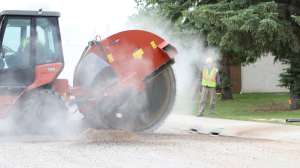
The total cost of the combined project was about CA$21.7 million (about US$15.15 million). This budget included 6,856 feet of 750 mm-diameter cured-in place pipe, 272 feet of 1,200 mm-diameter CIPP, and 7,513 feet of 400 mm-diameter water main; along with 35 internal mechanical joint seals on 1,200 mm and 1,350 mm pipes and the installation of 10 underground chambers. There were 47 maintenance holes that received nonstructural rehabilitation while 1.4 miles of roadway had to be reconstructed following excavation and filling operations.
Peel Region’s decision to install the twinned sewer pipe years before made life easier for the 2023 rehab project. “Being able to use the twinned trunk as a diversion option saved us both time and money,” Gan says. “Specifically, we were able to use that twinned trunk sewer as a receiving body for the bypass flows from the original sewer trunk. With those flows moved to the twin — which handled up to 42 U.S. gallons/second — we were free to repair the original trunk sewer on our own schedule.”
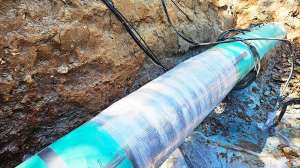
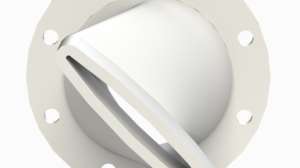
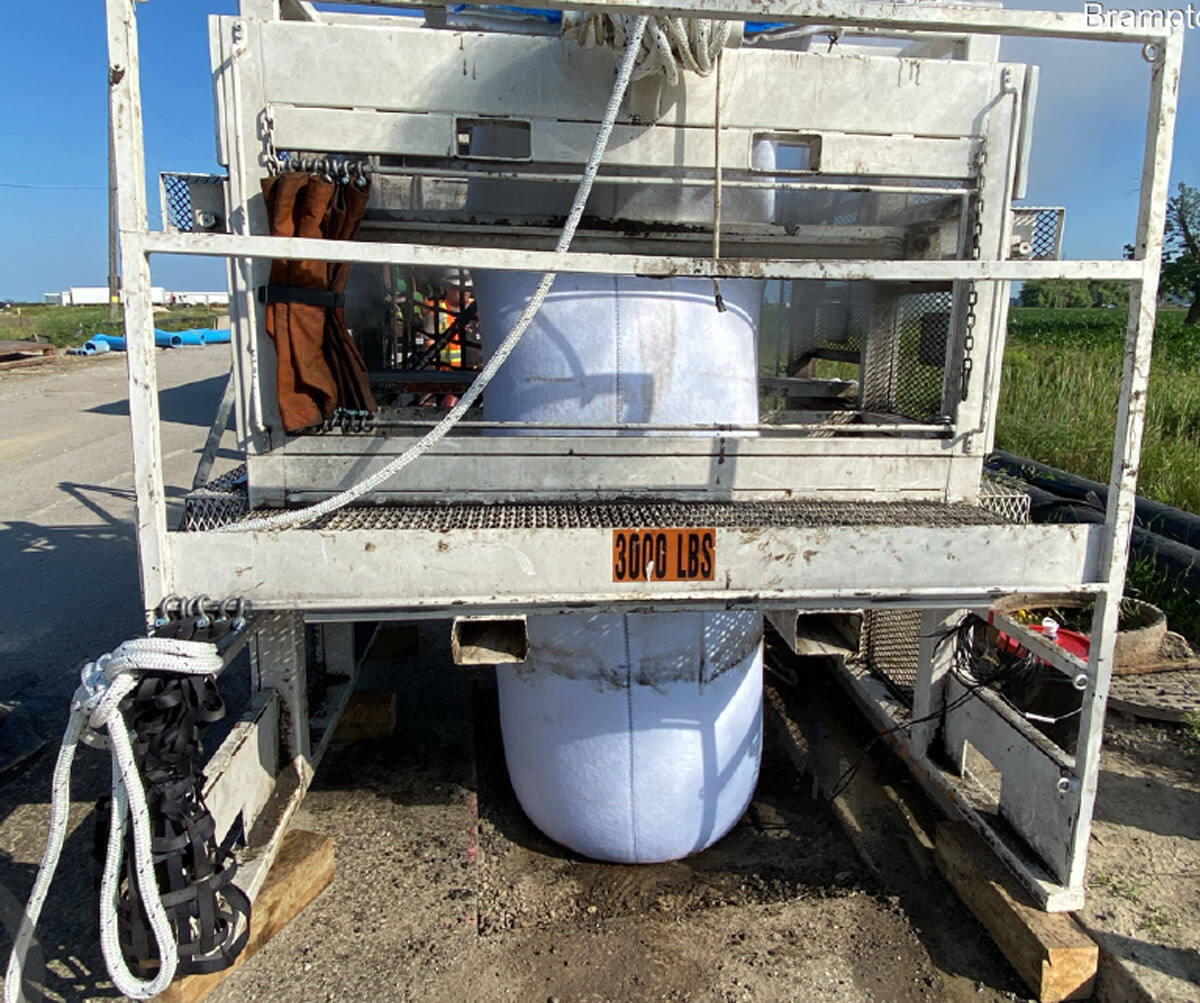
Most of the repairs to the original McVean Truk Sewer were made with CIPP. “The repairs also used some internal mechanical joint seals as well as CIPP spot repairs,” Gan says. “This rehab methodology was chosen in conjunction with our consultant GHD due to the size of the asset and the desired extension of the McVean Trunk Sewer’s useful life.”
Challenges arise
Although the McVean Trunk Sewer Project achieved its goals, it did run into some challenges along the way. These included the demands associated with rehabbing the original line while simultaneously installing a new water main.
“One challenge right off the bat was the amount of work to be done in the area,” Gan says. “One of our initial discussions was, ‘Do we allow one of the projects to go first and defer the other, or do we combine them?’ … We ultimately ended up doing the latter. This led to the challenge of figuring out how to scope and then manage the combined projects properly.”
As it turned out, doing everything at the same time mitigated the impact on the community. “So it was the right decision. With early involvement of both teams, we were able to integrate both scopes and the contract documents relatively seamlessly. I think it worked out quite well.”
Another concern for this project was traffic management. The McVean Trunk Sewer is located along the Highway 50 corridor, “which is a major north-south route in the region,” Gan says. “So we had to handle the flow of materials and the construction work to minimize disruption to this roadway, which is on the boundary between Peel Region and York Region.”
The landscape was a third challenge. The groundwater drainage system here is a mix of ditches and storm sewers. “During heavy rain events, sometimes groundwater was an issue with surface runoff affecting the construction site,” says Gan. “All we could do when this happened was to defer work until a drier day.”
Finally, site security was an annoying issue. “We experienced some illegal dumping of waste materials at our compounds,” Gan said. “This waste wasted time for Clearway’s crew, which had to pick up and then remove this waste. So, as a mitigative measure, we installed cameras on high poles as a deterrent and also to monitor the sites. This really helped make the problem go away.”

Ready for the future
Today, Gan is happy about Peel Region’s decision to twin the McVean Trunk Sewer System.
“There is a lot of development planned for this area, so having access to the resilience and redundancy provided by a twinned sewer system makes good sense,” he says. “Meanwhile, being able to use the twin as a bypass option during the rehab project made it much easier to fix the original sewer. Should there ever be an issue on one of these trunks going forward, the other can serve as a backup. And yes, we are using both trunks today to optimize wastewater flow, which gives us lots of headroom for higher water volumes, if need be, in the future.”
Continue reading for free