Modernizing water data management to prevent flooding
Problem: Miami Conservancy District is responsible for flood protection along Ohio’s Great Miami River. The organization struggled with fragmented data management systems, and data quality assurance and data accessibility were persistent issues. In addition, staff turnover created knowledge gaps and inconsistent approaches. When responding to information requests, the district could only provide raw data, forcing users to conduct their own analysis. They wanted to focus on watershed science rather than managing complex IT infrastructure.
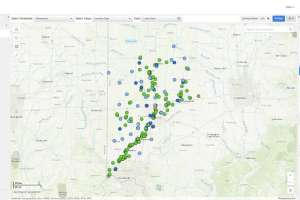
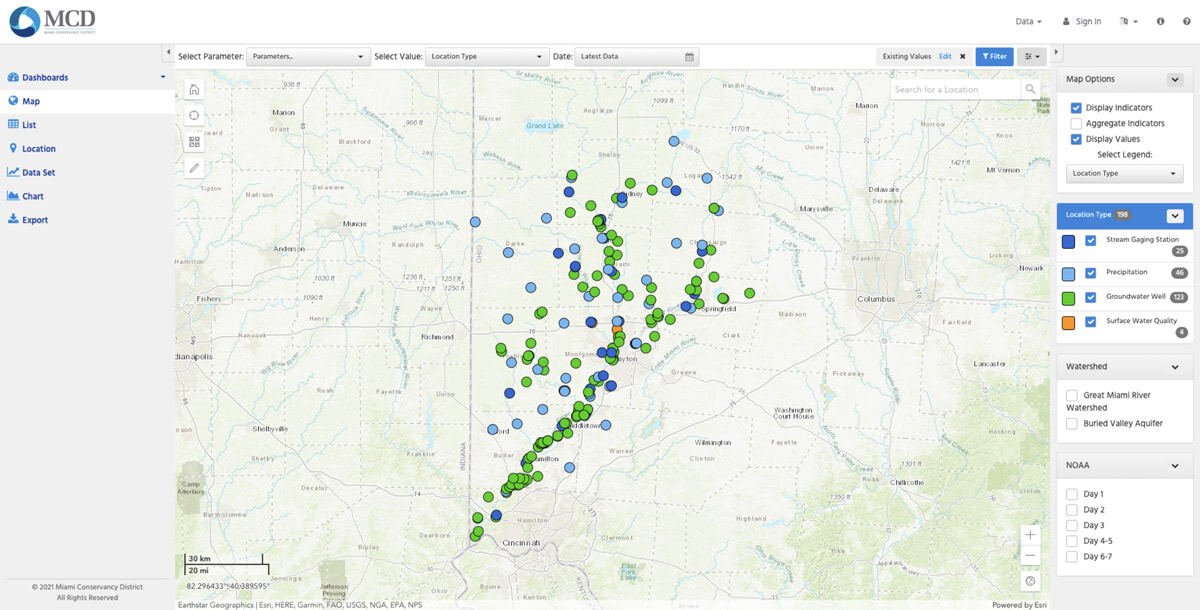
Solution: They implemented Aquarius software, a cloud-based platform from Aquatic Informatics designed specifically for water information management. The solution features a comprehensive web portal with custom dashboards displaying real-time environmental conditions including groundwater levels, stream flow, temperatures and rainfall statistics. The cloud-hosted system eliminated the need for on-site servers and software maintenance while providing enhanced data security. It automatically centralizes hydrologic time series data from over 100 observation wells and performs automated quality checks with error detection and bias corrections. The platform integrates data feeds from USGS, NWS and other agencies, enabling collaborative watershed management and data sharing.
Result: The new system has improved data accessibility and analysis capabilities. Staff can now easily identify correlations between river levels and groundwater across multiple monitoring points, enabling better predictive modeling. The public web portal allows residents and emergency crews to access real-time conditions directly, supporting both recreational activities and emergency response. Enhanced visualization tools have strengthened community outreach efforts, allowing the district to demonstrate watershed conditions during presentations and educational events more effectively. 877-870-2782; www.aquaticinformatics.com

Protecting the pumps that keep downtown from flooding
Problem: The Able No. 3 Stormwater Pump Station in Dallas, Texas, provides 100-year flood protection for 3 square miles of downtown Dallas. Manually cleaned bar screens were installed to keep debris out of the pumps. Clearing the huge screens by hand was extremely difficult, unsafe for employees and mostly ineffective. Debris would either accumulate on the screens or bypass them, resulting in pump cavitation or clogging. Every heavy rain event flooded the downtown district, creating damage to buildings, economic loss, closing businesses and endangering the public.
Solution: The city needed a reliable system that could withstand extreme weather and handle debris of any size or type. Nine Duperon Self-Cleaning Trashracks were selected for the pump station for their proven ability to operate automatically during rain events, even after long periods of inactivity, and effectively manage all debris. Duperon also designed a custom removable screen section, allowing access to clear silt buildup behind the units.
Result: Downtown Dallas has experienced three known 100-year storm events with no flooding since the Trashracks were installed in 2016, resulting in great cost savings. Also, eliminating manual screen cleaning reduced labor costs and reduced employee injuries by 100%. 800-383-8479; www.duperon.com
Continue reading for free