Accounting for growth can be difficult for municipal utilities already struggling with maintenance backlogs and aging infrastructure. In Princeton, Texas, the fastest growing city in the U.S., the challenge is exponentially bigger.
But Tommy Mapp, the city’s director of public works, doesn’t look at it in negative terms.
“It’s exciting for me to be public works director in the fastest-growing city in the country, but it’s challenging, too. You have to keep an eye on everything to make sure the needs of the community are being met. We are anticipating more growth and are planning how to provide the infrastructure to meet the needs of the growing community.”
Twenty-five years ago, the Collin County community, which is situated some 40 miles northeast of the Dallas-Fort Worth metro area, had a population of about 3,500 people. In 2020, the number of residents had risen to 17,000. Today, its population is estimated to be more than 46,000 and still rising.
The city is a bedroom community, with people commuting just a few miles west to McKinney and from there south to the Dallas-Fort Worth metroplex. Hence, there are no sizable industrial utility customers in Princeton. In fact, 90% of land within the 15-square-mile city is classified residential.
Serving all of these new or longtime residents is the top priority for Mapp and other city officials. Their unvarying focus for several years has been planning for growth, executing strategies to meet it and overseeing construction of new facilities to accommodate it. It’s all about growth and more growth.
Examples: In 2020, Princeton and the extraterritorial areas it served had 77 miles of wastewater lines; the number today is 270 miles. The city’s 90-plus miles of waterlines in 2020 have expanded to 185 miles today. Water connections numbered about 6,500 in 2020; today, the number is nearly 15,000. Eleven lift stations helped move the system’s water five years ago; twice that number regulate the flow in 2025.
Those numbers are poised to grow even larger, because population growth remains the community’s official goal. This year’s city budget document makes it clear: “The City Council remains focused on growing the city…”
To keep ahead of it, the public works department is updating its water and wastewater master plan. Typically, such updates occur every five years, but a 2022 master plan was already viewed as outdated. “We felt the need to upgrade it,” Mapp says.
A corollary comprehensive plan for the city will include other forward-looking measures for public works such as conducting an assessment of pavement in the city and examining the possibility of new utility rates for city customers “so we can be sure we’ll be able to fund and support new infrastructure identified in future studies,” Mapp says.
A brief pause
To their credit, city officials voted one year ago to pause the relentless building-out of the city, with the city council enacting a moratorium on residential property development. Last summer, the ban was extended to the end of November. Developments that already were approved or underway were not affected by the order and continued apace. Other construction plans, however, were nipped in the planning stage.
“We benefitted from that, for sure,” Mapp says of the pause. “The city was just trying to make sure we are growing correctly and with infrastructure in place to meet the future needs of the community. It allowed us to get the planning in place that we needed.”
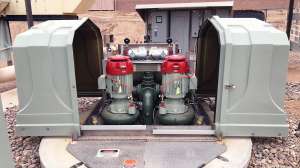
Some of the moving parts that the department has set in motion in recent years to keep up with demand include a new pump station with a ground storage capacity of 4 million gallons that was brought online three years ago and a 2 million-gallon elevated water storage tank connected to the system two years ago. Another 3 million-gallon elevated tank is in the design stage.
The city gets its water from the North Texas Municipal Water District system, which serves a dozen or more communities. Princeton was a founding member of the district system and also sends its wastewater a half-dozen miles for treatment at the district facility.
The aforementioned 270 miles of 8-inch sewer lines includes several miles of clay pipe in older sections of town. While the 80-year-old pipe is holding up OK “for the most part,” the public works director says, there are identified problems in some of it. As a result, the clay is targeted for elimination in a five-year capital project. “We are going to spend $1 million annually for the next five years and a lot of it will be addressing I&I and replacing clay pipe and aging infrastructure in general.”
Sewer and water infrastructure serving the 13 schools in the city are in good shape, generally speaking, Mapp says. For one thing, many of the school system’s campuses were built to accommodate school-age children in neighboring new residential developments, so the same new lines running to the housing stock also run to the schools.
Several years ago, public works divided the city into five areas and began to rotate among them to systematically and thoroughly inspect each section of the town for maintenance issues. It was a big step up from making intuitive forays into the field. Mapp says the methodical inspection and cleaning of the system continues even as the system is built out — construction of new lines not being allowed to overwhelm the need to maintain the old.
CORE values
When the 42-year-old director began at Princeton in 2011, public works employees numbered five. Today there are 41 in the department keeping water flowing, sewers collecting, roads travelable and other utility infrastructure functioning as intended. Doing the routine work is no small feat when the whole system is under siege from new residents and developments.
To help keep it all together, the director and staff developed a culture that keeps department employees producing at a high level. “We have a culture that celebrates the work our people do,” Mapp says. “The organization works hard to make people feel welcome.”
Keyed to the department’s “CORE” values of collaboration, optimization, respect and efficiency, the leadership oversees an employee of the month system in which peers nominate one another for an achievement award pegged to one of the CORE values. When a person achieves distinction in each CORE area, the individual is recognized publicly in the community.
“We don’t have a lot of turnover,” the director says, evidence that the overall program is good for morale.
One of the longer-tenured employees is Ginger Williams, who has worked in the office for 11 years, interacting with both customers and department colleagues. Her approach to successfully dealing with the public is to help them “get to a real person instead of just getting a runaround.”
Assistant Director Preston Jones says Williams is indispensable inside the office and out. “She can take care of anything. With new office staff, she makes sure they learn the system and how to optimize the system.”
The department engages with customers through Shereta Sweet-Odame, who serves as administrative and compliance manager as well as environmental coordinator. Which is to say she tactfully reaches out to customers to inquire about high volumes of water use, offering them water conservation tips. She manages a city app where the public can submit queries and is the primary contact person for the department. “She stays on top of it all and communicates with the guys in the field, too,” Mapp says.
One of the city’s ongoing public outreach issues is battling FOG in the water system — the fats, oils and grease that coagulate and plug lines and pumps. Restaurant owners are constantly encouraged through messaging from Sweet-Odame to keep their grease traps working so FOG doesn’t enter public lines. Of late, her messaging focus is on residential cooks and dishwashers who often add unknowingly to the problem.
As for field work, the department undertakes most maintenance and pipe-laying tasks in its sewer and water system. There are exceptions, though, when jobs are contracted out. Mapp notes, for instance, that some wastewater mains are 40 feet underground and his crew lacks both equipment and expertise to reach them.
But ordinary pipeline repair or replacement is accomplished inhouse. While public works field personnel are division specialists — water and sewer workers, for instance, or road crews — emergency or large-scale projects often draw from all divisions to get the work done. The field personnel have at their disposal a fleet of jet/vac trucks, hydroexcavation rigs, skid-steers, a backhoe, a CCTV inspection truck, a fleet of haul and tank trucks and assorted other machinery.
Hands-on approach
Because the city and its public works department have been able to keep ahead, or at least abreast, of the influx of new residents, their successful management of unwieldy growth is being recognized by peers in the industry.
In a gathering of the Texas chapter of the American Public Works Association in McAllen, Texas, earlier this year, Mapp was presented the professional manager of the year award for water resources management. Jones, his assistant director, earned the organization’s management innovation award. The director’s award makes Mapp eligible for a national citation.
The director was asked if, everything considered, his approach to managing the challenge of growth is new or just a refinement of what he and the department have been doing all along.
“It is more of a refinement of how we have been operating. We are a very hands-on department, inspecting facilities daily, checking stations daily. So, it is a refinement. We expanded our capability but still are maintaining the same hands-on approach.”
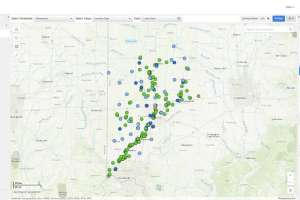
That said, he also is an advocate of virtual assessments. A few years ago, an asset management system — called Incode — was connected to the city’s GIS mapping platform, making field crews more efficient and responsive to customer needs. The department’s cellular system also is being upgraded to give office monitors more real-time views of infrastructure and more timely assessments of the condition of infrastructure.
So, human ingenuity and new technology are coming together in Princeton to ward off errant or helter-skelter growth. In the end, Mapp deflects some of the attention he and his staff receive, saying that his department is not alone in facing up to the downside of growth.
“The overall growth in the area is tremendous and we are just sharing this experience with other cities. I think we are managing the growth correctly, but everyone in the area is taking appropriate steps, too.”