Aging infrastructure and delayed maintenance can be problematic. Leadership in the city of New Britain (Connecticut) can testify from long and rather painful experience that neglecting old underground infrastructure is not a good idea.
“Our problem is old pipe,” says New Britain Mayor Erin Stewart, speaking of chronic inflow and infiltration issues in the city’s sewer systems. “And a lot of our problems stem from no one thinking about addressing the issues. The sewer lines are underground and leaders sometimes don’t care about things the people can’t see. Maintaining underground pipe is not a very sexy issue.”
By “old,” we are talking about pipe buried a hundred years ago, some of it nearly 150 years ago. Not all of New Britain’s infrastructure is that old, of course, but utility officials have determined that 80% of the system’s inflow and infiltration problems occur in 20% of the pipe — which includes the old stuff.
This is New England, after all, one of the colonial regions in the U.S. The infrastructure maintenance problem was aggravated when the region began to lose some of its industrial base 50 years ago, thereby losing tax base and funding resources for utility maintenance programs. Many of New Britain’s sister cities in the region share the problem, though it’s also true that some communities in the area struggle less because they are wealthier.
“New Britain is an older town, and not a rich one,” the mayor says of the municipality of 73,000 residents.
Long-term approach
The good news is that the city is fully engaged now in repairing its sanitary and storm sewers. The election of Mayor Stewart 11 years ago was one component in what is shaping up as a municipal utility success story.
“This is a long-term project,” says the city’s public works deputy director, Ray Esponda, who heads the city’s utilities division. He is a 23-year employee of the city. “It is an 11-phase program and we’re in phase three. By the time we get to the final phase, we expect to see a major reduction in I&I. If the mayor stays another 10 years, we just might get it done. She’s been the force behind it.”
Actually, attention finally began to be paid to the issue more than 25 years ago when the city contracted an assessment of its 180-mile gravity sewer system. Over two years — beginning in 1996 — sewer flow in the two dozen sub-basins in the city was monitored and groundwater monitoring wells drilled. It was determined that about half of the sub-basins were experiencing excessive inflow and several showed excessive infiltration.
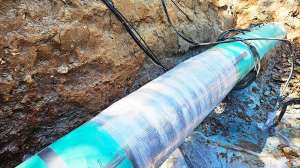
In response, city officials launched a series of rehabilitation projects over the next decade. Though some pipe was dug up and replaced, most was lined with cured-in-place pipe — tens of thousands of feet of pipe ranging from 8 to 18 inches in diameter. The joints in nearly as many linear feet of pipe were tested and grouted.
Most of the pipe is vitrified clay with other types mixed in, including Orangeburg, the bituminized fiber pipe that is the bane of municipal utility departments. “That stuff was never meant to be in the ground for a hundred years,” Esponda says. The fiber pipe usually is fixed by lining it.
Because some of the city’s 3,600 sanitary sewer manholes were allowing water in, watertight covers were installed and manholes were sealed. Some manholes were replaced entirely.
In 2011, the city went after even bigger things — specifically, a 42-by-60-inch rock tunnel. A 36-inch high-density PVC pipe was inserted in the tunnel, fill dirt packed around it and a bulkhead fitted at either end.
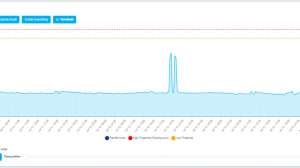
All of this sounds like a serious effort to assess and fix a porous pipe and manhole situation, and it was. Yet by 2011, flow monitoring showed that the system continued to be an I&I sieve. As late as 2023, the five-year average flow in the system was 13.5 mgd; expected flow based on water consumption data is 8.5 mgd. Which is to say there was a lot of vagrant groundwater in the sanitary sewer system.
“I was shocked at the amount of storm sewer water going into the sanitary sewer system,” Esponda says. “During a storm event, we can get more than 100 mgd flow.” Consequently, though the previous decade of rehab work was helpful, the city reassessed its approach to the issue and, among other things, decided on a strategy that included better storm sewer management.
“The rainwater going into our sewer pipes overwhelms the wastewater treatment plant,” Esponda says. “We have to address that, also. Managing the sanitary and storm sewers goes hand in hand.” When the city reorganized its management structure a few years ago, Esponda was placed in charge of the utilities division, which includes sanitary and storm sewer systems and water. It seems a good fit inasmuch as the deputy director originally worked on the water side of utilities.
Reducing I&I
It should be noted that New Britain wastewater is treated in a modern facility in nearby Cromwell, Connecticut. That district plant serves New Britain and three other communities and has adequate capacity to handle the excessive flow coming out of the city’s sewers.
Even so, the problem came to a head in 2015 when both New Britain and the district treatment plant were put on notice by the Environmental Protection Agency that the clock was ticking on a true I&I fix. “The EPA consent order is really what put the issue in the forefront of our minds,” says Mayor Stewart. “We knew we had to start addressing it more effectively.”
Officials launched a systematic phased approach to dramatically reduce inflow and infiltration. A 10-year plan was developed with expenditures each year capped at $2 million. It involved CIPP lining and grouting of sewers and manholes, rehabbing of service laterals and a renewed focus on curbing inflow from private property. This proved to be only a beginning.
“The deal was we would put in $20 million over 10 years, but we have committed to do $90 million,” says Esponda. “This is a long-term investment from which the city should be in good shape for the next 50 years or so. It is a multiphase, multipoint attack on the issue.”
The mayor adds: “We strategized and created this 11-phase program and committed to funding it. We know the EPA surely will say at some point, you have to do more.”
Though some $13 million from the 2021 COVID-era American Rescue Plan will be tapped, money remains a core issue. “Funding is a huge piece of this,” says Mayor Stewart. “It is going to make or break it. We know that to secure adequate funding, we have to remain committed to the plan.”
Envy of Connecticut
The utilities division of the city’s public works department contracts most of its rehab work, according to Esponda, primarily because the type of work involved, which is grouting and pipe lining. Both require specialized equipment. General maintenance and emergency responses, however, are handled by the division’s 60 employees.
“My water staff is the envy of Connecticut,” Esponda says. “We had a major waterline break a while back that we handled in-house. We have undertaken mainline extensions. But sewer lines can be more difficult.”
The problem of water entering the sewer system from private property — sump pumps, roof drains and so on — is handled systematically. Property owners are required to let utility representatives into their homes. Sump pumps are disconnected if that is an issue, and pipes are inspected and sometimes smoke-tested.
“If we find lines are connected to the sanitary sewer and shouldn’t be, we connect them to the proper pipe and pay for the connection — if we can afford it,” says Esponda. “We try to keep it as low-cost as possible.”
No sewer system is ever 100% sealed against I&I, of course, and New Britain’s won’t be either. Esponda’s end goal is realistic. “We are shooting for 20% incursion. If we have 10 mgd of flow and less than 2 mgd is inflow, we will have been successful.”
New Britain has become something of a leader on the I&I battlefront with other communities in the region now calling Esponda, the mayor and others for advice. And what do they advise the callers?
“Find a way to allocate money to the issue,” says Mayor Stewart. “Inflow and infiltration are always going to be an issue, so you have to assure people that you are allocating adequate resources to it.”
The deputy director says he emphasizes long-term planning. “You need to maintain the system. If you have good maintenance, you are on top of things. If people here had worked on these problems over the last 50 years, our projects now would be a lot less drastic. So, keep an eye on the system and do the work.”