Every wastewater utility deals with FOG issues. In Johnson County, a comprehensive FOG management program is making a difference in sanitary sewer system performance.
Johnson County Wastewater serves the northeast quadrant of Kansas, bordering Missouri. JCW provides wastewater services to a population of nearly 600,000 residents and over 1,600 food service facilities. To service all these customers, the utility operates six treatment facilities with a combined total daily average of 76 million gallons per day. The collections system consists of 2,400 miles of sanitary sewer main, 60,000 manholes and 32 pump stations.
The utility’s Douglas L. Smith Middle Basin Wastewater Treatment Facility can process up to 40,000 gpd of FOG and typically consumes around 18,000 gpd. The FOG is co-digested with waste activated sludge.
Asset Management
In 2014 JCW advanced an asset management program focused on the collections system and aimed at aligning resources with system needs. The process began by evaluating the existing data on the utility’s infrastructure and identifying areas for improvement.
Johnson County has and continues to experience a high growth rate in undeveloped areas while managing aging infrastructure in older parts of the county with redevelopment. The goal was to strike a balance between maintaining the system effectively and avoiding wasteful overmaintenance.
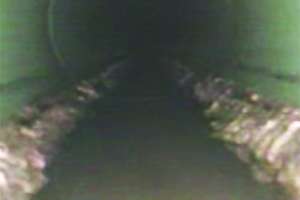
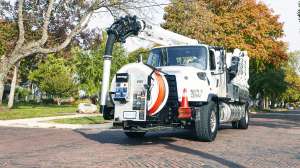
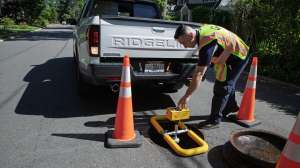
The JCW’s cleaning crews regularly encounter a variety of issues, not the least of which is the buildup of FOG in sewer lines. Left unchecked, FOG can create a host of problems and eventually lead to the formation of fatbergs.
Comprehensive Approach
Food service facilities, which are major contributors to FOG, are a key focus of JCW’s program. These facilities are required to install grease interceptors if they cook food from raw ingredients. JCW mandates that all food service establishments be permitted and follow strict guidelines.
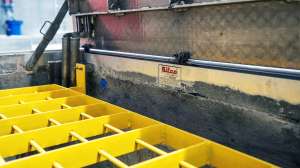
The permitting process begins during the design phase, where JCW engineers review plans to ensure compliance with the utility’s requirements. Prime grease generators such as wok sinks, three-compartment sinks, floor drains and dishwashers are required to be plumbed into grease interceptors. Once construction is completed, JCW inspects the facility to ensure the plumbing matches the approved plans.
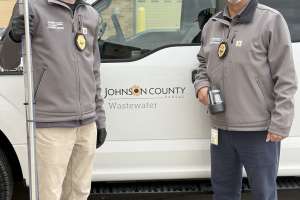
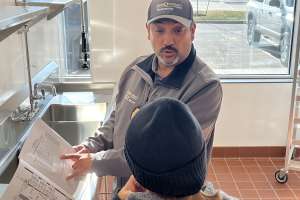
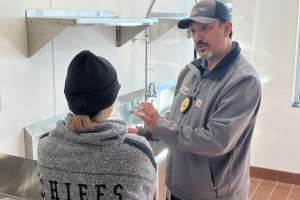
After the facility is operational, JCW’s Environmental Compliance Managers conduct an on-site visit to discuss best management practices and provide educational materials. During this visit, the ECM reviews the menu with the facility’s owner or manager and discusses the necessary pumping frequency for the grease interceptor. Factors such as the size of the interceptor, menu items, and production volume determine how often pumping is needed. It’s a requirement for facilities to submit a detailed pumping report after each service, including the amount of grease and solids removed, as well as the interceptor’s condition.
This inspection and permitting process takes place whenever a new facility is built or ownership changes hands. The goal is to ensure proper maintenance, protect the sanitary lines, and educate businesses about FOG management.
Waivers and Inspections
Not all food service facilities produce significant amounts of FOG. Establishments like bakeries, coffee shops, and sandwich shops that do not cook raw meats or other fats may qualify for a Low Grease Discharge Waiver. While these businesses are not required to install interceptors, they must still follow certain guidelines to minimize FOG discharge. Random inspections and menu reviews help ensure compliance with these standards.
JCW’s FOG program is regulated under the Environmental Protection Agency’s Title 40 Code of Federal Regulations and the utility’s Sanitary Sewer Use Code. Violations, such as failure to permit, pump, repair, or renew a permit, can result in daily fines of up to $100, as well as potential court summons or liens for unpaid fines. However, JCW emphasizes education and collaboration, working with businesses to ensure compliance before taking enforcement action.
Preventing Fatbergs
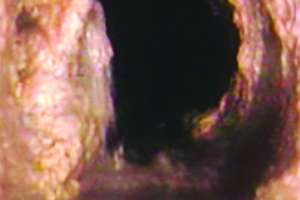
Fatbergs are a growing issue in wastewater systems across the country. Composed of FOG combined with nonbiodegradable solids like wet wipes, sanitary napkins, cotton swabs, and food waste, fatbergs can form solid, concrete-like masses that obstruct wastewater flow. In the U.S., nearly half of all sewer blockages are caused by grease, compounded by the increasing use of wipes that clog systems.
Preventing FOG from entering the system in the first place is crucial. JCW’s comprehensive program, which includes inspections, education, and enforcement, is designed to protect infrastructure and reduce the risk of blockages. By addressing FOG at its source — food service facilities, households, and businesses — JCW is saving time, money, and resources that would otherwise be spent on costly cleanups and emergency repairs.